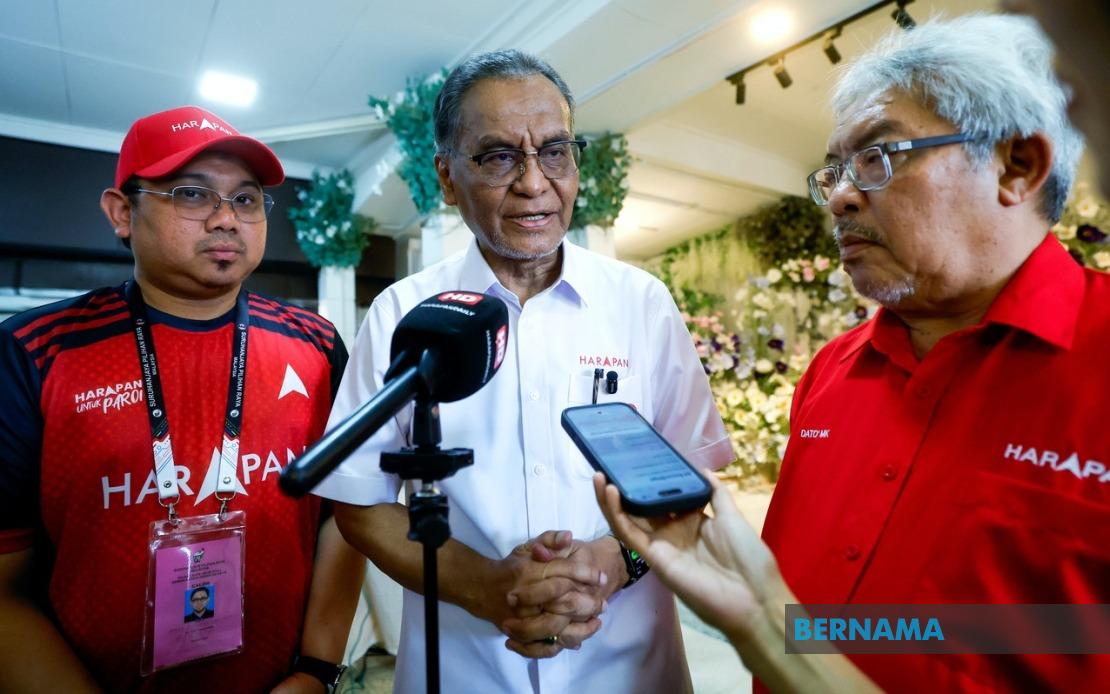
Negeri Sembilan's upcoming state election on August 1 will see Parti Amanah Negara launch its campaign primarily on the governing coalition's five-year track record, with nine candidates representing Pakatan Harapan across the 36-seat legislature. The messaging strategy reflects a deliberate pivot away from rhetoric-heavy politics toward tangible governance outcomes, positioning the party as a vehicle for demonstrating competence through action rather than oratory prowess.
Amanah vice-president Datuk Seri Dr Dzulkefly Ahmad articulated this philosophy during engagement activities in Seremban, emphasising that the election represents a choice between candidates with verifiable experience and community ties versus those trading primarily on campaign visibility. The approach positions PH's component parties as differentiated by their ability to solve practical problems facing residents, whether related to business licensing, infrastructure, or service delivery coordination with local authorities. This contrasts sharply with the more ideologically charged campaigns that have characterised Malaysian politics in recent election cycles.
Within the broader PH alliance framework, seat allocation reflects established power dynamics. Amanah contests nine seats while Parti Keadilan Rakyat fields 16 candidates and DAP 11, distributing the coalition's parliamentary burden according to party strength and electoral viability assessments. The nine Amanah candidates—including incumbent Datuk Bakri Sawir in Klawang and seven newcomers—collectively represent a mix of experienced administrators and fresh faces intended to project both stability and renewal. Each candidate brings purported grassroots credentials that Amanah claims will translate electoral support into constituent-responsive governance.
The party's organisational strategy deemphasises large rallies in favour of intimate constituent engagement. House-to-house canvassing, small-group discussions, and social media outreach form the skeletal framework for candidate visibility and voter contact. This granular approach ostensibly allows candidates to identify localised grievances and pledge follow-up coordination with relevant agencies, creating accountability loops that distinguish between campaign promises and post-election delivery mechanisms. For constituencies like Paroi—containing over 65,000 registered voters and approximately 140,000 residents—such engagement proves logistically demanding yet theoretically more effective at identifying and prioritising community concerns.
Paroi's PH candidate Ahmad Shahir Mohd Shah exemplifies the campaign's microeconomic focus, pledging support for small traders through streamlined licensing procedures and business area upgrades executed jointly with local authorities. This reflects a recognition that state-level electoral success increasingly hinges on demonstrating attention to petty traders and informal sector participants whose concerns diverge from corporate-scale economic policy. By committing to procedural simplification and amenities enhancement, candidates position themselves as administrative facilitators capable of negotiating bureaucratic complexity on constituents' behalf—a practical value proposition that may resonate more strongly than broader ideological commitments.
Negeri Sembilan's electoral context reveals the precarious balance PH must maintain in predominantly Malay-Muslim states where religious politics competes fiercely with governance narratives. In the 2023 state election, PH secured 17 of 36 seats while Barisan Nasional claimed 14 and Perikatan Nasional five, establishing the ruling coalition's narrow majority that demands flawless retention of existing constituencies. Any seat loss to PN or BN would jeopardise PH's government formation, rendering the track record campaign not merely a political preference but an existential necessity. Amanah's nine candidates must therefore function as both offensive weapons and defensive bulwarks, expanding PH's support while preventing defection to rival coalitions.
The timing of the election—with early voting scheduled for July 28 and polling on August 1—compresses campaigning into a concentrated window that advantages well-organised machinery with established voter databases and mobilisation capacity. Amanah's emphasis on relationship-building and issue identification benefits from this compressed timeline if candidates have already cultivated sufficient community connections, yet risks underperformance if grassroots infrastructure requires additional development time. The party essentially gambles that five years of governance presence has sufficiently deepened its organisational roots to outweigh potential disadvantages from condensed electioneering.
Sector-specific initiatives articulated by candidates reveal PH's targeting of traditionally underrepresented constituencies. Small business support, local authority coordination, and procedural efficiency represent bread-and-butter governance concerns that generate electoral dividends when executed visibly. Unlike grand infrastructure projects that require extended implementation periods, streamlined licensing and amenities upgrades can be demonstrated relatively quickly, allowing candidates to point toward tangible achievements during campaign season. This tactical choice reflects sophisticated understanding that Malaysian voters increasingly demand demonstrable progress rather than aspirational promises.
Amanah's nine-candidate roster includes constituencies spanning Negeri Sembilan's geographic and demographic diversity. Klawang, Serting, Lenggeng, Senaling, Johol, Kota, Bagan Pinang, and Gemencheh represent rural, semi-urban, and commercial mixed constituencies, necessitating candidate portfolios addressing agricultural support, urban service delivery, and commercial facilitation simultaneously. The diversity of Amanah's fielded candidates—though individual profiles remain underpublicised in available reporting—presumably reflects calculations about constituent demographic preferences and electoral competitiveness in each locality.
Election Commission procedures will allow early voting on July 28, enabling government employees, security personnel, and other designated categories to cast ballots before general polling on August 1. This administrative provision shapes campaign strategy by compressing the window for persuading swing voters, as a significant portion of the electorate will have already voted before the final days of campaigning. Candidates must therefore front-load their engagement activities and media messaging rather than relying on late campaign momentum, privileging early voter contact and message saturation over dramatic final appeals.
The broader Southeast Asian context positions Negeri Sembilan's election as a meaningful test case for coalition governance in states where religious nationalism competes fiercely with administrative competence narratives. Malaysia's experience with PH-led governance across multiple states provides comparative data on whether voters genuinely prioritise delivery-focused leadership or whether they remain susceptible to identity-based polarisation regardless of government performance. Amanah's deliberate positioning around track record and constituent problem-solving offers an implicit argument that post-pandemic Malaysian politics increasingly rewards pragmatism over ideology, a proposition that the August 1 election will either validate or refute.
For regional observers, the Negeri Sembilan election carries implications extending beyond Negeri Sembilan's boundaries. Other Southeast Asian democracies grappling with coalition governance and religious-nationalist opposition parties will scrutinise whether PH's governance narrative proves electorally durable or whether PN's Islamist positioning and anti-establishment messaging ultimately overwhelm administrative achievement. Amanah's nine candidates thus represent not merely local political competition but a test of democratic resilience in contexts where competing governance models vie for legitimacy.

