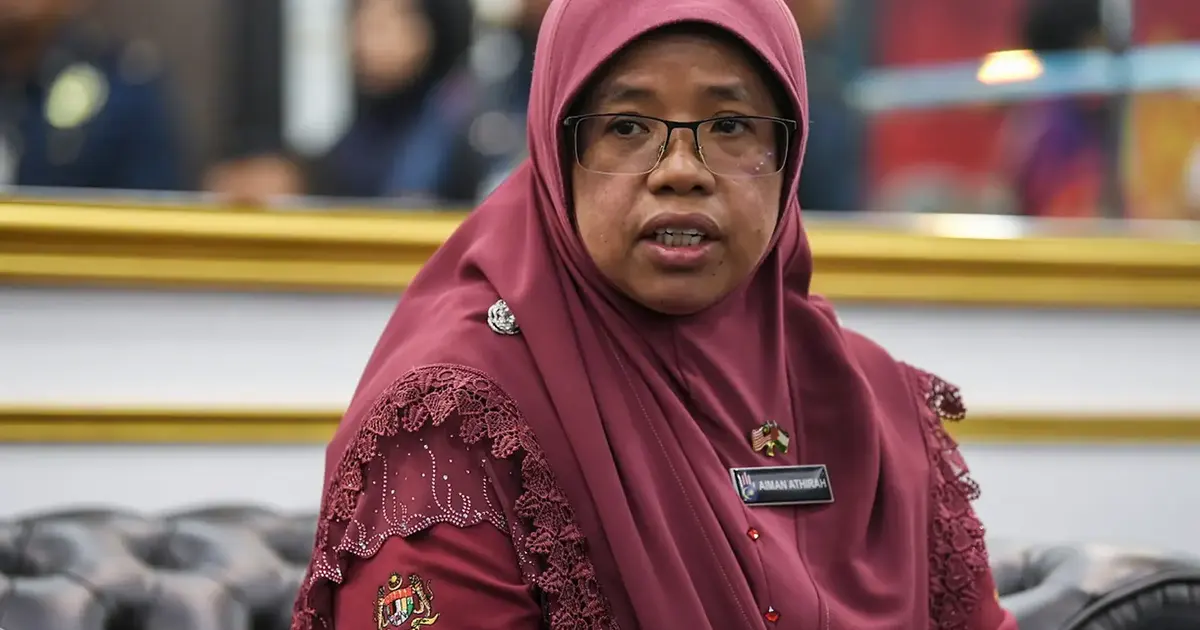
Malaysia's political landscape remains fractured along ideological lines as Amanah's deputy president Aiman Athirah Sabu escalated tensions within the Pakatan Harapan coalition on Tuesday by directly challenging PAS president Hadi Awang to substantiate his recurring accusations against the Democratic Action Party. The confrontation underscores deepening rifts between Islamist and secular-oriented parties that have characterised Malaysian politics since the 2023 general election, with Amanah positioning itself as a bridge between competing visions of governance.
Aiman Athirah's public dare came in response to persistent statements by Hadi Awang that the DAP harbours anti-Islamic sentiments and objectives. Rather than engage in rhetorical sparring, the Amanah leader demanded concrete evidence, effectively calling Hadi's bluff and forcing him to choose between escalating his claims with documentation or retreating from assertions that have long animated PAS's political messaging. This move reflects Amanah's strategy of defending coalition partners while maintaining its own Islamic credentials, a precarious balancing act that defines its role within Pakatan Harapan.
The challenge carries legal weight by inviting Hadi to pursue defamation or other civil remedies if his claims against DAP hold substance. Aiman Athirah's implicit suggestion that Hadi lacks sufficient grounds for litigation reveals the speculative nature of such allegations—they serve rhetorical and political purposes within PAS's base rather than being grounded in actionable evidence. This distinction matters significantly in Malaysian legal contexts, where defamation claims require demonstrable falsity and damage to reputation.
PAS and its president have long positioned the party as Islam's institutional guardian in Malaysian politics, a self-appointed role that intensified following the party's departure from Pakatan Harapan in 2015. Accusations that other parties, particularly the DAP, oppose Islam function as a rallying cry for PAS's religious conservative constituency and justify the party's separate political trajectory. However, such claims remain largely unsubstantiated, resting instead on selective interpretation of DAP policy positions regarding secular governance, religious pluralism, and constitutional secularism.
The DAP's actual record demonstrates complex engagement with Islamic issues rather than blanket opposition. The party has supported Islamic religious institutions within secular constitutional frameworks, participated in governance with Islamist parties in various state governments, and generally advocated for religious freedom alongside secular law rather than its abolition. These nuances disappear in PAS's framing, which conflates resistance to Islamic supremacy with hostility toward Islam itself—a rhetorical move that appeals to party loyalists but struggles under legal scrutiny.
Aiman Athirah's intervention signals that Amanah, despite sharing Islamic credentials with PAS, fundamentally rejects the binary worldview where DAP's presence in government automatically endangers Islamic interests. This reflects Amanah's broader political positioning as a moderate Islamic party comfortable with plural coalitions and secular institutional safeguards. By challenging Hadi to substantiate his claims legally, Amanah implicitly endorses DAP's right to participate in governance without constant accusations of religious betrayal.
The timing of this confrontation matters within Malaysia's broader political context. Coalition dynamics remain unstable following the 2023 election, with Pakatan Harapan holding office but facing significant pressure from the Perikatan Nasional bloc led by PAS and the United Malays National Organisation. Every public dispute between coalition partners attracts scrutiny about governmental stability and cohesion, creating incentives for both sides to manage conflicts carefully. Aiman Athirah's direct challenge risks inflaming tensions but also sends a signal that Amanah will not tolerate sustained attacks on coalition partners without response.
For Malaysian readers and regional observers, this exchange highlights the persistent challenge of bridging theological and political divides within multiparty democracies. Islam's constitutional position in Malaysia necessarily generates debates about how Islamic interests coexist with minority rights, secular law, and religious pluralism. Rather than productive engagement with these genuinely difficult questions, Malaysian politics often relies on accusations that opponents harbour secret anti-Islamic agendas—a rhetorical shorthand that forecloses serious discussion.
Hadi Awang's likely response to Aiman Athirah's challenge will reveal whether PAS intends to escalate the conflict or retreat to safer rhetorical ground. Pursuing legal action would require meeting evidentiary standards that his previous statements may not satisfy. Ignoring the challenge would suggest that Hadi's accusations serve symbolic rather than factual purposes. Either outcome carries implications for coalition stability and the trajectory of Malaysian political discourse in coming months.
The broader significance extends to questions about how Malaysian politics accommodates parties with fundamentally different constitutional visions. DAP's secular framework and PAS's Islamic framework represent genuine philosophical differences that cannot be entirely papered over through electoral alliances. Whether these differences can be managed through coalition discipline, mutual respect for institutional separation, or explicit policy compromises remains the central challenge for Pakatan Harapan's continued viability as a governing entity.

