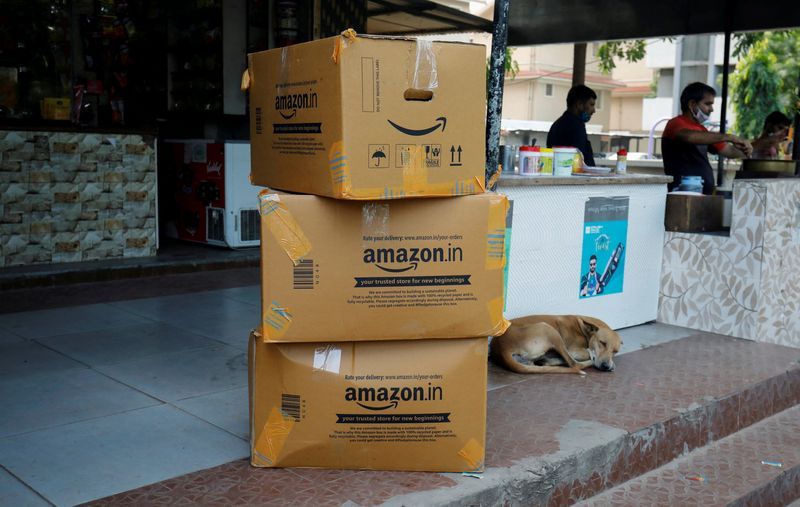
Amazon has committed to taking action against its delivery partner M&M Logistics Solutions once local authorities complete their investigation into a warehouse fire that claimed two lives in India's Uttarakhand state on June 5. The e-commerce giant, one of India's largest digital retailers, said in a statement to Reuters it will implement measures in accordance with its corporate policies once the police probe concludes. The company is simultaneously conducting its own independent internal review into the incident, according to sources with direct knowledge of the matter who declined public attribution due to confidentiality concerns.
The deadly fire at the M&M Logistics facility has exposed serious workplace safety failures that raise broader questions about oversight of third-party logistics networks in India's rapidly expanding e-commerce sector. According to police documentation reviewed by Reuters, the building where the fire occurred lacked fundamental safety infrastructure, including a valid fire safety clearance, fire alarm systems, smoke detection equipment, and properly designated emergency exits. These deficiencies represent a fundamental breach of building codes and workplace safety standards that are meant to protect workers in warehouse and logistics facilities.
M&M Logistics Solutions operates an extensive network of 45 Amazon delivery centers distributed across 21 cities throughout northern India, as documented in a 2023 Amazon press release. The company serves as a critical intermediary in Amazon's supply chain, responsible for the last-mile delivery of packages to customers across the region. This scale of operations underscores the significant responsibility that both Amazon and its logistics partners bear in ensuring safe working conditions for the thousands of employees engaged in the delivery network.
Amazon's internal supplier code of conduct explicitly prohibits working environments that pose safety risks to employees, with specific provisions against uncontrolled fire hazards. The code of conduct framework permits Amazon to suspend or terminate third-party contractors and vendors who violate these standards. However, the gap between stated policies and on-ground compliance has emerged as a persistent challenge, particularly in India's logistics and warehouse sectors where rapid growth has sometimes outpaced regulatory oversight and enforcement mechanisms.
The incident comes amid a pattern of workplace safety concerns at Amazon facilities across India. In early 2024, the National Human Rights Commission scrutinized Amazon over allegations of labour law violations during an intense heatwave at a warehouse facility near New Delhi. Following this investigation, the state government initiated legal proceedings against Amazon under India's labour protection statutes. These recurring incidents suggest systemic issues in how Amazon and its contracted partners manage worker welfare and safety compliance.
The Amazon India Workers Union has called for a judicial investigation into the June 5 deaths, characterizing the incident as evidence of a profound collapse in workplace safety standards and worker protection mechanisms. The union's demand for an independent judicial review reflects growing worker advocacy pressure on Amazon to strengthen safety protocols beyond internal compliance measures. This represents a significant escalation in scrutiny, moving beyond corporate self-regulation toward external accountability mechanisms.
The investigation reveals tensions inherent in Amazon's outsourced logistics model. By utilizing third-party delivery partners rather than directly managing all logistics operations, Amazon has built a scalable but complex network that can be difficult to monitor comprehensively. While this model offers operational flexibility and cost efficiency, it also creates accountability gaps where contractors may prioritize cost-cutting over safety infrastructure. The M&M Logistics facility's documented lack of basic safety equipment suggests such priorities may have been at play.
For Malaysian and Southeast Asian readers, this case has significant implications for understanding how major e-commerce platforms operate across the region. Many Malaysian logistics companies serve similar roles for Amazon and other international retailers, and this incident underscores the importance of rigorous safety standards in the sector. Malaysia's workplace safety regulators and e-commerce industry stakeholders should monitor how Amazon addresses these findings, as the standards and practices established in India often influence operations across broader Asian markets.
The fact that neither Uttarakhand state police nor M&M Logistics responded to Reuters inquiries suggests potential difficulties in obtaining transparency about the incident. This lack of response raises questions about whether sufficient information-sharing mechanisms exist between company management, regulatory authorities, and the public regarding serious workplace incidents. Transparent reporting and investigation of such incidents is crucial for preventing similar tragedies and building worker confidence in safety systems.
Amazon's statement that worker safety and wellbeing remain top priorities will face credibility tests as the police investigation unfolds and the company determines what "appropriate action" entails. The severity of the documented safety lapses—absent fire alarms, smoke detectors, and emergency exits—suggests this was not a minor oversight but rather a fundamental failure of basic occupational safety standards. The adequacy of Amazon's response will signal whether the company is willing to implement genuine accountability measures or whether existing enforcement mechanisms remain largely symbolic.
The coming weeks will reveal much about Amazon's commitment to worker protection in India. If the company terminates its relationship with M&M Logistics and implements stricter third-party auditing, it could signal a meaningful shift toward stronger oversight. Conversely, if the response proves minimal or delayed, it would reinforce perceptions that corporate safety commitments often lack substantive enforcement. For the workers and families affected by this tragedy, the investigation outcome and Amazon's consequent actions represent a test of whether corporate pledges translate into meaningful protection for those on the frontlines of the global e-commerce supply chain.

