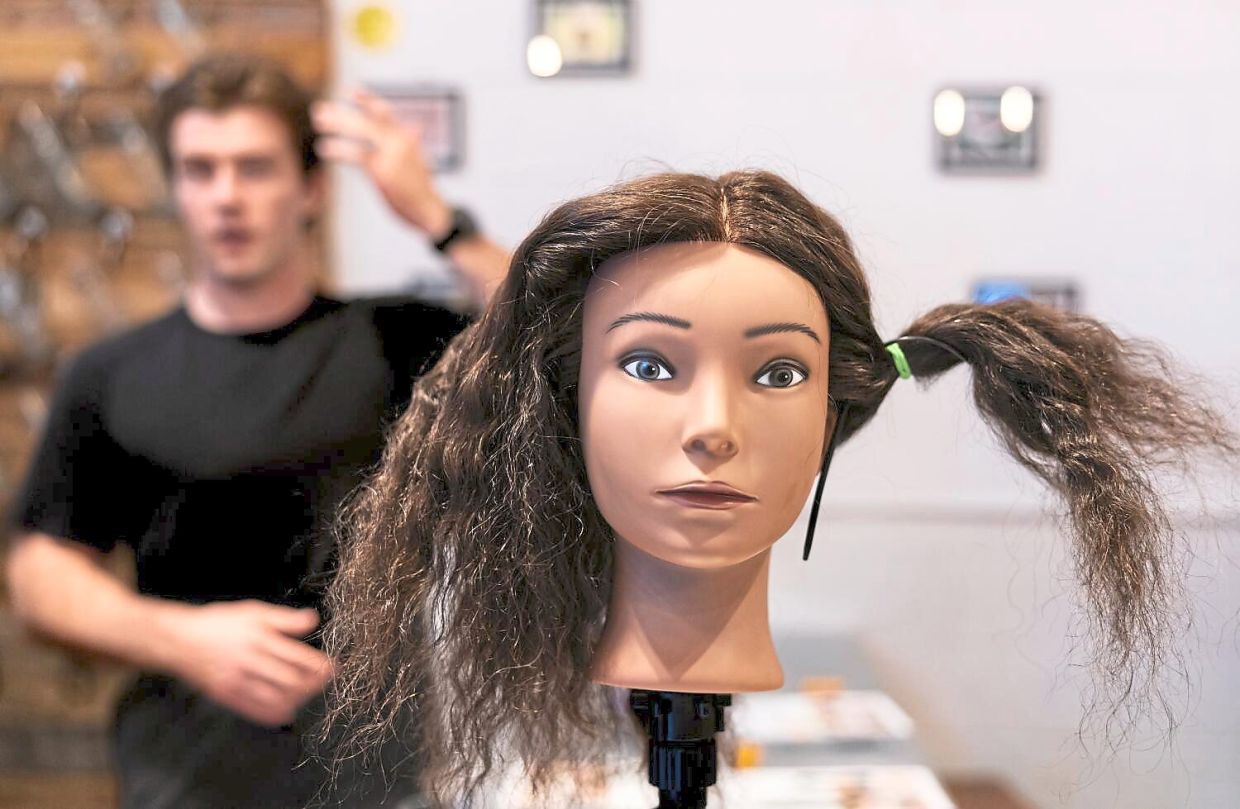
Austin Nieves transformed a routine Friday evening at Captain Fatty's Brewery in Santa Barbara County into something memorable when he gathered 15 men to learn an unexpected skill: brairing their children's hair. The event, inspired by a viral British concept called "Pints and Ponytails," sold out quickly and illustrated a broader trend sweeping across America – the establishment of organised groups specifically designed to address the unique pressures and isolation that modern fathers face.
The Santa Barbara Dads group, which Nieves founded after relocating to the area in April 2025, represents one of many such communities sprouting up to fill what many experienced fathers describe as a significant gap in support systems. Nieves, originally from Pasadena, observed a striking disparity in the resources available to parents when his son Hudson was born. His wife immediately accessed multiple mother groups, classes, and training programmes that provided guidance, friendship, and practical knowledge. As a first-time father, Nieves found himself largely dependent on his brothers for advice and perspective – a situation he recognised many men experience but few discuss openly.
The challenges fathers encounter during their transition to active parenting have attracted genuine academic attention. Research published in the Journal of Family Issues by Chris Knoester and David J. Eggebeen demonstrated that involved fatherhood often correlates with reduced feelings of wellbeing and decreased participation in social activities. The shift in priorities means fathers frequently sacrifice time with friends and peers, creating pockets of isolation amid the demands of child-rearing. Clinical psychologists Hillary Halpern and Maureen Perry-Jenkins have documented the emotional volatility accompanying the transition from single life to parenthood, revealing that many men experience a complex mixture of joy, anxiety, and uncertainty.
A significant 2021 study from Stockholm's Karolinska Institute provided compelling evidence that fathers benefit substantially from structured peer support during their transition to parenthood. The research found that men who participated in father groups reported high satisfaction with their involvement and noted positive impacts on their relationships with both their partners and children. Beyond emotional benefits, participation in organised father groups increased men's self-confidence, promoted greater equality within families, and demonstrably reduced feelings of loneliness – outcomes that suggest these communities address genuine psychological needs rather than serving merely as social clubs.
Nieves's personal experience exemplifies the pivot many fathers encounter. After Hudson's birth, his leisure time vanished almost completely, and his social circles fragmented as friends discussed television programmes and entertainment whilst he focused on developmental milestones. The disconnect prompted him to establish the Orange County Dads club in October 2023, even before his relocation to Santa Barbara. The club organised monthly meetups at coffee shops and zoological facilities, hosted communal music sessions during holidays, and provided practical training such as CPR certification courses. What began as Nieves's personal response to isolation has evolved into a genuinely collaborative community that continues expanding, partly through word-of-mouth as wives and partners share his social media content with their husbands.
The organic growth of these father communities illustrates genuine demand among men who feel isolated within conventional parenting structures. Mikhail Alfon, founder of Blue Light Media, brought his son Santos to multiple gatherings and described the experience as transformative. With their first child, Alfon and his family experienced the disorientation that accompanies major life transitions. Finding peers navigating identical circumstances – other fathers balancing professional ambitions with new responsibilities – provided validation and practical perspective that extended beyond what traditional support networks offered.
Nieves's move to Santa Barbara in April 2025 initially threatened to disrupt his community-building efforts. However, within a month he had established a second father group in his new location, demonstrating both personal commitment and the broader viability of the model. The Santa Barbara group held its inaugural gathering in May 2025 and committed to monthly meetings, suggesting the template successfully transcends geography and demographic boundaries. Austin Jones, a Santa Barbara-based real estate agent and investor, discovered Nieves's group through Instagram and immediately recognised the value proposition. As someone simultaneously managing professional responsibilities, spousal relationships, and paternal duties, Jones felt perpetually stretched across multiple roles with insufficient support for any single dimension.
The practical dimension of these father groups emerges clearly through initiatives like the Pints and Ponytails event. Jones, a father to two-and-a-half-year-old Noa with textured, curly hair requiring specialised care techniques, initially felt inadequate tackling her hair maintenance needs. The brewery event, combining casual socialising with expert instruction from professional hairstylists, transformed his confidence. Using salon mannequins as practice subjects, men overcame the awkwardness that typically accompanies learning unfamiliar skills in group settings. Within hours, Jones progressed from managing basic headbands to successfully executing ponytails, a practical accomplishment that extended beyond technical skill to emotional reassurance that parenting challenges remain surmountable with proper guidance.
The atmosphere during these gatherings reveals important dynamics about male socialisation and support-seeking. Nieves observed that initially attendees sat stiffly around the bar, experiencing the discomfort many men associate with acknowledging vulnerability or seeking assistance. The first round of drinks functioned as social lubricant, allowing men to transition from guarded observation to active participation and mutual learning. This pattern reflects broader research suggesting that men often require permissive environments to discuss parenting struggles openly, environments where practical skill-building coexists with emotional support without the latter feeling forced or artificial.
The expansion and sustainability of father groups carries implications beyond individual participants. These communities potentially shift cultural narratives around fatherhood from marginal involvement to engaged partnership, normalising the idea that fathers deserve support equivalent to mothers. By addressing loneliness, building confidence, and facilitating practical skill development simultaneously, father groups tackle multiple dimensions of the modern parenting experience. For Southeast Asian readers observing evolving family structures and changing gender roles, the American father group phenomenon provides insight into how communities can proactively support men navigating non-traditional caregiving responsibilities, filling gaps that conventional family structures and institutional support systems often overlook.

