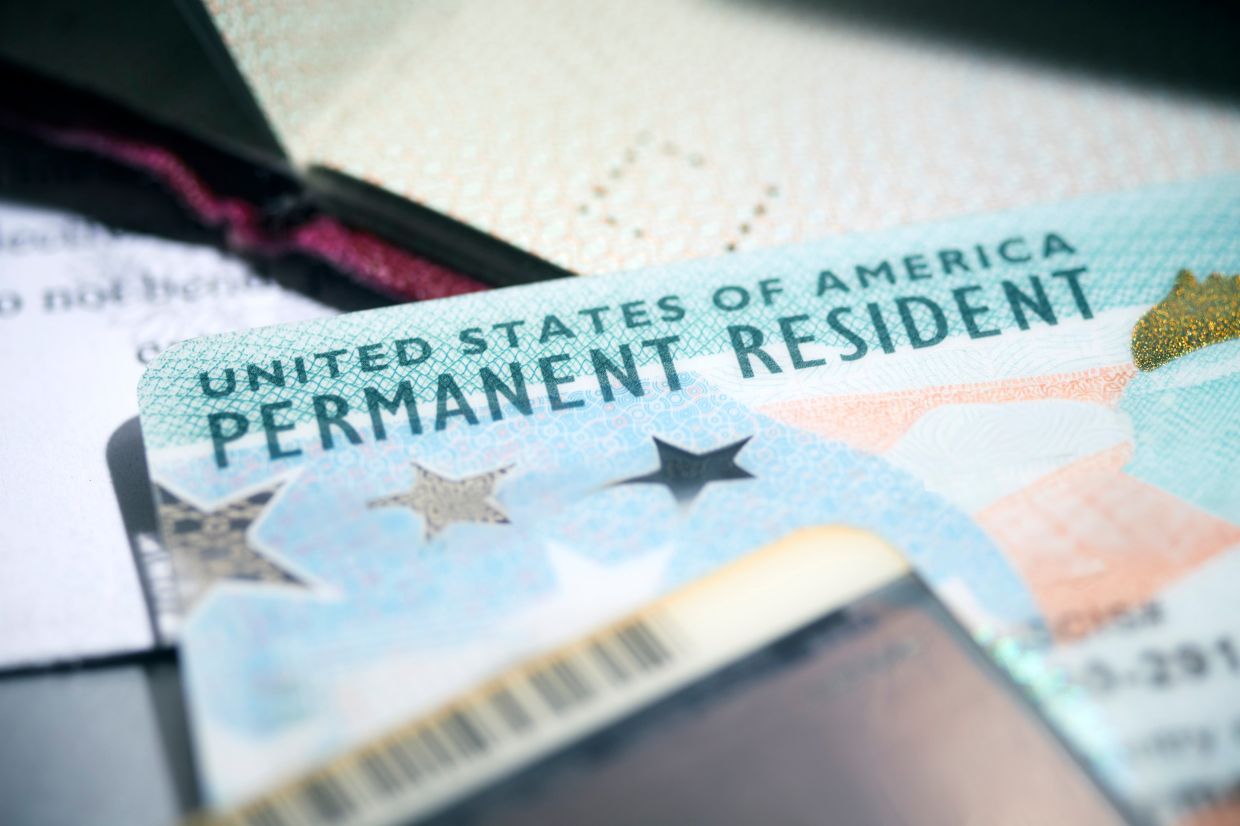
American diplomatic missions across the world have halted processing of immigrant visa applications while staff undergo training in a more rigorous financial evaluation framework. The new "public charge" test determines whether applicants might depend on government assistance, a concept that has suddenly become central to US immigration policy after years of routine implementation. This operational pause emerged shortly after a federal court invalidated an unrelated 75-country travel ban rooted in identical reasoning, suggesting the Trump administration is doubling down on tougher immigration standards despite legal challenges.
The factors used to assess financial viability are not novel in themselves. Officials have long examined applicants' ages, health status, family size, financial resources, educational attainment, professional skills and employment prospects. The dramatic shift lies in the directive to implement these assessments far more stringently, including the power to demand "public charge bonds" from certain applicants—financial guarantees that can effectively price out lower-income families. Sarah Pierce, a policy director at the Third Way think tank and former US Citizenship and Immigration Services analyst, contends that the Trump administration "chose the most disruptive possible way to roll this out," prioritising maximum upheaval over gradual policy transition.
Immigration lawyers report that consular officers are being trained explicitly "on how to deny cases under public charge rules," according to Charles Kuck, an Atlanta-based immigration attorney who previously represented over 100 students challenging administration policies. Family-based applicants will encounter substantially higher barriers to obtaining residency permits, while participants in the diversity visa lottery—designed to promote immigration diversity—face particular vulnerability under these revised standards. The implications extend beyond individual cases; entire categories of prospective immigrants may find themselves systematically disadvantaged by the enforcement approach now being rolled out globally.
While postponed interviews create immediate anxiety, they do not automatically invalidate approved petitions or reset priority dates. The State Department has suspended scheduling but has not yet announced that existing approvals will be revoked. However, Pierce emphasises that "the real harm is delay" for people who have made substantial commitments: booked international flights, sold properties, or completed required medical examinations. The uncertainty surrounding when normal processing will resume compounds this hardship, leaving thousands in a bureaucratic limbo with no timeline for resolution.
The timing pressure is especially acute for diversity visa holders. These visas must be issued by September 30, the close of the US government's financial year, creating a hard deadline that could be missed entirely if interviews are not rescheduled promptly. Applicants should verify that the National Visa Centre holds current contact details, including working email, telephone numbers and postal addresses, to ensure they receive notification when interviews resume. Missing administrative communications during this freeze could prove catastrophic for time-sensitive cases.
The visa interview freeze applies exclusively to immigrant greencard processing overseas and does not currently affect H-1B skilled worker visas, student permits or tourist visas. However, legal scholars warn that the public charge assessment could theoretically extend to non-immigrant categories; so far, implementation appears confined to immigrant visa seekers. The Trump administration's proposed $103,000 fee increase for H-1B visas has not yet taken effect, and the proposed new lottery system does not currently affect already-selected beneficiaries, though these remain contentious policy proposals.
Applicants still requiring overseas visa stamps face the most exposure to the stricter standards. Historically, properly completed I-864 affidavits of support—financial guarantees from US-based sponsors—sufficed for family-based cases unless officers identified unusually grave concerns. Pierce cautiously avoids labelling the new directive "a legal blanket ban," but warns that aggressive implementation in practice "begins functioning like one for certain populations," suggesting discriminatory outcomes even if the policy lacks explicit categorical exclusions.
Pierce's overarching concern is administrative discretion without guardrails. The statute contains minimal guidance on how public charge assessments should operate, creating what immigration lawyer Charles Kuck describes as a vacuum "allowing for a great deal of mischief." This interpretive space enables officers to apply standards inconsistently across nationalities, family compositions and economic backgrounds, potentially producing outcomes that differ dramatically between two applicants in equivalent circumstances.
Applicants whose interviews have been cancelled should remain in their home countries rather than attempting to travel, unless they already hold work authorisation permitting re-entry. Kuck advises that most recipients of cancellation notices lack this protection, making international movement extraordinarily risky. Since restarting processing will take considerable time, applicants should plan for extended delays and avoid expenditure or commitments premised on rapid resolution.
Individuals already holding lawful US status face different calculations. Those with approved applications should avoid international travel unless genuinely necessary, as re-entry requires navigating the revised assessment regime. An approved O-1 petition for temporary extraordinary ability status does not justify overseas travel if return depends on obtaining a new visa. Workers entering the United States should carry pay stubs and employer letters verifying employment; undocumented persons—including those on 240-day extensions following H-1B expiry or awaiting greencard or asylum decisions—should not travel at all.
New arrivals from abroad face reduced grace periods for remaining in status. Previously, visitors received open-ended duration until conditions changed; now they receive fixed departure dates, typically spanning four years, plus a compressed 30-day grace period instead of the previous 60 days. This contraction reduces flexibility for those managing family emergencies, employment transitions or legal proceedings. Combined with enforcement intensification throughout the administration, bureaucratic errors now carry substantially graver consequences than under previous regimes, forcing applicants to scrutinise their own files meticulously and resist guesswork when officers pose questions about documentation or circumstances they cannot verify independently.

