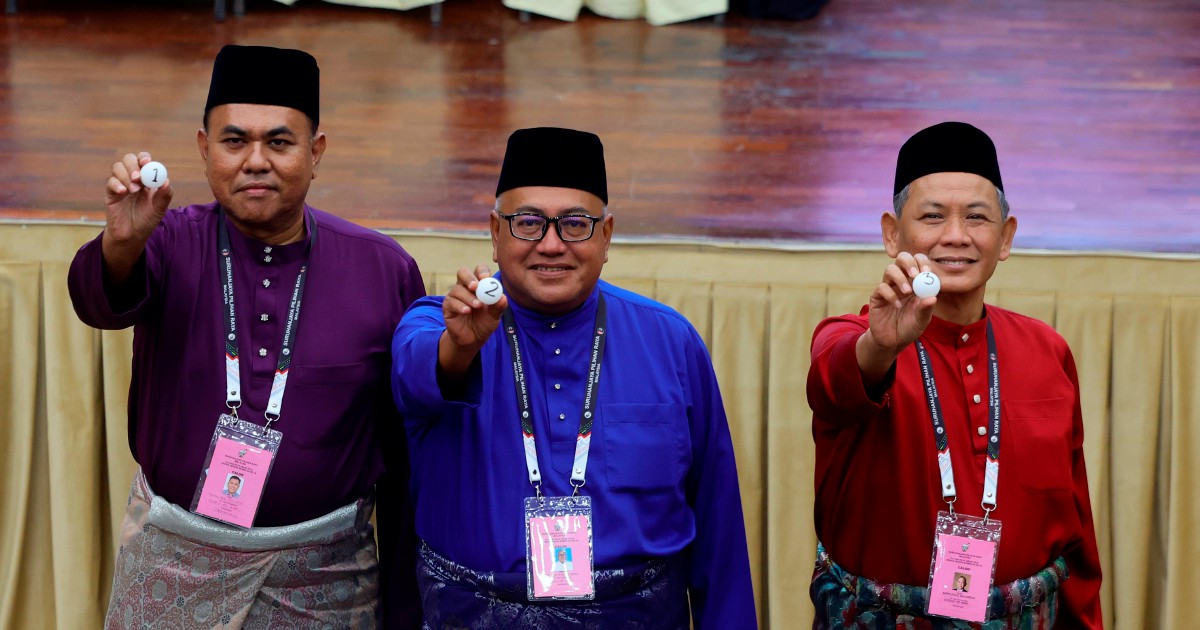
Caretaker Menteri Besar Datuk Seri Aminuddin Harun has candidly acknowledged that his path to retaining the Linggi seat in the upcoming Negri Sembilan state election will be anything but straightforward, with the political landscape in this traditionally Barisan Nasional stronghold proving considerably more contested than in previous electoral cycles. Speaking at Port Dickson, the senior politician described his electoral prospects as a "50-50" proposition, a characterisation that underscores the shifting dynamics in state politics and signals genuine uncertainty about outcomes in contests that once appeared settled.
The candour demonstrated by Aminuddin represents a departure from the customary confidence projected by incumbents heading into electoral contests. Rather than rehearsing familiar narratives about grassroots support and organisational superiority, the caretaker Menteri Besar has chosen to offer an unflinching assessment of the competitive environment. This measured tone suggests a political operator acutely aware of changing voter sentiments and the challenges facing Barisan Nasional beyond the conventional strongholds where the coalition has historically exercised dominance. The acknowledgement also reflects broader difficulties confronting the ruling coalition across several Malaysian states, where demographic shifts, economic pressures on ordinary households, and evolving voter expectations have combined to whittle away traditional advantages.
Linggi carries particular significance within Negri Sembilan's political architecture, functioning not merely as a standard constituency but as a bellwether seat whose result often presages the broader direction of voting patterns across the state. The constituency encompasses diverse communities with varying economic interests and priorities, from urban residents experiencing property and cost-of-living pressures to rural populations grappling with agricultural challenges and infrastructure gaps. This heterogeneity means that a candidate's performance in Linggi frequently reflects their capacity to craft messaging that resonates across different demographic segments, a challenge that has become increasingly demanding in recent election cycles.
The competitiveness that Aminuddin identifies reflects broader patterns evident throughout Malaysia's peninsular states. Opposition parties have invested substantial organisational resources in constituencies they previously conceded, investing in ground-level engagement and developing candidate profiles that appeal to swing voters and younger electorates less tethered to historical party allegiances. Simultaneously, disaffection within Barisan Nasional's traditional voter coalitions has intensified, with economic grievances and governance concerns driving segments of the electorate to explore alternatives. Linggi, as a microcosm of broader statewide dynamics, embodies these countervailing forces.
The Negri Sembilan state election itself assumes heightened importance within Malaysia's evolving political context, particularly given uncertainty surrounding the state's government formation process and questions about coalition alignments. The state election will either reinforce Barisan Nasional's authority or represent a significant setback for the coalition's efforts to consolidate power across multiple geographic fronts. Aminuddin's position as Menteri Besar places him at the forefront of these negotiations, and his personal electoral performance carries implications extending well beyond his individual constituency.
Polling patterns across Southeast Asian democracies suggest that seats combining urban and semi-rural characteristics tend to exhibit heightened volatility compared to constituencies with predominantly homogeneous voting populations. Linggi's mixed character therefore positions it as a genuinely unpredictable contest, where traditional voting blocks may behave differently from historical patterns. The constituency has experienced demographic evolution through urbanisation and generational turnover, factors that typically correlate with reduced party loyalty and greater receptiveness to campaign messaging emphasising competence and responsiveness to immediate concerns.
Aminuddin's strategic calculation in publicly framing the contest as competitive rather than favourable reflects both political realism and positioning for post-election narratives. Should he successfully defend the seat despite acknowledging the difficulty level, it enhances the perceived magnitude of his achievement and consolidates his standing within the party hierarchy. Conversely, if an adverse outcome materialises, the prior acknowledgement of a challenging environment provides contextual buffer against allegations of organisational incompetence or leadership failure. This careful calibration of expectations represents sophisticated political communication aimed at multiple audiences including party machinery, voter populations, and media interpreters of electoral results.
The broader implications for Malaysian politics rest partly on how closely Linggi's result aligns with statewide outcomes. If opposition parties can successfully leverage anti-incumbency sentiment and organisational capabilities to threaten constituencies previously considered secure, the pattern would suggest that Malaysia's electoral landscape has fundamentally shifted toward greater competitiveness and reduced predictability. Such a development would obligate Barisan Nasional to recalibrate strategies across multiple fronts and reconsider assumptions about voter retention that have traditionally guided campaign planning. Conversely, if Aminuddin successfully navigates what he himself characterises as an evenly-balanced contest, it may indicate that despite recognised challenges, the coalition retains sufficient residual support to withstand opposition pressure in strategically important constituencies.
The economic context surrounding this election cycle deserves consideration, as Malaysian voters across multiple constituencies have expressed mounting concerns regarding inflation, employment security, and adequacy of public services. These material grievances transcend party affiliation and strike at fundamental voter preoccupations about household wellbeing and government responsiveness. In constituencies like Linggi where economic pressures affect diverse constituencies simultaneously, these concerns can override traditional loyalties and create electoral volatility that defies conventional projection methodologies. Aminuddin's acknowledgement of the "50-50" nature of his contest implicitly reflects awareness that economic pressures are reshaping voter calculations in ways that complicate traditional organisational advantages.
As the Negri Sembilan state election proceeds toward its conclusion, the dynamics evident in Linggi will warrant close monitoring as potential indicators of broader statewide trajectories. The outcome will substantially influence perceptions regarding Barisan Nasional's capacity to retain control of state administrations and will contribute important data points toward understanding whether Malaysia's electoral system continues moving toward greater volatility and reduced incumbent protection. Aminuddin's forthright acknowledgement of the competitive environment suggests political awareness of these larger stakes and recognition that assumptions rooted in historical patterns no longer provide reliable frameworks for projecting contemporary electoral outcomes.

