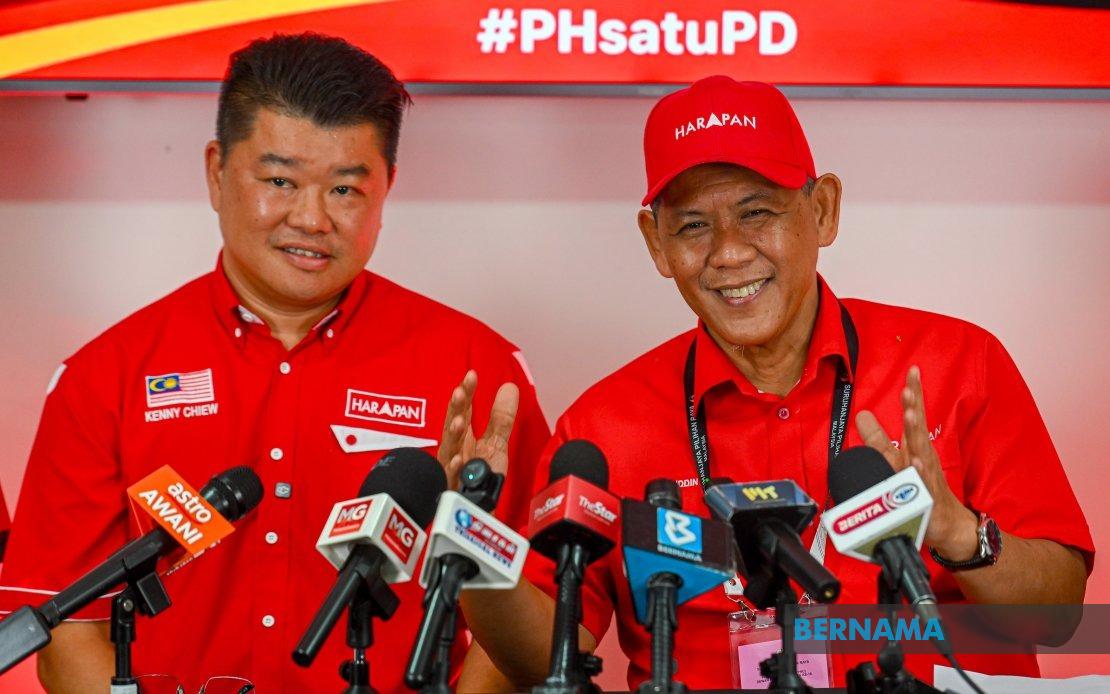
Negeri Sembilan Menteri Besar Datuk Seri Aminuddin Harun has appealed to all contesting political parties to maintain high standards of electoral conduct, insisting that campaigns must operate strictly within the bounds of the law and established regulations during the 16th Negeri Sembilan State Election. Speaking while campaigning in the Linggi constituency on July 20, Aminuddin, who stands as the Pakatan Harapan candidate for that seat, stressed that destructive tactics have no legitimate place in a mature democratic system.
The call came in response to mounting complaints of campaign material vandalism registered by the opposition coalition's operations centre. According to a statement released earlier that day by the PH Media Centre Secretariat, incidents had already been documented on the second day of active campaigning. These included the burning of party flags in the Palong area and deliberate damage to flagpoles in Chembong, signalling a troubling pattern of escalating electoral disruption across the state.
Aminuddin framed his appeal within a broader vision of democratic maturity and civilisational standards. He argued that voters deserve the opportunity to assess political candidates based on the merits of their ideas, track records, and policy proposals rather than being influenced by the intensity of partisan aggression or spectacle. By calling for respectful engagement, he positioned the election not merely as a competitive exercise but as a civic moment that reflects the character and self-regard of Negeri Sembilan as a political community.
The law enforcement response has begun to materialise. Datuk Alzafny Ahmad, the Negeri Sembilan Police Chief, confirmed that officers had received at least one formal report documenting vandalism of campaign materials in Jempol. Additionally, police investigations into a separate incident in Chembong remain active, indicating that authorities are taking the matter seriously and moving toward potential prosecutions if evidence warrants.
These incidents underscore recurring challenges in Malaysian electoral campaigns, where the boundary between aggressive promotion and unlawful conduct sometimes becomes blurred. Vandalism of opposing parties' campaign materials—whether flags, banners, or signage—technically violates election laws and has been grounds for police action in previous contests. However, enforcement has historically been uneven, and perpetrators often operate with apparent impunity, emboldening further misconduct.
The timing of these incidents carries particular significance given the compressed timeline of this election cycle. The Negeri Sembilan State Legislative Assembly was dissolved on June 5, with the Election Commission designating July 28 for early voting and August 1 for the main polling day. This compressed schedule leaves limited time for extensive campaigning, potentially intensifying competitive pressure on all sides and creating situations where some activists may resort to disruptive tactics out of desperation or miscalculation.
For Malaysian observers and analysts, the Negeri Sembilan contest presents a microcosm of broader electoral governance questions. The state's experience with campaign vandalism reflects patterns seen in other recent state-level contests across the peninsula, where digital organising capabilities have sometimes outpaced parties' capacity to manage disciplined grassroots behaviour. Younger activists, operating with limited oversight and emboldened by online echo chambers, occasionally undertake uncoordinated actions that senior party leadership subsequently disavows.
Aminuddin's intervention as Menteri Besar carries particular institutional weight. As the sitting head of government and a major candidate himself, his public stance signals that maintaining electoral integrity remains a shared responsibility across party lines. His explicit invocation of democratic maturity also implicitly challenges the prevailing culture of impunity, suggesting that Negeri Sembilan should establish a reputation for clean, law-respecting campaigns rather than accepting vandalism as an inevitable electoral norm.
The broader context of PH's governance in Negeri Sembilan may also shape how this election unfolds. As the incumbent coalition seeking re-election, PH has considerable interest in demonstrating that it can manage state affairs responsibly, including fostering an environment where electoral competition remains vigorous but orderly. Conversely, opposition parties may see opportunities to capitalise on voter discontent or to test new campaign strategies, potentially leading to escalating confrontation if not carefully managed.
Moving forward, the Election Commission will play a crucial role in enforcing campaign finance regulations and conduct standards. While the police handle criminal matters such as vandalism, the Commission itself possesses authority to investigate breaches of electoral rules and to impose sanctions ranging from warnings to disqualification of candidates in egregious cases. The heightened scrutiny following these early incidents may encourage greater compliance as the campaign intensifies toward August 1.
For Southeast Asian democracies more broadly, Malaysia's electoral management—including how state authorities respond to campaign misconduct—carries relevance. Regional democracies often grapple with balancing competitive intensity against institutional safeguards, and successful models depend heavily on the willingness of political elites to reinforce norms of restraint and lawfulness. Aminuddin's public appeal represents exactly such leadership, though whether it translates into changed behaviour on the ground remains to be demonstrated over the coming weeks.

