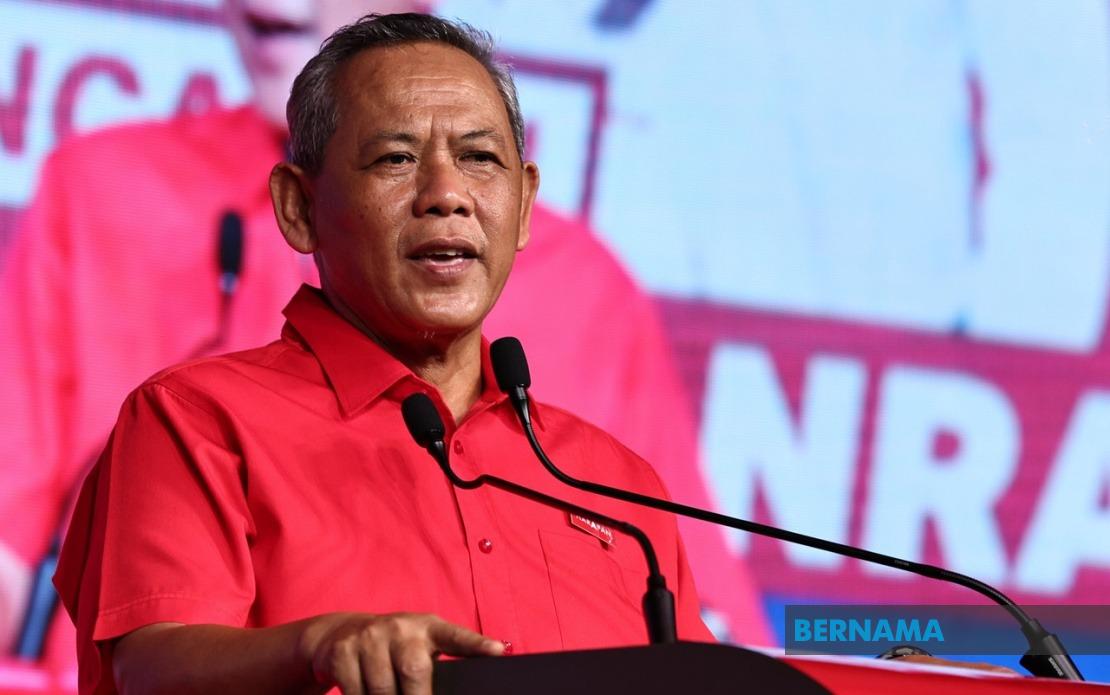
Menteri Besar Datuk Seri Aminuddin Harun has firmly rebutted suggestions that his decision to contest the Linggi state seat represents an attempt to sidestep the challenge of defending his long-held Sikamat constituency in the forthcoming Negeri Sembilan state election. In a statement issued from Seremban on July 16, the senior Pakatan Harapan politician characterised the move as a deliberate personal choice rather than a tactical manoeuvre forced by electoral circumstances.
Aminutdin, who holds the position of Negeri Sembilan Pakatan Harapan chairman alongside his role as state PKR leader, expressed his determination to bring the same calibre of service to Linggi residents that he has provided to Sikamat over four consecutive electoral cycles. His comments come amid speculation within political circles regarding the rationale behind the high-profile shift, which effectively ends his representation of Sikamat after an extended tenure characterised by significant constituency development.
The Menteri Besar's statement carries particular weight given Sikamat's status as his political stronghold. His tenure there has encompassed a transformative period in the constituency's infrastructure and administrative capacity. Aminuddin recounted how he had initially operated from cramped quarters above a commercial shophouse with minimal state resources, a reflection of the constraints facing opposition-aligned representatives during Barisan Nasional's lengthy federal and state governance. Despite these resource limitations, he mobilised community fundraising initiatives and coordinated grassroots programmes to address constituent needs.
This narrative underscores a broader theme in Malaysian state politics: the divergence between resources available to ruling and opposition-aligned assemblypersons. Aminuddin's retrospective account highlights how the transition from opposition status to government participation following the 2018 federal election fundamentally altered the material conditions under which elected representatives operate. The shift from operating under financial constraints to accessing state allocations as part of the ruling coalition represents one of the most tangible benefits of electoral victory for legislators and their constituencies.
Having cultivated Sikamat across multiple decades of political engagement, Aminuddin's decision to relinquish the seat requires explanation precisely because it departs from the conventional pattern of political entrenchment. When senior figures vacate long-held constituencies, observers naturally examine whether electoral vulnerability or strategic calculation underlies such moves. Aminuddin's insistence that the decision represents genuine personal preference rather than defensive necessity attempts to reframe the narrative around proactive ambition rather than reactive retreat.
To facilitate the transition, party structures have nominated Nor Azman Mohamad to succeed Aminuddin in Sikamat. The selection of a replacement carrier carries implicit expectations regarding continuity of service delivery and maintenance of the incumbent's political legacy within the constituency. Aminuddin's expression of confidence in Nor Azman's ability to perpetuate his approach to constituency management suggests an orderly transition intended to minimise disruption to voter confidence in Pakatan Harapan's representation.
The Linggi contest itself presents a considerably different competitive landscape than the Sikamat seat Aminuddin is vacating. He faces Datuk Mohd Faizal Ramli, the sitting Linggi assemblyman representing Barisan Nasional, in what constitutes a direct clash between the state's executive leadership and the incumbent opposition representative. This configuration transforms the individual seat contest into a high-profile battle with symbolic implications for the broader state election outcome. Aminuddin's willingness to contest against an entrenched incumbent suggests confidence in his ability to achieve electoral victory even in less familiar political terrain.
The scheduling of the election mechanics reinforces the transitional nature of the political moment. Nomination proceedings are scheduled for Saturday, with early voting designated for July 28 and general polling set for August 1. This compressed timeline means that campaign activities must occur with unusual intensity, allowing limited opportunity for grassroots consolidation of support. For a candidate attempting to establish himself in a new constituency, such compressed schedules present particular challenges in cultivating the personal relationships and local networks that traditionally underpin electoral success.
Aminutdin's explicit gratitude toward Sikamat residents, framed around memories of collective struggle during opposition years, serves multiple communicative purposes. The expression of appreciation acknowledges the constituency's role in his political development while simultaneously attempting to ensure that his departure does not precipitate voter disaffection or perceptions of abandonment. This careful emotional labour reflects sophisticated understanding of voter psychology in Malaysian constituencies, where personal relationships between representatives and constituents frequently transcend formal party structures.
The broader context of Negeri Sembilan's political trajectory influences the significance of leadership personnel movements. As Malaysia navigates post-2018 electoral realignment and the complex negotiations surrounding coalition governance, state-level elections acquire heightened importance as testing grounds for competing political models. The performance of Pakatan Harapan-led administrations in retaining voter support becomes analytically significant for assessing the durability of opposition-aligned coalitions across Malaysian political geography.
Aminutdin's repositioning within the electoral landscape also reflects evolving calculations regarding seat distribution and resource allocation within Pakatan Harapan's broader campaign strategy. The allocation of senior leadership figures to contested seats carries implicit messages about party priorities and resource concentration. By committing the Menteri Besar to the Linggi contest, Pakatan Harapan signals the strategic importance of that particular seat within the broader state electoral contest. Conversely, the decision to field a successor in Sikamat rather than maintaining Aminuddin's personal candidacy suggests confidence that the constituency has accumulated sufficient institutional advantages to withstand leadership transition.
As the election campaign develops across Negeri Sembilan's constituencies, Aminuddin's performance in Linggi will provide voters with clarity regarding whether his transition genuinely represents personal preference as he maintains, or whether electoral dynamics ultimately vindicate those sceptics who perceived tactical calculation beneath the stated rationale. The outcome will simultaneously determine whether his successor in Sikamat successfully preserves the seat for Pakatan Harapan or whether the constituency proves vulnerable to opposition repositioning.

