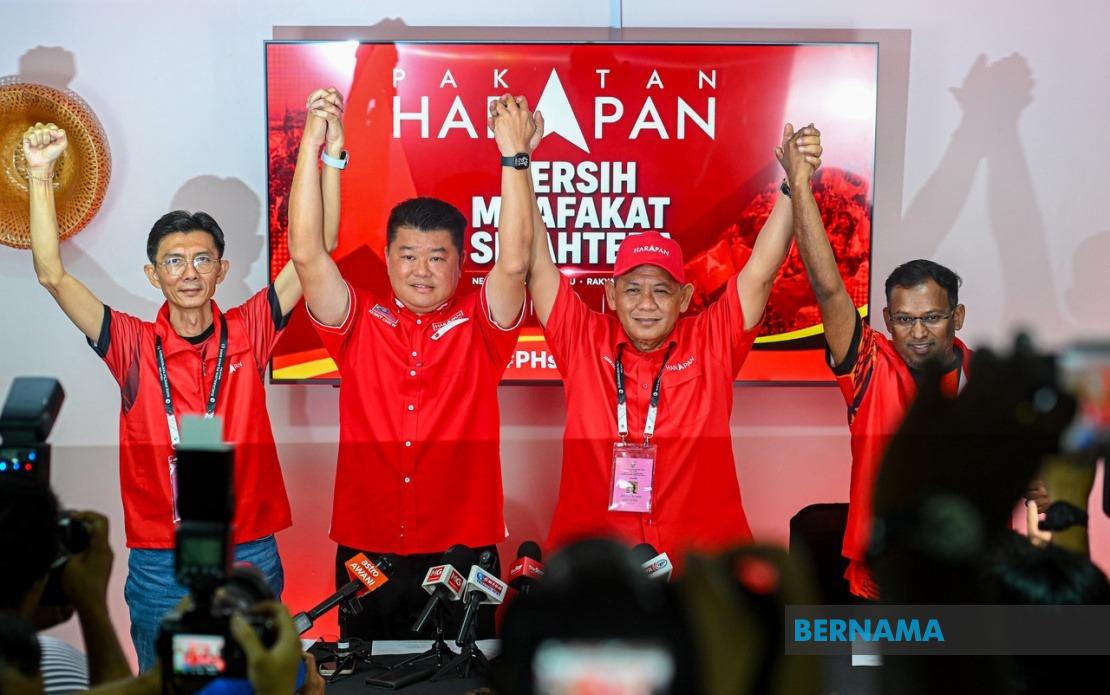
Datuk Seri Aminuddin Harun, who chairs Negeri Sembilan's Pakatan Harapan coalition, has emphatically rejected suggestions of fractures within the opposition alliance's leadership structure and campaigning framework as voters prepare to head to the polls. Speaking at a press conference in Port Dickson on Monday, the menteri besar sought to reassure supporters that PH remains cohesive across the five state seats—Chuah, Lukut, Sri Tanjung, Bagan Pinang and Linggi—that fall within the Port Dickson parliamentary constituency.
The timing of Aminuddin's comments reflects broader concerns about internal harmony within PH, particularly following controversy surrounding the re-nomination of incumbent Chuah assemblyman Datuk Yew Boon Lye. The matter gained traction on social media platforms, triggering public debate about potential divisions within the party's Port Dickson machinery. At the centre of the dispute was Port Dickson PKR deputy division chief Datuk Kenny Chiew Chi Kin, whose exclusion from the candidate slate had sparked questions about factional tensions within the party.
However, Aminuddin indicated that any friction has since been resolved through internal party processes, emphasising that the incident does not reflect genuine organisational discord. He highlighted Chiew's commitment to supporting all PH candidates contesting in the forthcoming election, framing the deputy division chief's position as that of a committed party member willing to subordinate personal ambitions to the broader coalition objective. This characterisation attempts to present the resolution as evidence of internal discipline and cohesion rather than as a manifestation of unresolved grievances.
Aminuddin's remarks underscore a strategic concern for PH: that unfounded speculation about internal divisions could undermine voter confidence precisely when the coalition is mobilising resources ahead of polling day. He argued that deliberate efforts by unspecified quarters were driving the narrative of coalition disunity, a rhetorical move that deflects responsibility for the controversy while attributing it to external actors with vested interests in portraying PH negatively. This framing allows the coalition to maintain a public face of unity whilst acknowledging that tensions have existed.
The Port Dickson MP also sought to reinforce the notion that PH's organisational machinery remains functional and coordinated. He expressed confidence that the leadership structure and campaign operations across the five constituencies were functioning effectively and working toward the shared goal of securing electoral victories. This emphasis on operational coherence serves to counter impressions that internal disagreements might disrupt campaign coordination or voter mobilisation efforts in the lead-up to the election.
Aminuddin himself is contesting the Linggi seat as PH's candidate, placing him directly on the ballot and giving his statements about coalition harmony both institutional and personal weight. His position as menteri besar adds authority to his claims about internal stability, whilst his candidacy ensures his interests are closely aligned with broader PH electoral performance. The dual roles provide him with credibility when asserting that the coalition is functioning smoothly across the state's leadership tiers.
The Chuah constituency, where Yew is seeking re-election, represents a strategic flashpoint in the Port Dickson cluster. In the 2023 state election, Yew secured victory with a commanding majority of 6,298 votes against Perikatan Nasional candidate Tang Jay Son, establishing him as an effective incumbent. In the upcoming contest, he will face Barisan Nasional's Pau Jeou Ching, a fresh challenge that underscores the evolving political landscape in Negeri Sembilan. Yew's track record of winning substantial margins makes his seat one PH would regard as secure, though the shift in opposition from PN to BN may alter the dynamics of voter preference.
The five constituencies under Port Dickson's parliamentary umbrella collectively represent significant electoral terrain within Negeri Sembilan. Beyond Chuah, the seats of Lukut, Sri Tanjung, Bagan Pinang and Linggi form a contiguous bloc that could amplify PH's state-level representation if secured collectively. The coalition's messaging emphasises that internal coherence is essential for maximising its electoral footprint across these constituencies, suggesting that disunity could translate directly into lost seats.
The electoral calendar adds urgency to Aminuddin's statements. Early voting is scheduled for July 28, with general polling set for August 1. This compressed timeframe means that campaign operations must function with minimal friction, and public confidence in party unity must be established quickly. Any appearance of ongoing internal disputes could create openings for rival campaigns to exploit during the final campaign push, making Aminuddin's preemptive messaging a necessary step in the pre-election phase.
Beyond the immediate Port Dickson context, Aminuddin's intervention speaks to broader vulnerabilities within PH that became evident during previous electoral cycles. Opposition coalitions are inherently fragile formations, dependent on partner parties—PKR, DAP, Amanah and others—maintaining cooperative relationships despite organisational autonomy and occasional policy differences. When incidents like the Chuah re-nomination dispute emerge, they risk triggering broader questions about PH's internal governance and partner party dynamics.
For Malaysian voters in Negeri Sembilan, Aminuddin's reassurances may carry varying weight depending on their perceptions of PH's performance in government and whether they view internal party management as relevant to electoral decisions. Supporters focused on substantive policy outcomes may regard the furore as peripheral, while those concerned about organisational competence may view it as symptomatic of deeper governance challenges. The dismissal of rift claims, therefore, operates at multiple levels—addressing party faithfuls, reassuring undecided voters, and framing the election as a choice between functioning coalitions rather than between candidates of equal standing.
The Port Dickson cluster ultimately represents a microcosm of PH's broader challenge: maintaining electoral momentum whilst managing internal party politics. Aminuddin's public insistence on cohesion is a necessary counterbalance to any leakage of damaging narratives from within the party apparatus. Whether the internal resolution of the Chiew matter proves durable beyond the election cycle remains to be seen, but for now, the coalition appears positioned to present a united front to voters across the five constituencies.

