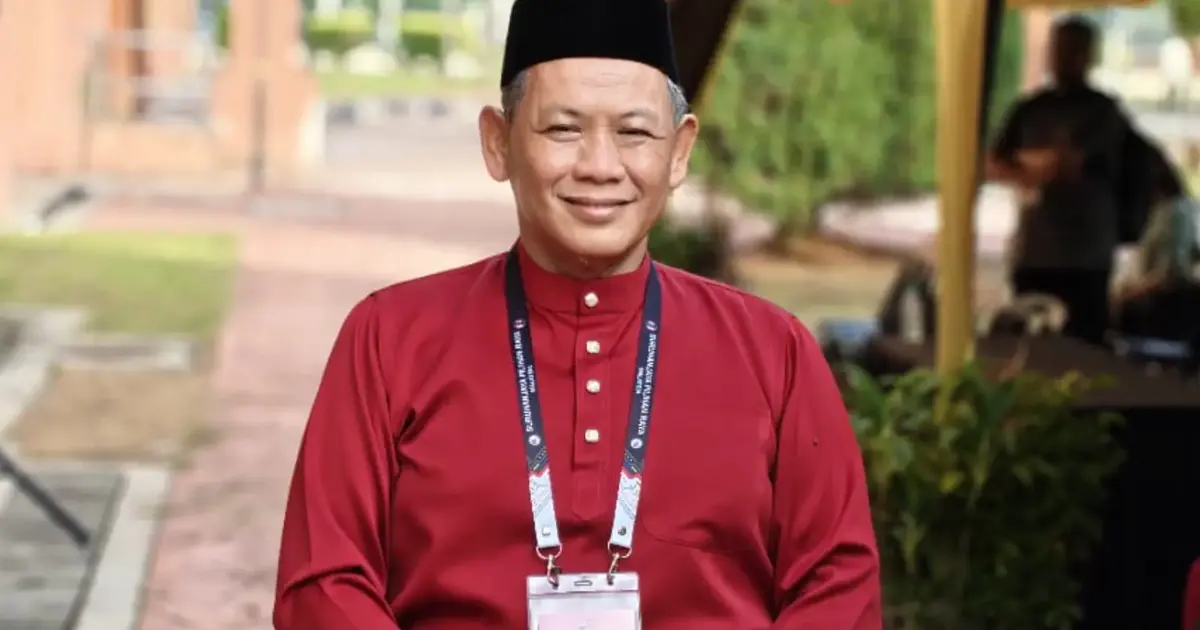
Negeri Sembilan Menteri Besar Aminuddin has entered the contest for the Linggi parliamentary seat, setting up a three-cornered battle in what has long been considered among Umno's most secure electoral bases. The constituency, located within Negeri Sembilan's political landscape, represents both an opportunity and a significant challenge for the incumbent state leader, whose political fortunes have been closely tied to regional developments in recent years.
Faizal Ramli, the current Member of Parliament for Linggi representing Barisan Nasional, claimed the seat in the 2023 general election in a decisive victory that reinforced the coalition's grip on this Malay-majority constituency. His tenure since then has consolidated support across traditional Umno-aligned voters and the broader BN base, making him a formidable incumbent with the advantage of name recognition and established ground networks. The seat's electoral composition—heavily concentrated among Malay-Muslim voters—typically favours established coalition partners with deep institutional roots in the community.
Aminuddin's entry into the race introduces considerable uncertainty into what might otherwise have been a straightforward retention contest for Faizal. As Menteri Besar, Aminuddin brings executive authority and the ability to direct state-level resources towards constituency development, a traditional advantage in Malaysian electoral politics. However, his decision to contest represents a tactical shift that signals confidence in his party's competitive positioning within Negeri Sembilan, a state where power arrangements have grown increasingly fluid in recent electoral cycles.
The third candidate from Bersatu adds further complexity to the electoral mathematics. Bersatu's intervention in what was historically a two-coalition battleground reflects the party's broader strategy of challenging established power structures and attempting to carve out independent electoral space. The party's presence means that opposition voters face a split slate rather than a unified alternative, while simultaneously risking vote fragmentation on the pro-establishment side should disaffected Umno supporters defect.
Linggi's status as a Malay-majority seat carries particular significance in Malaysian political calculations. Such constituencies typically vote along communal and party lines with less volatility than ethnically mixed areas, yet they remain susceptible to swings when intra-Malay political competition intensifies. The three-way nature of this particular contest may disrupt traditional voting patterns, especially if Bersatu can mobilise grassroots sentiment or if Aminuddin's state leadership translates into meaningful electoral traction.
The electoral strength of each candidate will depend heavily on ground-level organisation and community perception. Faizal's advantage as the sitting Member of Parliament cannot be understated—he has had three years to build relationships with constituents, address local grievances through parliamentary channels, and establish development track records. His BN affiliation also provides access to the coalition's organisational machinery and campaign resources, traditionally decisive factors in Malaysian electoral contests.
Aminuddin's political capital as Menteri Besar potentially offers compensatory advantages. State-level authority allows targeted announcements of infrastructure projects, appointments, and allocations timed to maximise electoral benefit. His ability to mobilise state administrative apparatus and highlight development achievements under his leadership could resonate with voters seeking tangible improvements to local conditions. However, such executive leverage can backfire if voters perceive it as self-serving or if his party's governance record receives negative evaluation.
Bersatu's positioning as a challenger party without incumbent advantages or establishment backing allows it to appeal to voters seeking alternatives without previous allegiances. The party has demonstrated capacity to mobilise support in specific constituencies, particularly where it can frame itself as an anti-establishment option. In a seat like Linggi, Bersatu's presence might mobilise younger voters or those dissatisfied with both traditional coalitions, though capturing enough support to win remains a daunting task in a Malay-majority constituency with ingrained communal voting patterns.
The contest reflects broader shifts in Malaysian electoral politics where three-way races have become increasingly common following the fragmentation of the political landscape since 2018. The traditional two-coalition model faces consistent challenge from splinter parties, independent candidates, and smaller outfits seeking parliamentary representation. Linggi represents a microcosm of this reconfiguration, where established political orders face pressure from new entrants while incumbent MPs leverage institutional advantages.
Regionally, the Linggi race carries implications beyond Negeri Sembilan. The state remains strategically important within Umno's electoral geography, and the party's performance here will signal broader trends affecting its standing among Malay voters. Any significant consolidation of opposition votes or unexpected movement toward challengers would suggest shifts in traditional support bases that extend across multiple constituencies nationwide.
Voter expectations in Linggi likely centre on which candidate can deliver concrete development benefits and address long-standing local infrastructure gaps. Constituency concerns typically encompass transportation networks, educational facilities, healthcare accessibility, and economic opportunities—bread-and-butter issues that transcend ideological positioning and focus voter attention on tangible performance rather than abstract party principles.
The campaign dynamics will shape electoral outcomes significantly. How effectively each candidate communicates their distinct value proposition, mobilises supporters, and responds to opposition messaging will prove decisive. Faizal's challenge involves maintaining momentum while countering Aminuddin's state-level profile; Aminuddin must convert executive position into electoral advantage while managing expectations; Bersatu must articulate a compelling alternative narrative capable of breaking through traditional voting patterns.
As campaigning intensifies, political observers will scrutinise Linggi carefully as a bellwether for Umno's resilience and the broader trajectory of Malaysian electoral competition. The outcome will illuminate whether traditional strongholds remain secure or whether the political landscape has fundamentally shifted toward more unpredictable, multi-polar contests.

