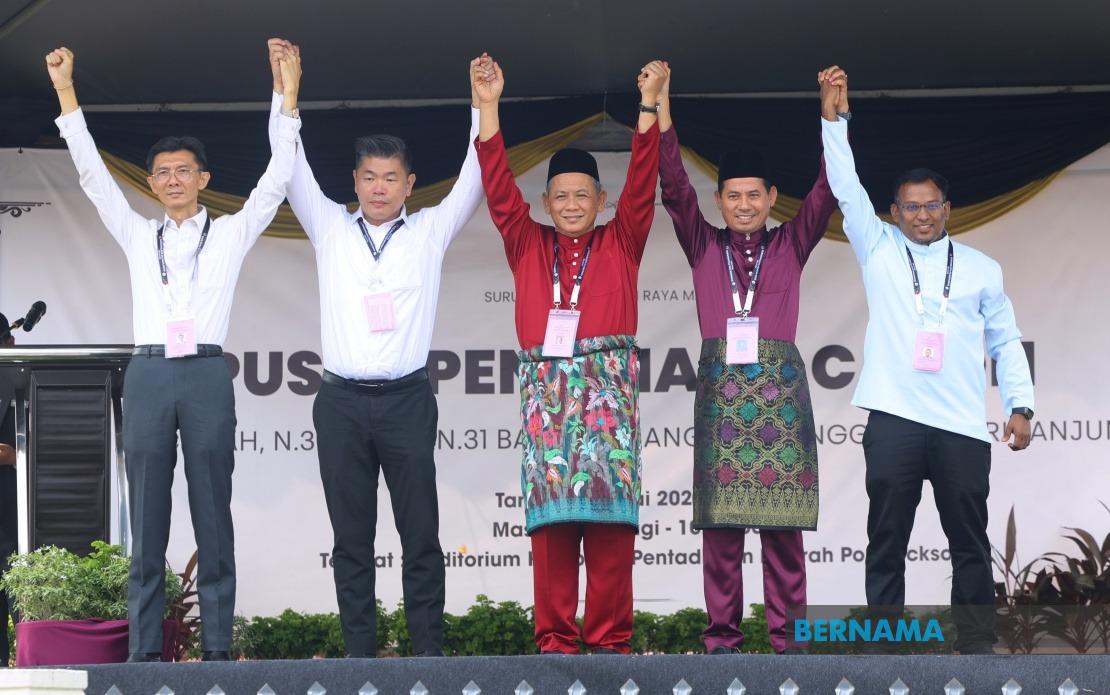
Negeri Sembilan Menteri Besar Datuk Seri Aminuddin Harun has unveiled an ambitious infrastructure agenda for the Linggi state constituency, announcing plans to establish both a port development and an industrial zone if voters grant Pakatan Harapan the mandate in the 16th state election. Speaking after nomination proceedings at the District Administration Complex Auditorium in Port Dickson on July 18, Aminuddin framed these projects as cornerstones of a comprehensive economic strategy designed to unlock growth potential and improve living standards for constituents currently underserved by major industrial and logistical infrastructure.
The Negeri Sembilan PH chairman positioned the twin initiatives within a wider vision of infrastructure modernisation and economic diversification for the constituency. Port development, in particular, represents a significant opportunity for the region, given Linggi's coastal geography and proximity to important maritime trade corridors. An industrial park would complement such port infrastructure, creating clusters of manufacturing and value-added economic activity that could employ thousands and generate sustained revenue for local authorities. Aminuddin's framing suggests PH views these projects as catalysts for transforming Linggi from a peripheral constituency into an economic engine for the state.
The announcement carries strategic weight precisely because Aminuddin is mounting a challenge in what remains fundamentally a Barisan Nasional bastion. Linggi has historically tilted towards the coalition, and the incumbent, Datuk Mohd Faizal Ramli, represents a well-entrenched political machine. By leading with concrete development proposals rather than abstract campaign rhetoric, Aminuddin appears intent on shifting electoral conversation toward bread-and-butter issues that might resonate with constituents frustrated by perceived neglect under previous administrations. The approach mirrors broader PH strategy in the peninsula of offering tangible infrastructure commitments to swing voters in traditionally opposition-held or marginal seats.
Aminuddin acknowledged the formidable challenge before him, describing Linggi plainly as difficult terrain for opposition politics. Yet he projected confidence that PH's organisational capacity and grassroots machinery would sustain momentum throughout the two-week campaign period. His language suggested both humility and determination—thanking the party for the nomination and personal responsibility for having championed the port and industrial park proposals internally before their formal endorsement by party leadership. This candour about the uphill battle may itself serve a tactical purpose, lowering expectations whilst positioning any gains as a moral victory.
The Linggi contest has evolved into a three-way competition, with Datuk Zamri Md Said of Bersatu fielding a candidate alongside Aminuddin and the incumbent Mohd Faizal. The presence of a Bersatu contender complicates the traditional binary of BN versus PH, potentially fragmenting the anti-establishment vote if Bersatu fails to coordinate with Pakatan Harapan. Conversely, it may also split the conservative vote if Bersatu appeals to dissident BN voters dissatisfied with Mohd Faizal's representation. Such fragmentation could theoretically improve Aminuddin's chances, though predicting how Bersatu's entry alters seat dynamics remains speculative without polling data.
Mohd Faizal's response—urging campaign discipline and cautioning against excessive provocation, slander, or unfounded accusations—signals that BN recognises vulnerability in a seat long considered secure. His appeal for a clean campaign may reflect concern that mud-slinging could backfire with moderate voters or invite counter-attacks that undermine BN's broader state narrative. The tone suggests internal BN confidence balanced against awareness that complacency in any constituency risks embarrassment, particularly if opposition momentum translates into local gains elsewhere in Negeri Sembilan.
For Malaysian voters and political observers, the Linggi contest exemplifies broader themes reshaping state-level politics across the peninsula. Infrastructure promises have become central to electoral competition, as constituencies increasingly demand evidence of tangible investment and economic opportunity rather than relying on historical party loyalty or communal networks alone. The port and industrial park pledges, if credible and deliverable, could influence voter calculations—particularly among younger, economically aspirational constituents seeking employment and income growth opportunities that traditional politics has failed to guarantee.
The port proposal warrants particular scrutiny from a developmental perspective. Negeri Sembilan lacks major maritime infrastructure, leaving coastal areas undersaturated relative to neighbouring Selangor and Melaka. A well-conceived port at Linggi could genuinely diversify the state economy and reduce reliance on Selangor as a transhipment hub. However, such projects require substantial capital investment, complex federal-state coordination, and long-term commitment beyond electoral cycles. Whether a PH state government could realistically finance and execute such infrastructure, or whether the promise functions primarily as campaign rhetoric, remains an open question that voters might reasonably explore during campaign discourse.
The August 1 polling date for the 16th Negeri Sembilan state election falls during a broader period of political flux in Malaysia, with several states rotating into electoral cycles and the federal coalition structure remaining fluid following recent national developments. Results in Negeri Sembilan will be scrutinised nationally as a bellwether of voter sentiment regarding opposition performance and BN resilience in its traditional heartlands. Should PH unexpectedly gain ground or capture seats like Linggi, such gains would signal erosion of coalition strength in central Peninsular Malaysia. Conversely, BN retention of strongholds would reassure the coalition's leadership that structural advantages remain intact despite recent electoral volatility.
Aminuddin's campaign messaging ultimately reflects a calculated gamble—staking PH's case on economic development promises rather than anti-BN sentiment alone. Whether voters in this BN bastion prove receptive to opposition infrastructure pitches, or whether tribal affinity to the incumbent sustains Mohd Faizal, will determine not only Linggi's representation but potentially influence how both coalitions calibrate their messaging across remaining state contests and ahead of the anticipated general election.

