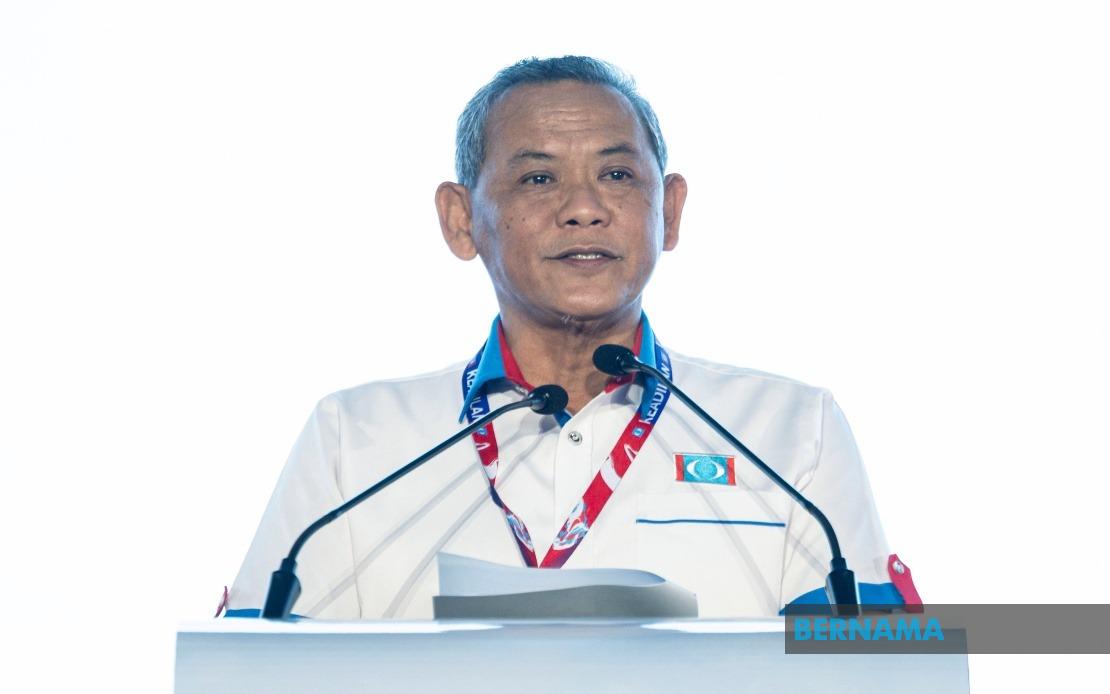
Datuk Seri Aminuddin Harun, the former Menteri Besar of Negeri Sembilan, has signalled his willingness to step aside as chairman of the state's Parti Keadilan Rakyat (PKR) leadership structure in the wake of a catastrophic electoral performance. Speaking during the party's national congress at the Melaka International Trade Centre, Aminuddin acknowledged mounting pressure from six PKR branch leaders demanding accountability for the party's collapse at the polls and indicated he would defer to the party hierarchy on whether his departure should proceed.
The context for Aminuddin's concession is the August 1 Negeri Sembilan state election, in which PKR experienced a dramatic loss of ground. The party contested 15 assembly seats but managed to retain only two, a result that represents a significant reversal for the party in a state where it had previously held greater influence. This outcome has triggered internal reckonings across PKR's leadership, with grassroots figures openly questioning whether those at the helm during the campaign should bear the consequences. For Aminuddin, who carried the additional weight of contesting the Linggi state seat personally, the pressure intensified when he suffered a personal defeat.
In the Linggi contest, Aminuddin finished second in a three-way race, garnering 6,163 votes against Barisan Nasional incumbent Datuk Mohd Faizal Ramli's 9,139 and Bersatu's Datuk Zamri Md Said's 391. The margin of his loss—2,976 votes—underscores not merely a close contest but a failure to mobilise sufficient support despite his position and profile. For a senior party figure to lose his own seat while presiding over such a weak collective showing creates an untenable position politically, and Aminuddin's acknowledgement of this reality reflects both political maturity and pragmatic recognition of his weakened standing within party structures.
What distinguishes Aminuddin's response from a mere resignation statement is his framing of accountability as a matter of principle. Rather than deflecting blame or citing external factors, he explicitly accepted responsibility and rejected what he called hiding behind excuses. This rhetoric serves multiple purposes within PKR's internal politics: it distinguishes him from figures who might seek to minimize their role, it satisfies rank-and-file demands for acknowledgement of failure, and it positions his potential departure as a gesture of party commitment rather than a forced removal. Such positioning matters considerably in Malaysian party politics, where how one leaves a position shapes future opportunities and standing.
However, Aminuddin qualified his acceptance by deferring the final decision to the party's central leadership. He stated that the position does not belong to him personally but represents a trust held by the party, and that the party apparatus will determine what action is warranted. This formulation allows PKR's national leadership—currently navigating complex coalition dynamics with Amanah and Democratic Action Party within the broader framework of the Unity Government—to manage the situation according to broader strategic considerations. A formal removal or resignation choreographed at the party centre carries different implications than a unilateral step-down, particularly regarding signal-sending to other state-level leaders.
The broader context of PKR's Negeri Sembilan collapse involves factional competition within the state party apparatus and the broader challenge facing Pakatan Harapan components in holding ground against Barisan Nasional resurgence and Bersatu's competitive positioning. Negeri Sembilan has emerged as contested terrain where Bersatu has made inroads, and the scale of PKR's loss suggests either organizational weakness, message failure, or demographic shifts working against the party. For readers across Southeast Asia observing Malaysian politics, the incident illustrates how electoral setbacks in federal systems can trigger leadership reshuffles that reverberate across organizational hierarchies.
Aminuddin's emphasis that defeat should catalyse rebuilding rather than demoralization attempts to salvage narrative control around the Negeri Sembilan result. By characterizing the loss as a starting point rather than a terminus, he tries to prevent the election outcome from being weaponized by rivals within PKR or from triggering broader questioning of strategy at the national level. This rhetorical manoeuvre is particularly important because PKR, as the anchoring party in the Unity Government alliance, faces scrutiny regarding whether it can retain sufficient electoral relevance to justify its role in federal governance arrangements.
The timing of Aminuddin's statement during the PKR national congress provides a public platform for managing what could otherwise have become a drawn-out internal controversy. By addressing the matter directly to party delegates, he ensures the narrative is controlled and frames any subsequent leadership transition as part of party congress processes rather than backroom maneuvering. For PKR strategists, this public handling reduces the risk of the Negeri Sembilan issue festering and potentially affecting other state leadership positions where electoral setbacks might justify comparable demands.
For Malaysian political observers, the Aminuddin situation encapsulates the precarity facing opposition parties operating in an electoral environment where voter volatility has increased and traditional support bases have become less reliable. Even senior figures with substantial political capital find themselves vulnerable when electoral performance deteriorates sharply. The readiness to step back, while rhetorically positioned as accountability, also reflects pragmatic assessment that retaining a compromised leadership position offers fewer advantages than gracefully exiting and potentially repositioning for future opportunities. Whether Aminuddin's offer will be accepted remains uncertain, as party leaders may calculate that his removal or retention serves different strategic purposes depending on broader political calculations affecting PKR's positioning.

