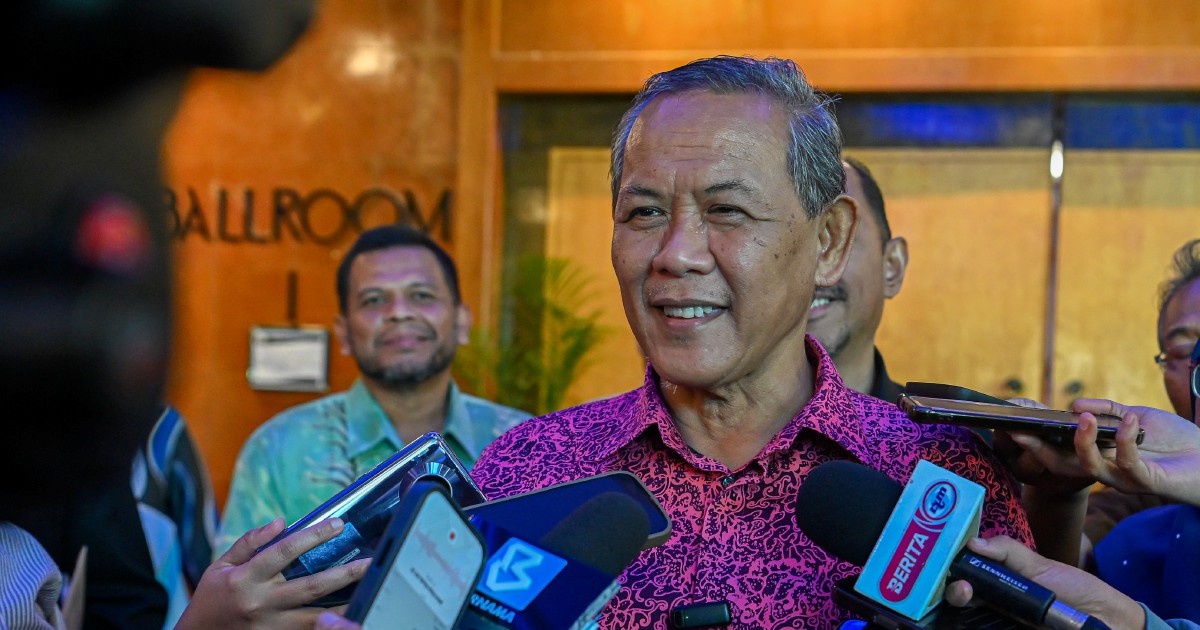
Negri Sembilan Menteri Besar Datuk Seri Aminuddin Harun has appealed to voters to weigh the government's substantive efforts in addressing Linggi's persistent flood vulnerabilities rather than allowing the issue to become fodder for opposition rhetoric in the lead-up to the 16th state election. Speaking in Seremban, Aminuddin underscored the importance of setting aside partisan calculations and focusing instead on the tangible infrastructure and policy responses his administration has implemented to protect residents in the flood-prone region.
The appeal reflects broader tensions in Malaysian state politics, where chronic infrastructure challenges frequently become flash points for electoral contestation. Linggi, situated in the heart of Negri Sembilan's economic zones, has historically suffered from seasonal inundation that disrupts commerce, damages property, and displaces families. Rather than debate the merits of competing mitigation strategies, Aminuddin's framing positions the government as the rational actor delivering results, while implying opposition parties exploit public anxiety for votes.
The Linggi flooding problem stems from a confluence of geographical and developmental factors. The river basin has undergone rapid urbanisation, which has reduced natural water absorption and increased runoff volumes during heavy rainfall. Inadequate drainage infrastructure in sprawling residential and commercial areas has compounded the challenge, as has encroachment on traditional flood plains. Previous administrations acknowledged these structural deficits but progress on comprehensive remediation has been episodic, leaving residents frustrated and sceptical of political promises.
Aminuddin's assertion that mitigation works are actively underway signals the state government's commitment to moving beyond rhetoric. Effective flood management in Negri Sembilan requires multi-layered interventions: upgrading the capacity of the Linggi River channel, installing modern retention ponds and sluice systems, improving stormwater networks, enforcing stricter land-use planning, and establishing early warning systems. Each of these components demands substantial capital investment and coordination between state agencies, local councils, and federal departments responsible for water resources.
From a regional perspective, Linggi's vulnerability reflects patterns common across Southeast Asia's rapidly urbanising corridors. Kuala Lumpur and other metropolitan centres in Malaysia face analogous pressures as development encroaches on drainage corridors and green spaces that historically absorbed floodwaters. The solutions implemented in Negri Sembilan—whether enhanced engineering, land-use discipline, or integrated water resource planning—carry lessons applicable to other states grappling with intensifying monsoon impacts and urban sprawl.
The electoral dimension cannot be ignored. State elections in Malaysia typically revolve around local grievances: potholes, hawker licensing, rubbish collection, and flooding. Parties that deliver visible improvements to these services gain credibility and voter goodwill. Conversely, persistent problems become liabilities. Aminuddin's call for voters to judge the government on outcomes rather than rhetoric is strategically sound but also places his administration under scrutiny. If mitigation efforts stall or prove insufficient when the next monsoon season arrives, the political cost will be steep.
Climate dynamics add urgency to the Linggi challenge. Meteorological data from Malaysia's meteorological department indicates that rainfall intensity during monsoons has increased in recent decades, placing older infrastructure designed for historical precipitation patterns under severe stress. Future-proofing Negri Sembilan's flood defences requires planning for scenarios more severe than those that shaped existing systems. This typically means larger channels, expanded retention capacity, and more sophisticated drainage automation—all capital-intensive undertakings.
Community engagement also underpins durable solutions. Residents in flood-prone Linggi areas possess intimate knowledge of water flow patterns, warning signs, and evacuation needs. Incorporating their perspectives into mitigation planning builds both effectiveness and local buy-in. Successful flood management programmes elsewhere in Malaysia and the region have benefited from transparent consultation processes where affected communities help shape solutions rather than simply receiving top-down interventions.
Aminuddin's emphasis on measuring government performance through implementation rather than opposition criticism aligns with growing voter expectations for competence-based governance. Particularly in states where economic development has created educated, urban constituencies, traditional party loyalty has weakened. Voters increasingly hold governments accountable for delivering services. In this context, his call to assess actual mitigation works is an invitation to voters to apply practical criteria to electoral choices.
Looking ahead, the Linggi issue will likely feature prominently in state campaign narratives. Opposition parties will highlight any flooding incidents as evidence of government failure, while Aminuddin's coalition will showcase completed projects and funds allocated. The 16th state election provides voters with a mechanism to judge which approach they find more persuasive. Underlying this electoral calculus, however, are the genuine concerns of Linggi residents who simply want reliable flood protection and the security that comes with it.
The challenge facing Negri Sembilan is to translate Aminuddin's appeal into demonstrable progress. Infrastructure projects require time, funding certainty, and technical expertise. Even well-intentioned administrations sometimes face delays, cost overruns, or design flaws. Maintaining public confidence demands regular updates on project status, transparent communication about timelines and budgets, and accountability when benchmarks are missed. These elements matter as much as the physical works themselves in sustaining community trust.

