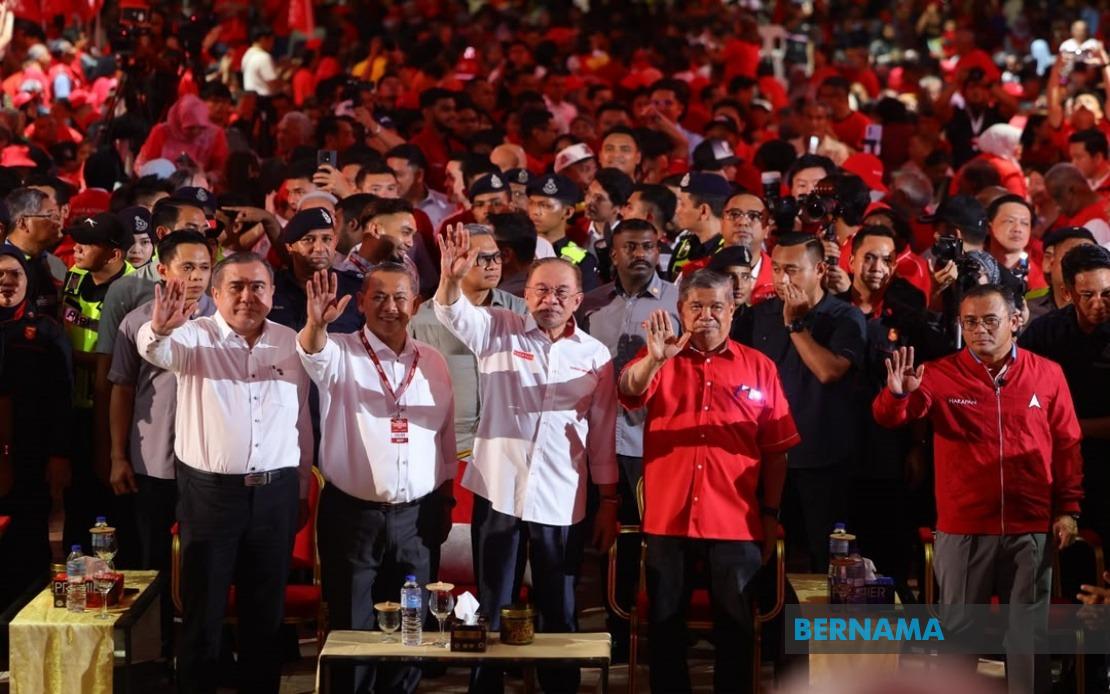
Negeri Sembilan's Pakatan Harapan leadership has launched its campaign for the upcoming state election by framing the contest as essential to preserving the political and economic progress the coalition claims to have delivered over the past six years. Datuk Seri Aminuddin Harun, the state PH chairman, made his case at a candidate announcement ceremony in Kuala Pilah, arguing that returning the coalition to power would safeguard the trajectory of development and ensure continuity in government services that voters have grown accustomed to.
The core of Aminuddin's pitch centres on tangible achievements rather than promises. He highlighted investment inflows totalling RM19.1 billion as concrete evidence that the business community views the state government as stable and competent. For a state seeking to diversify its economy and reduce reliance on traditional sectors, such investor confidence represents a significant advantage in regional competition for capital and jobs. Aminuddin further underscored that administrative consistency, enabled by a single-party government, directly translates into sustained economic momentum and the ability to plan long-term infrastructure projects without political disruption.
Welfare and social support programmes form the second pillar of the PH campaign narrative. The coalition has committed to expanding assistance in education, particularly through the provision of free tablets to students—a measure aimed at bridging the digital divide in a state with both urban and rural communities. Beyond education, Aminuddin cited a dramatic rise in zakat collection from approximately RM80 million to nearly RM200 million during his tenure, allowing the state to channel more aid to vulnerable populations. This focus on social spending signals PH's intent to demonstrate that stability yields resources for helping ordinary Malaysians navigate economic pressures.
However, the Negeri Sembilan campaign unfolds against a backdrop of recent electoral disappointment. DAP secretary-general Anthony Loke, speaking at the same event alongside Amanah president Datuk Seri Mohamad Sabu and other coalition leaders, characterised this election as PH's opportunity for redemption following its loss of Johor to BN in the previous state poll. Loke's framing of Negeri Sembilan as PH's "home ground" and "second round" reveals the coalition's anxiety about momentum. The language suggests internal recognition that the Johor defeat damaged PH's image of inevitability and that recapturing ground in Negeri Sembilan is critical to reviving coalition morale heading into potential federal-level contests.
Loke's remarks about learning from the Johor campaign and rebuilding coalition unity indicate that PH leadership views procedural and messaging failures as correctable. His emphasis on ensuring all component parties function as a coordinated unit, with Aminuddin continuing as the Menteri Besar candidate and campaign "commander," signals an attempt to eliminate the factional infighting that undermined earlier efforts. For coalition members and campaign workers, Loke issued explicit guidance on conduct, reminding them to respect Negeri Sembilan's customs, royal institutions, and constitutional frameworks—a subtle acknowledgement that past DAP messaging on these sensitive matters had invited controversy and provided ammunition to opponents.
The coalition's reliance on the stability and economic performance argument, while substantive, also reflects the limits of its current political position. Unable to claim transformative change or dramatic policy departures, PH instead positions itself as a competent administrator deserving of continuity. This defensive posture contrasts with the more ambitious campaign rhetoric the coalition deployed during the 2018 federal election, when it promised systemic anti-corruption reforms and a fundamental political reboot. Six years later, having held power in Negeri Sembilan without triggering major scandals or economic collapse, the pitch has become more modest: vote for us because we have managed adequately.
For Malaysian and Southeast Asian observers, the Negeri Sembilan campaign illuminates broader regional trends in competitive authoritarianism and coalition-building. The emphasis PH places on investor confidence and economic metrics reflects growing awareness that voters increasingly evaluate governments on delivery of material benefits rather than ideological transformation. Similarly, the coalition's sensitivity to charges of disrespecting institutions or monarchy indicates the boundaries within which Malaysian politics still operates—even progressive coalitions must genuflect before constitutional symbols and federalism to maintain legitimacy.
The coordination among PH's component parties, highlighted by the prominent presence of DAP and Amanah leaders, demonstrates that despite earlier tensions over seat allocation and policy direction, the coalition retains sufficient organisational discipline for state-level contests. Yet the need for Loke to explicitly warn members against improper conduct suggests underlying anxieties about grassroots discipline and the risk that campaign intensity could provoke either overreach or intra-coalition friction.
Among Negeri Sembilan voters, the election will partly turn on whether they view the coalition's six-year track record as sufficiently impressive to warrant another mandate, or whether they believe BN can deliver superior governance or better federal-state coordination. The fact that Aminuddin specifically highlighted the importance of close cooperation with the Federal Government—where BN holds sway—reveals a potential vulnerability. If federal resources or support for Negeri Sembilan projects become limited or conditional, PH's claims about stable development could appear hollow.
The campaign also highlights the shifting role of electoral coalitions in Malaysian politics. Unlike 2018, when PH represented an insurgent force promising wholesale change, the coalition now must justify its continued stewardship in pragmatic, administrative terms. This transition from opposition movement to incumbent manager presents both opportunities and risks. Competent administration earns voter retention, but it also invites comparison with BN's longer track record of state-building and can be framed as insufficient if ordinary citizens feel their lives have not materially improved.
Ultimately, the Negeri Sembilan election will serve as an early indicator of whether PH can stabilise its electoral position after Johor and whether Malaysian voters remain persuaded by arguments centring on stability and incremental progress. The outcome will also shape perceptions of PH's viability in future federal contests and determine whether the coalition can maintain the network of state governments that provide organisational infrastructure and patronage resources essential to its long-term survival as a political force.

