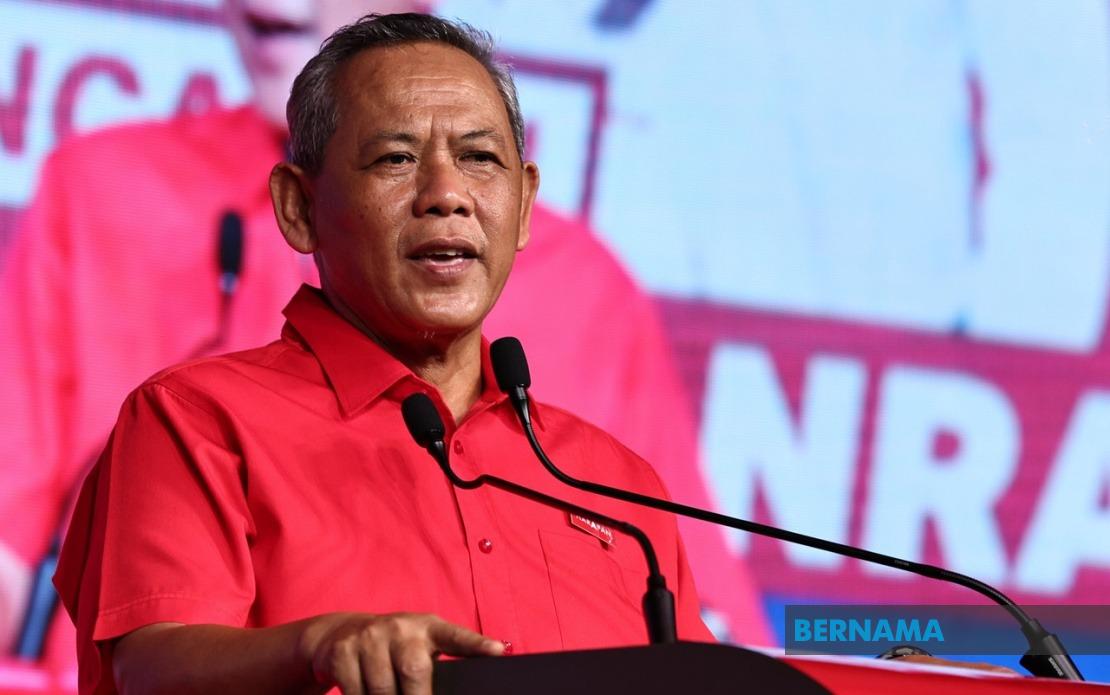
Negeri Sembilan Menteri Besar Datuk Seri Aminuddin Harun is appealing to voters in the run-up to the 16th state election to assess the government's substantive work on addressing Linggi's chronic flooding rather than permitting the issue to be weaponised for electoral advantage. Speaking after Friday prayers in Seremban on July 17, Aminuddin, who is also the Pakatan Harapan (PH) candidate for the Linggi state seat, emphasised that his administration has treated the persistent flood problem with the seriousness it warrants, moving beyond rhetoric to tangible action.
The flooding challenges facing Linggi residents have long been a flashpoint in local politics, with recent social media posts reviving claims that the area experiences regular inundation during periods of heavy rainfall in Seremban. Rather than dismissing these concerns, Aminuddin framed them as a legitimate problem that requires systematic intervention. He pointed specifically to two distinct flood mitigation projects that have received formal approval and are currently under implementation, developed through a coordinated effort between Negeri Sembilan's state government and the federal administration.
Aminuddin acknowledged the reality that infrastructure solutions of this magnitude cannot be rushed, stressing that meaningful progress on flood management typically unfolds over extended timescales. Both projects are advancing through their implementation phases, he said, with the expectation that once fully realised, they will meaningfully diminish the flooding incidents that have disrupted life for Linggi residents over many years. The menteri besar's comments suggest an administration conscious of the long runway required for capital projects, particularly those involving water management and drainage systems.
The emphasis on a deliberate, planning-driven methodology reflects a broader philosophical stance that distinguishes between what Aminuddin characterised as populist appeals and genuine problem-solving. He drew a sharp distinction between political actors who exploit grievances to mobilise sentiment and governments that invest in infrastructure to address underlying causes. In his view, the PH-led state administration has chosen the latter path, investing financial and administrative resources in solutions that take time but deliver lasting results.
Aminuddin positioned the PH's electoral strategy around the party's established governance record and the infrastructure development initiatives currently underway across Negeri Sembilan. Rather than engaging in the tactical manoeuvres he suggests opposition figures employ, the menteri besar is banking on voters' capacity to evaluate the government's tangible contributions to state development and service delivery. This reflects a confidence, or perhaps a calculation, that incumbent parties performing adequately on infrastructure and administration can withstand opposition pressure built on selective issue exploitation.
The political context matters considerably here. With nomination day set for July 18 and polling scheduled for August 1, campaigns are entering their final, most intense phase. Flooding narratives carry particular resonance in Malaysian electoral politics because they directly affect quality of life and public safety, making them powerful mobilisation tools. Opposition parties have presumably seized on Linggi's drainage problems to highlight what they may frame as governance failures or neglect by the state administration.
For Malaysian voters and regional observers, Aminuddin's intervention illustrates a key tension in contemporary Southeast Asian politics: the contest between infrastructure-focused governance narratives and populist or emotion-driven political messaging. The menteri besar's appeal represents a wager that voters in Negeri Sembilan will prioritise demonstrable progress over opposition rhetoric. Whether this calculation proves accurate will become clearer on August 1, but it also offers insight into how ruling coalitions across the region attempt to deflect opposition attacks by anchoring campaigns in development credentials.
The broader implications for Negeri Sembilan's political trajectory are worth monitoring. Negeri Sembilan has historically been a competitive state where electoral margins can shift sharply, and infrastructure delivery—or the perception thereof—frequently influences outcomes. If the flood mitigation projects gain visible traction before election day, they could substantially reinforce Aminuddin's credibility claims. Conversely, if residents continue experiencing severe flooding incidents during the campaign period, opposition arguments about government ineffectiveness would gain potency.
Aminuddin's framing also touches on governance philosophy that resonates differently across Malaysia's diverse electorate. Urban, development-oriented voters may appreciate an emphasis on infrastructure planning and implementation timelines. Rural and suburban residents most affected by flooding may be more impatient with timelines, particularly if they have endured repeated disruptions. This suggests that the government's communication strategy going forward—explaining project progress, timelines, and expected outcomes in granular detail—will prove crucial to sustaining voter confidence.
The Election Commission has structured the campaign period tightly, with early voting on July 28 providing an important window where voters' minds are focused on the race. Both PH and opposition parties will be highlighting their respective visions for Negeri Sembilan's development over these final weeks. For PH, the emphasis on flood mitigation projects represents an effort to demonstrate that the coalition's governance approach is methodical, evidence-based, and oriented toward solving problems systematically rather than exploiting them for political gain.
Looking forward, the outcomes in Linggi and across Negeri Sembilan's 36 state seats will provide a significant barometer of how Malaysian voters are currently weighing incumbent performance against opposition alternatives. The flood issue, while specific to Linggi, encapsulates broader questions about governance effectiveness and the relative appeal of development-focused versus protest-oriented political messaging in Malaysia's current electoral environment.

