Pakatan Harapan's strategy for the Negeri Sembilan state election centres squarely on the political capital and governance credentials of Menteri Besar Datuk Seri Aminuddin Harun, with the coalition banking on voter recognition of his tenure marked by the absence of major administrative scandals or controversies. The coalition views Aminuddin's nearly two decades of leadership in the state as sufficiently compelling to overcome any electoral headwinds and maintain its control of the state assembly following strong early campaign feedback that suggests grassroots support remains robust across constituencies.
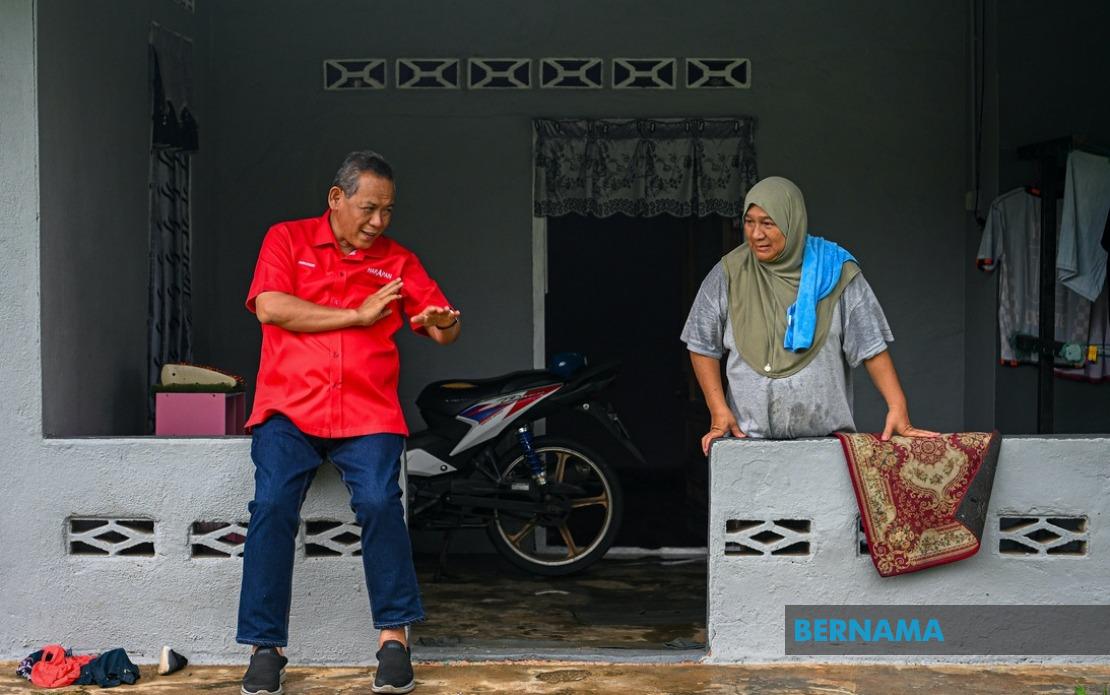
Datak Seri Amirudin Shari, who serves as both PH's election director and Selangor Menteri Besar, conveyed substantial optimism about the coalition's prospects during the opening phase of campaigning. His assessment reflected encounters with voters across Negeri Sembilan that indicated widespread satisfaction with the incumbent administration's stewardship, a factor he characterised as fundamental to translating positive sentiment into electoral gains when polling day arrives on August 1. The PKR vice-president emphasised that the consistency of Aminuddin's leadership philosophy—centred on clean governance and public service—had proven a compelling message during direct engagement with communities, particularly in smaller gatherings and through established party networks.
Crucially, Amirudin attributed much of PH's confidence not merely to Aminuddin's personal standing but to the coalition's broader institutional strength. The party's grassroots machinery, he argued, remained well-organised and effective at translating policy achievements into persuasive messaging at the community level. This organisational advantage, combined with the absence of notable governance failures that might provide opposition parties with ammunition, positioned PH to defend its existing parliamentary seats while potentially expanding its representation through gains in marginal constituencies.
The leadership of Prime Minister Datuk Seri Anwar Ibrahim at the federal level emerged as a secondary but significant advantage in PH's campaign calculus. Amirudin specifically referenced the electoral boost that Anwar's popularity and the federal government's perceived policy progress had delivered to PH candidates during the 2023 Johor state election, suggesting that similar dynamics could benefit Negeri Sembilan contestants. This vertical integration of campaign messaging—linking state-level governance achievements to federal-level policy delivery—reflects PH's understanding that voters increasingly evaluate state administrations within the broader context of national performance and stability.
The electoral backdrop against which this contest unfolds reveals a closely divided state. In the 2023 election, PH secured a commanding plurality with 17 seats, but Barisan Nasional's 14 seats and Perikatan Nasional's 5 seats collectively represented formidable opposition. The margins in several constituencies remain sufficiently narrow that shifts in voter sentiment or mobilisation levels could reshape the state assembly's composition. Nearly 890,000 registered voters will participate in the election, including substantial cohorts of military and police personnel voting early, adding layers of complexity to traditional voter analysis and forecasting.
Amirudin's characterisation of the campaign's trajectory as producing "very encouraging" responses warrants careful interpretation for Malaysian political observers. The distinction he drew between responses in large public gatherings—which may be difficult to interpret—and feedback from direct grassroots engagement suggested a differentiated strategy for assessing electoral mood. This methodological caution reflects the lessons learned across multiple recent state elections, where public enthusiasm does not always translate proportionally into voting patterns, particularly when voters face competing pressures or when opposition campaigns successfully mobilise their core supporters.
The coalition's forthcoming election manifesto, Amirudin indicated, would synthesise ongoing development initiatives with fresh policy proposals designed to appeal to Negeri Sembilan's economic aspirations and social priorities. This dual approach—emphasising continuity of successful programmes while offering new visions of progress—represents a calculated effort to satisfy both voters content with the status quo and those seeking additional momentum in state development. For a state that has historically occupied a middle position in Malaysia's economic hierarchy, messaging that credibly promises both stability and advancement carries particular weight.
The timing of the election, following the state assembly's dissolution on June 5, creates a compressed campaign period that advantages the incumbent administration's ability to mobilise existing constituencies and party structures. Early voting on July 28, encompassing military personnel and their spouses along with police officers, introduces an element that could disproportionately favour whichever coalition has cultivated stronger relationships within these institutional constituencies. PH's historical performance among uniformed services has varied regionally, making this bloc a potential source of surprise gains or losses.
Aminuddin Harun's dual role as both menteri besar and Member of Parliament for Port Dickson has enabled him to position himself as a bridge between state and federal governance levels, a positioning that Amirudin emphasised as a strategic asset. This cross-institutional credibility, built through consistent delivery on constituency services and policy commitments, establishes him as a figure whose political fortunes rest not solely on state-level performance but on demonstrated effectiveness in national legislative forums. Such multi-dimensional political presence can prove decisive in state elections where voters assess candidates through varied lenses.
For Malaysian political observers, the Negeri Sembilan contest offers instructive insights into how established incumbents navigate elections in an increasingly competitive landscape. PH's reliance on administrative competence and absence of scandal as primary campaign pillars reflects acknowledgment that Malaysian voters have grown more demanding regarding governance standards. The coalition's confidence in Aminuddin's record suggests assessment that competent administration, while perhaps less electorally dramatic than transformative reform, remains a powerful electoral argument when opposition alternatives lack comparable credentials.
The broader implications of this election extend beyond Negeri Sembilan's state assembly composition. A strong PH performance would validate the coalition's federal governance approach and reinforce Anwar's authority within the broader political establishment. Conversely, significant opposition gains could signal emerging dissatisfaction with federal policies or rising momentum for alternative coalitions. The state's position as neither a PH stronghold nor an opposition bastion makes it a genuinely competitive electoral battleground where marginal shifts in voter preference can produce substantial institutional consequences.

