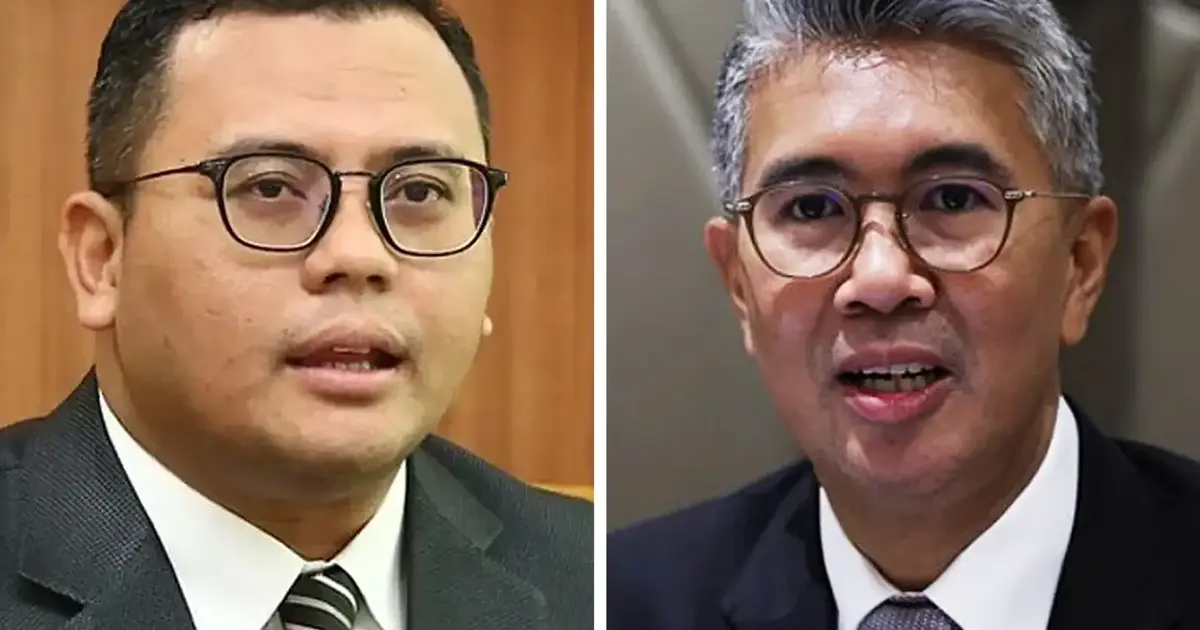
PKR president Anwar Ibrahim has entrusted Selangor Menteri Besar Mohamed Amirudin Shari with leading the party's election strategy, a significant structural decision reflecting the coalition's preparations for upcoming electoral contests. Tengku Zafrul Aziz has been assigned the critical coordination role to ensure operational efficiency across party machinery. Anwar justified the arrangement by emphasising that this leadership arrangement would enable PKR to consolidate and deploy its organisational strength in a disciplined, systematic manner rather than through ad-hoc or fragmented approaches.
The appointment represents a notable elevation of Amirudin's profile within the party hierarchy beyond his existing responsibilities as Selangor's chief minister. As the nation's largest state by economic output and population, Selangor serves as a crucial powerbase for PKR, and Amirudin's administrative experience managing the state apparatus positions him well to translate ground-level insights into broader national election strategy. His appointment signals that PKR intends to leverage successful governance models from Selangor—where the party has maintained dominance through multiple election cycles—as templates for broader party revitalisation efforts.
Tengku Zafrul's coordination mandate carries particular importance given PKR's ongoing coalition dynamics and the complex interplay required between the party and its Pakatan Harapan and Unity Government partners. As a figure with banking and corporate governance background, Tengku Zafrul brings a different skill set to party operations, potentially introducing more professionalised coordination mechanisms. His role bridges strategic direction with tactical implementation, a critical function in a party apparatus often described as having overlapping power centres and occasionally diffuse decision-making processes.
Anwar's emphasis on organised mobilisation reflects deeper concerns within PKR about electoral readiness and internal cohesion. The party has faced internal strains in recent years, including defections, factional tensions, and questions about succession planning and resource allocation. By formalising clear roles for election strategy and coordination, Anwar appears to be signalling that leadership structures will be clarified and accountability established—a message aimed both at party members seeking clear direction and at critics questioning whether PKR maintains sufficient organisational discipline.
The timing of this announcement carries significance within Malaysia's current political landscape. With the federal government stabilised through the Unity Government arrangement, opposition coalitions reconsidering their strategies, and state-level elections potentially looming across several states, PKR must position itself as both a reliable governing partner and an effective electoral machine. The leadership restructuring suggests Anwar recognises that maintaining these dual roles requires deliberate institutional design rather than personality-driven or improvised approaches.
For Malaysian voters and political observers, this restructuring offers clues about PKR's confidence levels and strategic priorities heading into subsequent electoral contests. The reliance on administrative experience (through Amirudin's appointment) suggests emphasis on proven governance credentials, while Tengku Zafrul's background implies attention to resource management and operational efficiency. Together, these appointments project an image of professionalised party machinery rather than a movement dependent on charismatic leadership alone.
Within Selangor's political context, the arrangement creates interesting dynamics. While Amirudin maintains his position as menteri besar, his enlarged national role means his attention will increasingly divide between state-level governance and party-wide electoral coordination. This could affect the pace of state-level initiatives or require deputising additional state officials to manage administrative continuity. Other PKR figures in Selangor and elsewhere may interpret this as indicating that electoral preparation now ranks as a top organisational priority, potentially reshaping internal party resource allocation.
The announcement also reflects calculations about generational leadership within PKR. Amirudin, representing a generation of leaders who rose through party structures during the Reformasi era and later, inherits responsibilities from older figures while having demonstrated administrative competence in Malaysia's most economically important state. His appointment sends signals about the party's trajectory—balancing continuity with Anwar's leadership while creating space for capable second-tier leaders to assume broader responsibilities.
For the broader Pakatan Harapan alliance and the Unity Government arrangement, this PKR restructuring matters considerably. Electoral performance by PKR directly affects coalition composition in any future parliament, influencing both the stability of federal arrangements and state-level political configurations. When PKR strengthens its organisational capacity, this theoretically enhances the entire coalition's electoral prospects, though it also potentially increases internal coalition tensions if resource competition or seat negotiations become contested between PKR and its Harapan partners.
The structural innovation—separating strategic direction (Amirudin's role) from coordination mechanics (Tengku Zafrul's function)—represents an attempt to address a persistent challenge in Malaysian political parties: the concentration of power and decision-making in party presidents or central figures without corresponding institutional capacity. By distributing responsibilities more clearly across designated roles, PKR signals intent to build more resilient organisational foundations that can survive leadership transitions and adapt to changing political circumstances without losing operational momentum.
Moving forward, the effectiveness of this arrangement will become evident through PKR's electoral performance in upcoming contests and through observable improvements in internal party coordination and communications. Observers will watch whether this restructuring produces tangible improvements in candidate selection, campaign resource distribution, grassroots mobilisation efficiency, and inter-state coordination. The arrangement's success will substantially influence whether similar reorganisations occur within other Malaysian political parties seeking to modernise their operational structures.

