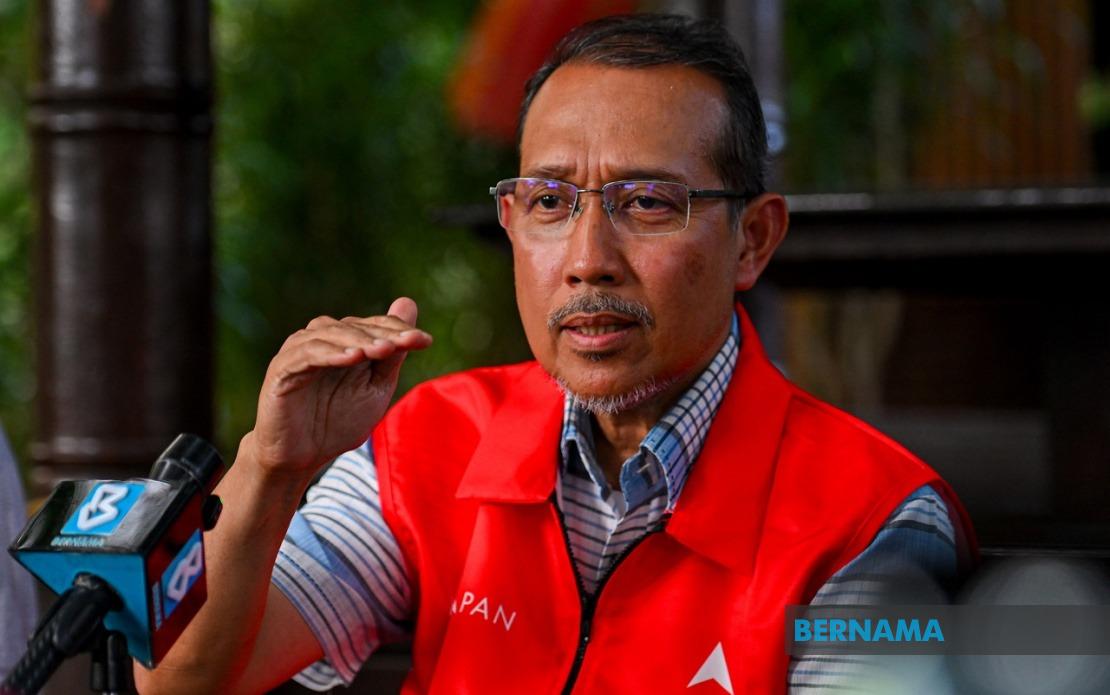
Pakatan Harapan candidate Datuk Muhammad Nazri Kassim is positioning himself as the champion of Ampangan's economic potential, pledging to establish the central Seremban constituency as a cleaner, safer and more economically vibrant township should voters entrust him with the mandate in the 16th Negeri Sembilan state election. His vision centres on practical improvements to daily life, combining essential infrastructure maintenance with strategic commercial development to unlock opportunities for residents and business operators alike.
The cornerstone of Muhammad Nazri's platform rests on addressing the constituency's historical vulnerability to severe flooding. Infrastructure maintenance has emerged as his primary concern, with emphasis on proper upkeep of roads, drainage systems, ditches and river management. The devastating floods of 2021 served as a watershed moment, demonstrating to residents the critical importance of proactive environmental management and collaborative approaches to water infrastructure across the state government's jurisdiction.
According to Muhammad Nazri, the Negeri Sembilan administration's river management initiative has yielded tangible results in the intervening years. The collaborative framework established by the state government has proved sufficiently effective that the region has avoided the catastrophic flooding incidents that previously plagued residents. This track record, spanning three to four years without severe inundation, provides Muhammad Nazri with concrete evidence to present to voters about the sustainability of current environmental management strategies.
Beyond mere flood prevention, Muhammad Nazri recognises that rehabilitated watercourses present untapped potential for recreational development. Well-maintained rivers can accommodate jogging paths, cycling routes, and other sports infrastructure that enhances quality of life whilst simultaneously generating foot traffic and economic activity. This dual-purpose approach transforms what might otherwise be perceived as purely technical infrastructure work into an asset capable of driving broader community wellbeing and commercial opportunity.
The candidate's economic development strategy focuses on leveraging Ampangan's inherent geographical advantages. Positioned within Seremban's commercial core, the constituency possesses natural potential for revitalisation through targeted upgrading of areas such as Benteng. By enhancing the visual appeal of public spaces through improved landscaping and cleanliness initiatives, Muhammad Nazri argues that Ampangan can attract greater visitor numbers, thereby creating income-generating opportunities for street vendors, small retailers, and service providers who constitute much of the local economic ecosystem.
Muhammad Nazri's vision connects environmental quality directly with economic viability. In his formulation, a township characterised by cleanliness, attractive public spaces, well-functioning drainage, and carefully maintained natural features inevitably attracts both residents and visitors. This influx generates demand for goods and services, creating employment prospects and enabling entrepreneurial activity among grassroots business operators. The logic appeals to both environmental consciousness and economic self-interest, bridging concerns about quality of life with tangible financial benefit.
His campaign methodology emphasises direct constituent engagement rather than mass rallies or mediated communication channels. House-to-house visits enable Muhammad Nazri to hear directly from voters about their lived experiences and specific concerns. This ground-level approach ostensibly allows for more granular understanding of local issues, moving beyond generalised political messaging toward contextually responsive solutions. By positioning himself as attentive to resident voices, Muhammad Nazri constructs a narrative of responsive leadership grounded in authentic community listening.
The Ampangan contest represents a three-way competition in a constituency with 21,336 registered voters. Beyond Muhammad Nazri's Pakatan Harapan candidacy, voters will choose between Datuk Dr Mohamad Rafie Malek representing the Perikatan Nasional coalition and Noor'azah Harun fielded by Parti Pribumi Bersatu Malaysia. The field reflects broader fractures within Malaysian politics, with multiple coalitions competing for control of state-level governance in Negeri Sembilan.
The Ampangan seat forms part of the larger Seremban parliamentary constituency, placing it within Malaysia's political heartland. As such, outcomes here will contribute to determining the overall composition of the Negeri Sembilan state assembly and the trajectory of state governance. For Malaysian observers tracking coalition dynamics at state level, Ampangan represents a microcosm of broader electoral competition patterns emerging across the peninsula.
Election Commission scheduling has established August 1 as polling day for the Negeri Sembilan state election, with early voting commencing July 28. This timeline provides candidates several weeks to mobilise grassroots support and refine their messaging around local issues. Muhammad Nazri's emphasis on infrastructure, flood prevention and economic development responds to tangible concerns about environmental management and livelihood opportunities that resonate particularly in semi-urban constituencies like Ampangan.
The intersection of environmental governance and economic opportunity that Muhammad Nazri emphasises reflects broader conversations across Southeast Asia about how local administrations can balance quality-of-life improvements with inclusive economic development. In the Malaysian context, state-level elections provide voters with opportunities to shape local policy directions on precisely these issues—drainage maintenance, landscape quality, commercial vibrancy—that directly affect daily experience even as national politics often dominates media attention.

