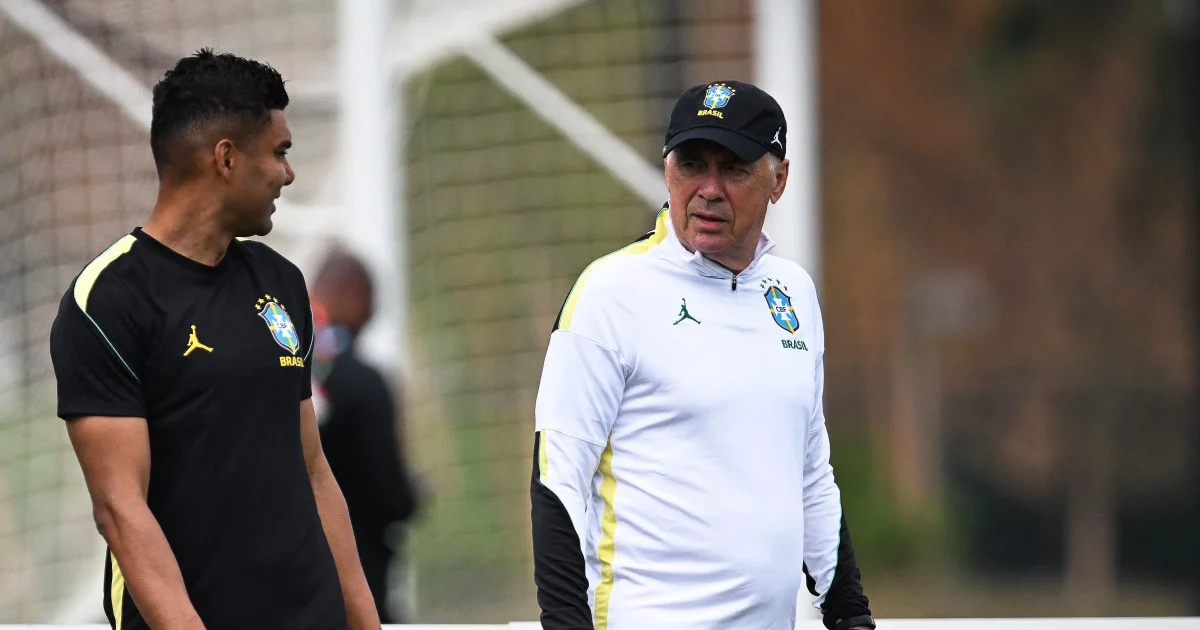
Carlo Ancelotti cut a composed figure in the aftermath of Brazil's stuttering World Cup opener, choosing not to amplify concerns despite his team's failure to break through against Morocco in their Group C fixture. Rather than retreating into defensive pessimism, the veteran coach adopted a measured approach that reflects both his considerable experience and confidence in the squad's capacity for adjustment. The Italian tactician's demeanour suggested he viewed the 1-1 draw as a learning opportunity rather than a harbinger of deeper problems, setting a constructive tone for Brazil's preparation ahead of their encounter with Haiti.
Brazil's opening performance exposed tactical vulnerabilities that Ancelotti was eager to rectify in the coming days. The team failed to impose their customary dominance in midfield and struggled to translate possession into clear-cut opportunities, concerns that demanded systematic correction rather than wholesale changes. Morocco's compact defensive setup and disciplined approach had exposed gaps in Brazil's attacking rhythm, and the coaching staff moved quickly to dissect these patterns. The draw represented a departure from the script many observers had written for a team widely regarded as among the tournament's strongest, yet it also provided a valuable benchmark against which improvements could be measured.
The Haiti fixture presented Brazil with an opportunity to build momentum and confidence in a group that includes stronger opposition later in the tournament. Unlike Morocco, Haiti would likely adopt a more open approach, offering Brazil greater space in which to operate and a chance to showcase their superior technical quality. This asymmetry in playing styles meant the upcoming match could serve as a reset button of sorts, allowing the team to rediscover their rhythm without the tactical constraints they had encountered in their opening game.
Ancelotti's refusal to panic reflects a philosophical approach that has defined his career across multiple continental leagues. His track record suggests an understanding that tournament football requires patience and incremental improvement rather than dramatic overhauls following single matches. The coach's previous successes at elite European clubs had taught him that early setbacks, whilst disappointing, rarely determine final outcomes. His calm exterior also served an important psychological function, reassuring players and supporters that the team's World Cup ambitions remained entirely intact despite the unexpected opening result.
Brazil's squad contains sufficient individual quality to navigate most defensive systems, and the technical attributes of their attacking players remained unchanged by the Morocco encounter. The real work ahead involved translating that individual brilliance into cohesive team performance, a challenge that required tactical refinement rather than changes to personnel. Ancelotti's confidence in the playing group's ability to make these adjustments without panic or radical intervention underscored his belief in the fundamentals of his preparation.
The broader context of Brazil's World Cup campaign suggested that even strong teams frequently encounter obstacles in opening matches. Morocco's performance had demonstrated that organised, disciplined football could impose real challenges on technically superior sides, a lesson that would serve Brazil well as they progressed through the tournament. The team's response to this setback would establish important patterns of resilience and adaptation that could prove decisive in knockout stages.
Haiti, by contrast, offered a markedly different test. The Caribbean nation's attacking approach would likely leave more defensive space available, permitting Brazil's midfield to operate with greater freedom and their forwards to exploit openings created through swift transitions. This change in tactical context meant the team could expect to encounter more familiar patterns of play, allowing them to execute their preferred style without the defensive frustration that had characterised the Morocco match.
Ancelotti's measured response also acknowledged the reality that World Cup campaigns are marathons rather than sprints. A single draw in an early group match, whilst suboptimal, rarely determines a team's ultimate trajectory. Throughout football history, eventual champions have stumbled in opening fixtures, recovering through concentration, tactical adjustment, and progressive improvement. Brazil's coach clearly subscribed to this perspective, viewing the Haiti match as the beginning of a corrective process rather than a moment of crisis.
The coach's composure extended to his media communications, where he avoided both the temptation to shift blame and the trap of overreacting to a single result. This balanced stance helped manage expectations whilst motivating the squad to respond positively. Players would recognise that their coach retained confidence in their collective abilities, whilst also understanding that improvements were both necessary and achievable in the brief time available before their next fixture.
Brazil's preparation for Haiti would therefore focus on tactical refinement rather than fundamental reconstruction. Ancelotti and his backroom staff would analyse video footage, identify specific patterns to correct, and work on set-piece organisation and transition play. The team possessed the quality to dominate less resourced opposition, and proving this point would restore the confidence that had been temporarily dented by Morocco's stern defensive display. For a coach of Ancelotti's experience, such methodical problem-solving represented the appropriate response to a disappointing but hardly catastrophic opening to their World Cup campaign.

%22%2F%3E%3C%2Fpattern%3E%3C%2Fdefs%3E%3Crect%20width%3D%22100%25%22%20height%3D%22100%25%22%20fill%3D%22url(%23phy0vqg)%22%2F%3E%3Crect%20width%3D%22100%25%22%20height%3D%22100%25%22%20fill%3D%22url(%23phy0vqp)%22%2F%3E%3Ctext%20x%3D%2250%25%22%20y%3D%2250%25%22%20text-anchor%3D%22middle%22%20dominant-baseline%3D%22central%22%20fill%3D%22rgba(255%2C255%2C255%2C0.95)%22%20font-family%3D%22Georgia%2C%20'Times%20New%20Roman'%2C%20serif%22%20font-weight%3D%22700%22%20font-size%3D%22170%22%20letter-spacing%3D%22-0.02em%22%3EMalaysia%3C%2Ftext%3E%3C%2Fsvg%3E)