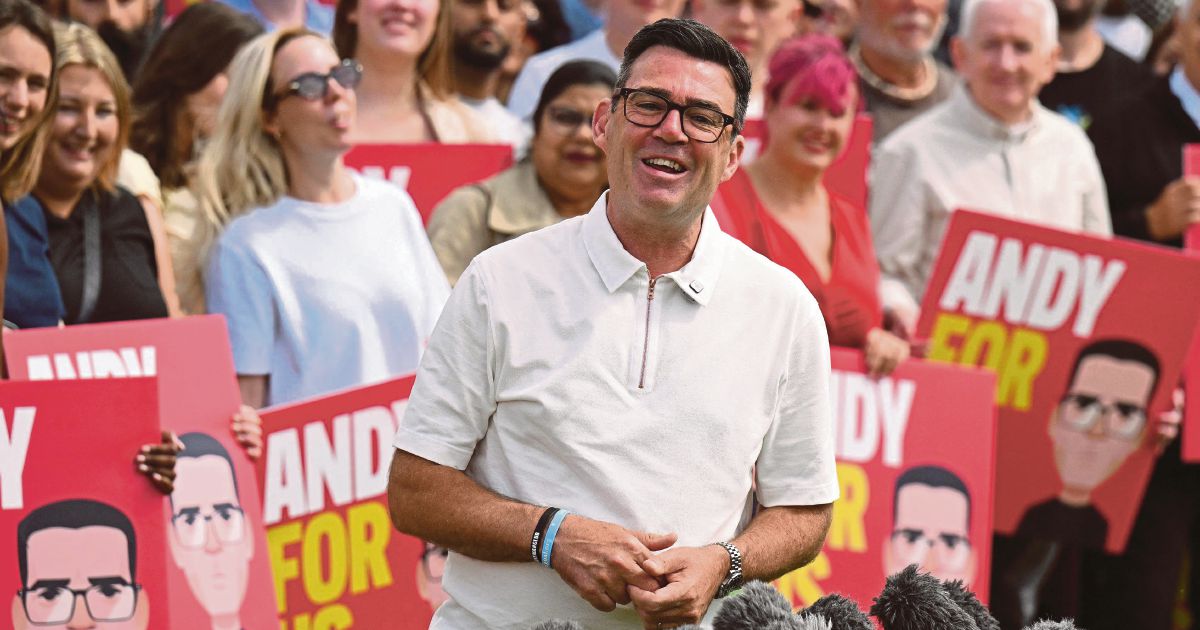
Andy Burnham assumed office as Prime Minister of the United Kingdom on Monday, marking yet another change at the helm of Westminster in what has become an era of political upheaval. His ascension represents the seventh transition of power in barely a decade, underscoring the instability that has gripped British governance since 2014. The Manchester-based politician, who earned his moniker 'King of the North' through his tenure as Mayor of Greater Manchester, brings a reputation as a champion of regional devolution and working-class concerns to a nation grappling with profound economic and social challenges.
The new premier's central campaign theme centres on what he terms "rewiring" Britain—a metaphor suggesting a comprehensive recalibration of how the nation's institutions and priorities function. Rather than pursuing incremental adjustments to existing systems, Burnham's rhetoric signals an intention to undertake fundamental structural reform across multiple policy domains. This framing reflects recognition that superficial changes have failed to restore public confidence in governance, and that voters increasingly demand substantive action on issues affecting their daily lives rather than political positioning and managerial shuffling.
Among the most pressing concerns Burnham will confront is the persistent cost-of-living crisis that has squeezed British households for years. Energy bills, food prices, and housing affordability have deteriorated dramatically, eroding purchasing power and imposing genuine hardship on millions. The crisis has proven intractable under previous administrations, partly because it stems from interconnected challenges—global energy markets, supply chain disruptions, and domestic wage stagnation—that resist simple solutions. However, the public mood suggests voters expect their government to articulate and implement a coherent strategy for alleviating these pressures, something that has been largely absent from political discourse.
Equally significant are the dysfunctions plaguing Britain's public services. The National Health Service faces waiting lists that have reached record lengths, with millions languishing for routine procedures and diagnostic appointments. Schools struggle with inadequate funding and teacher shortages. Policing capabilities have deteriorated across many communities. Transport infrastructure remains regionally unequal, particularly outside London and the South East. These service failures form the backdrop to widespread public frustration and the sense that government institutions no longer function adequately to meet basic citizen needs.
Burnham's northeastern base provides him with credibility on regional inequality, an issue that has become increasingly central to British politics. The North has felt neglected by Westminster for decades, with investment and opportunity concentrated in London and the South East. His mayoral experience in Greater Manchester gave him direct exposure to how regional disadvantage manifests in practice—lower wages, fewer job opportunities, worse health outcomes, and degraded public infrastructure. This background could allow him to champion genuinely redistributive policies rather than merely gesturing toward them while maintaining existing power structures.
For Malaysian and Southeast Asian observers, Burnham's rise carries interesting implications regarding how mature democracies handle political instability. Seven prime ministers in a decade suggests systemic dysfunction rather than normal democratic rotation. While Malaysia has experienced leadership changes, the frequency of premiership transitions in Britain reflects a parliament fractured by ideology and an electorate increasingly alienated from traditional parties. The underlying causes—economic inequality, regional grievances, identity divisions, and loss of faith in institutions—resonate across developed democracies and warrant careful study by policymakers in the region.
The personnel changes also highlight how institutional frameworks shape political outcomes. Britain's Westminster system concentrates executive power in a single office with minimal checks, yet offers parliament the ability to change leaders relatively quickly. This creates both flexibility and instability. When the public turns against a government mid-term, as has repeatedly occurred, removing the premier becomes possible without waiting for scheduled elections. However, the resulting churn creates its own problems—constant leadership transitions prevent coherent policy implementation and exhaust public patience with the political class.
Burnham's elevation may also reflect subtle shifts in how the British electorate views regional representation and class politics. His prominence as a working-class politician from outside London's traditional elite networks suggests some demand for leaders perceived as more connected to ordinary citizens' experiences. Whether his premiership can translate this perceived authenticity into actual policy improvements remains uncertain, but his appointment indicates at least a rejection of the revolving door of similar establishment figures that characterized previous transitions.
The immediate practical challenge involves formulating and executing policies that meaningfully address cost-of-living pressures while simultaneously reforming public services. These objectives require sustained investment at precisely the moment when government finances face constraints due to public debt accumulated during economic crises. Burnham will need to make difficult choices regarding taxation, spending priorities, and the pace of reform—decisions that will define whether his "rewiring" amounts to transformative change or merely another cycle of disappointed promises.
For regional players watching Britain's political turbulence, Burnham's appointment illustrates how deeply economic dysfunction and institutional sclerosis can penetrate wealthy democracies. The cost-of-living crisis afflicting Britain extends across much of Europe and beyond, suggesting shared structural problems in how modern capitalist economies function and distribute resources. Southeast Asian governments may observe both the dangers of such instability and the opportunities that crisis creates for leaders capable of articulating compelling visions for reform and restoration of basic governmental competence.

