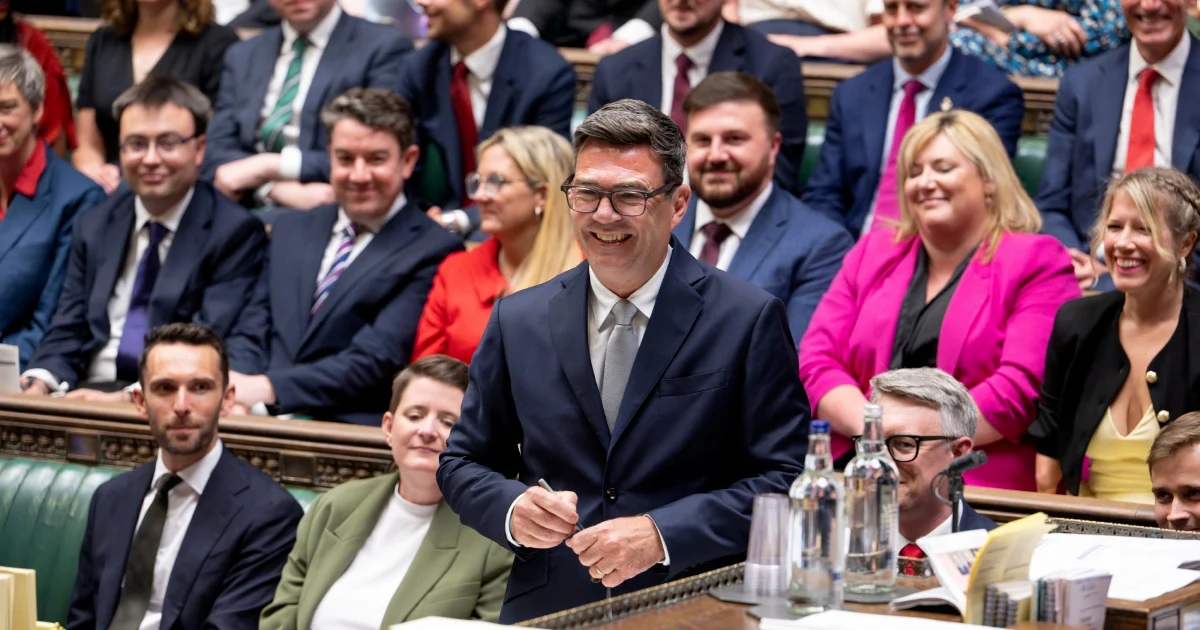
Andy Burnham's political standing received a dramatic boost as the Labour Party navigates a significant leadership transition following Keir Starmer's decision to step down. The Greater Manchester mayor entered parliament to a rousing reception from colleagues on Monday, signalling broad support within the party for his potential ascension to the top role. This moment represents a watershed in British politics, with implications extending across the United Kingdom and potentially influencing how Westminster approaches regional development strategies that Southeast Asian nations increasingly monitor as they develop their own decentralised governance models.
Burnham's journey to this position reflects a remarkable political rehabilitation. Once considered a controversial figure following high-profile controversies during his earlier parliamentary career, he has systematically rebuilt his reputation through his work as Mayor of Greater Manchester since 2017. His tenure has focused on addressing regional inequality, industrial renewal, and providing visible leadership during national crises—a positioning that resonates with voters in economically disadvantaged areas who feel abandoned by Westminster's metropolitan establishment. For Malaysian observers, his emphasis on local empowerment offers lessons in how major democracies address the centre-periphery divide that many nations in Southeast Asia grapple with.
The timing of Starmer's departure creates an opportunity that few predicted just weeks earlier. Starmer's tenure as prime minister proved turbulent, marked by internal party divisions and policy implementation challenges that eroded public confidence. His resignation clears the pathway for a candidate representing a different political direction—one more aligned with traditional Labour values and working-class concerns. Burnham's emergence as the frontrunner suggests the party is reconsidering its strategic positioning, moving away from centrist technocracy toward a leader with demonstrated grassroots credentials and regional influence.
Burnham's power base in the North derives from more than ceremonial authority. As mayor of Greater Manchester, he has cultivated relationships with local business leaders, trade unions, and community organisations across seven councils representing nearly three million people. This network provides him with operational experience managing complex stakeholder relationships—precisely the skillset required to navigate parliamentary factions and negotiate with devolved administrations in Scotland and Wales. His handling of the Manchester COVID-19 crisis in 2020, when he publicly challenged the government's regional support policies, demonstrated his willingness to fight for his constituents despite partisan pressures.
The nickname "King of the North" reflects both admiration and regional pride among northern Labour supporters who have long felt sidelined by governments focused on London and the Southeast. Burnham has weaponised this sentiment strategically, positioning himself as a voice for forgotten communities whilst simultaneously building credibility with urban professionals concerned about economic stagnation and service delivery. His speeches typically blend policy substance with emotional connection, addressing audience anxieties about job security, housing affordability, and public service quality—themes that transcend national boundaries and concern policymakers throughout Asia.
Internally, Burnham enjoys backing from multiple Labour factions. Shadow cabinet ministers respect his media competence and communication skills, whilst backbenchers appreciate his combative approach toward Conservative governance. Trade union leaders, influential in Labour's selection processes, regard him as genuinely committed to workers' rights and industrial investment. This coalition of support across the party spectrum suggests he could maintain broader unity compared to more ideologically rigid alternatives, reducing the risk of the damaging factional warfare that has periodically destabilised Labour.
However, Burnham faces significant challenges should he secure the leadership. A general election victory remains uncertain given Conservative momentum in certain regions and persistent economic headwinds. His northern powerbase, whilst substantial, does not automatically translate into southern England success where Labour must win seats to achieve overall parliamentary majorities. Critics also question whether his primarily managerial experience as a mayor provides adequate preparation for directing foreign policy, managing security agencies, and coordinating with international partners—responsibilities increasingly important for Britain's post-Brexit strategic positioning in relation to allies and competitors including nations throughout the Indo-Pacific region.
Burnham's potential leadership would reshape Labour's policy agenda significantly. His emphasis on regional investment and industrial policy suggests a stronger government role in economic direction compared to recent administrations. A Burnham-led government would likely prioritise infrastructure spending in disadvantaged areas, support for manufacturing sectors, and increased devolution of power to regional authorities. Such an approach could provide a template for other nations attempting to rebuild regional economies whilst maintaining national cohesion—particularly relevant for Southeast Asian democracies managing tensions between capital cities and provincial regions.
The parliamentary reception Burnham received signals that party members are ready to embrace his leadership candidacy. Unlike previous transitions, this succession does not appear contested by multiple heavyweight candidates of equal stature. Rivals exist, but none command comparable regional power, media profile, or perceived electoral appeal. This relative clarity may accelerate decision-making processes typically characterised by extended campaigns and factional jockeying. A swift resolution could allow Labour to project unity and forward momentum ahead of potential snap elections or policy announcements.
Burnham's rise also reflects broader shifts in how politicians accumulate power within modern parties. Direct electoral mandates from local constituencies carry increasing weight compared to Westminster connections alone. His Greater Manchester mayoralty, whilst operating within the UK's devolved governance framework, demonstrates how regional elections and local reputations can propel politicians into national prominence. This democratisation of leadership selection—moving away from exclusively parliamentary cliques—has parallels in Asian democracies where governors and local leaders increasingly challenge central party establishments for national positions.
Should Burnham assume the Labour leadership, his inaugural priorities would likely include developing comprehensive economic strategies addressing regional disparities, establishing clearer positions on international relationships, and rebuilding public confidence in government institutions. His communication style, characterised by direct engagement and accessibility, could appeal to voters fatigued by technocratic language. Early indications suggest he would maintain generally positive relationships with international allies whilst pursuing distinctive British interests more assertively than recent Labour positions have advocated.
The succession process will ultimately depend on Labour party mechanisms for selecting new leaders, involving parliamentary MPs and party membership voting. Burnham's frontrunner status provides tactical advantages, but nothing guarantees inevitable victory. Nevertheless, his parliamentary reception Monday underscored the emotional investment many Labour figures have invested in his potential candidacy. As the party navigates this transition, Burnham's trajectory from embattled MP to northern kingmaker to potential prime minister illustrates how political careers can recover from earlier setbacks through sustained local work and strategic positioning. For observers internationally, his emergence offers insights into how dominant parties manage leadership transitions and recalibrate their strategic direction in response to shifting electoral circumstances.