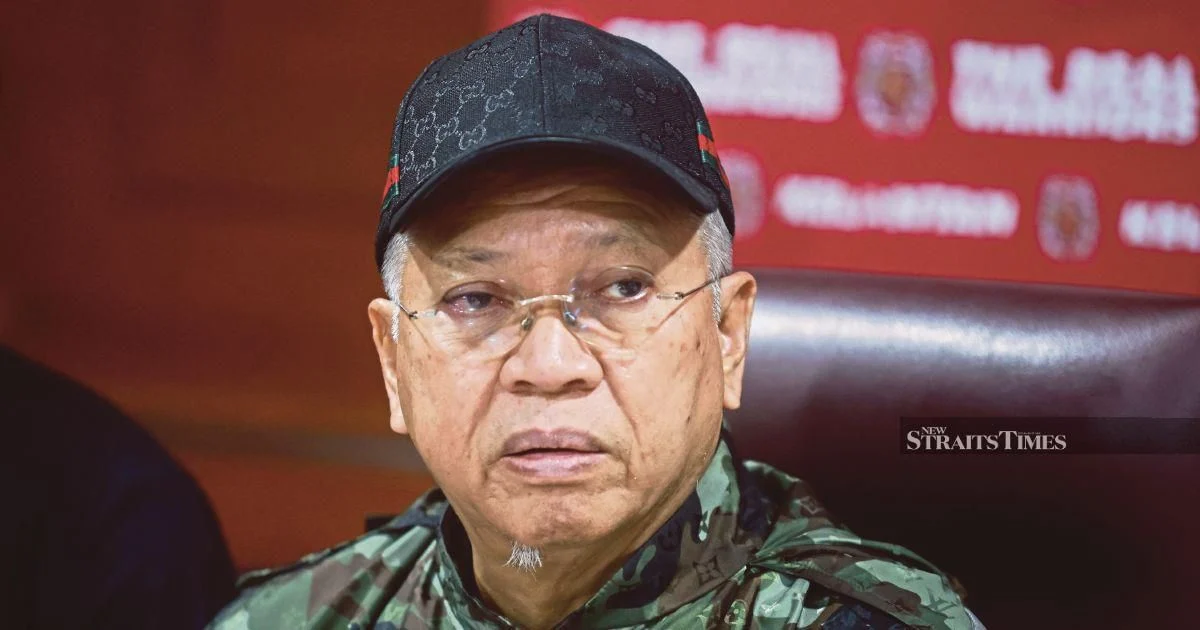
Tan Sri Annuar Musa disclosed in Kota Baru that he undertook multiple personal initiatives to mediate mounting tensions between Pas and competing factions within Bersatu, acknowledging his inability to prevent the deepening fractures jeopardizing Perikatan Nasional's cohesion. The admission reflects the escalating complexities confronting the coalition as factional disputes continue eroding its political foundation.
The Perikatan Nasional alliance has encountered mounting instability as internal disagreements within member parties threaten its operational effectiveness and electoral prospects. Pas and Bersatu, two pillars of the coalition, have experienced organizational strain that extends beyond routine political disagreement, creating parallel power structures and competing claims of legitimacy. These divisions represent more than merely personality-driven conflicts; they signal fundamental philosophical differences regarding the coalition's strategic direction and governance priorities.
Annuar's candid acknowledgment of his mediation failures underscores how deeply entrenched these disputes have become. His position within the coalition apparatus positioned him as a natural intermediary, yet even his interventions proved insufficient to narrow the widening gaps. The revelation suggests that conventional conflict-resolution mechanisms available to coalition leadership have been exhausted or rendered ineffective by the severity of underlying grievances.
Within Bersatu specifically, competing factions have articulated divergent visions for the party's future, extending beyond leadership contests into substantive policy matters and strategic partnerships. These internal divisions have created confusion regarding the party's authentic representation and decision-making authority, complicating negotiations both within Perikatan Nasional and with potential coalition partners. The faction fractures appear resistant to typical remediation attempts, suggesting structural problems requiring more fundamental organisational recalibration.
Pas faces its own internal pressures while simultaneously navigating its relationships within the broader coalition framework. The party must balance its theological constituencies with pragmatic political calculations, a tension that becomes more acute as coalition dynamics shift. The refusal or inability of Pas leadership to accommodate Bersatu faction concerns indicates either principled positions on substantive matters or calculation that compromise would undermine their own party's integrity and voter appeal.
The implications for Perikatan Nasional extend beyond symbolic unity concerns. Coalition governments require functional coordination across participating parties to implement legislative agendas and maintain parliamentary support. When internal rifts prevent basic consensus among coalition members, the entire political structure becomes vulnerable to external challenges and loses negotiating coherence when dealing with other political blocs or constituencies making demands on the government.
For Malaysian politics more broadly, Perikatan Nasional's instability raises questions about coalition sustainability as a governing model. Successive attempts to forge durable multi-party alliances have encountered similar fragmenting pressures, suggesting systemic factors inherent to Malaysian electoral competition may make stable coalition governance structurally difficult. The party system's fractious nature produces both opportunities for coalition-building and constant pressures toward realignment.
Regional observers monitoring Malaysian political developments pay particular attention to coalition stability, as it affects bilateral relationships, policy continuity, and Malaysia's regional leadership role. A destabilised Perikatan Nasional affects government capacity to maintain consistent foreign policies, pursue long-term infrastructure projects, and present unified positions on regional security matters. Coalition weakness transmutes into national vulnerability in an increasingly competitive Southeast Asian geopolitical environment.
Annuar's acknowledgment that reconciliation efforts have failed creates space for alternative scenarios. Coalition members and external observers must now contemplate whether Perikatan Nasional can survive as a governing entity or whether political realities will force reorganisation into different configurations. The admission also establishes that further mediation attempts would likely prove similarly unproductive, potentially accelerating consideration of structural alternatives rather than incremental repair efforts.
The timing of this revelation carries political weight. Announcing failed reconciliation attempts publicly demonstrates that leadership exhausted reasonable compromise avenues before more dramatic actions become necessary or inevitable. This communication strategy establishes accountability for future decisions while signalling to coalition members and the broader political community that existing frameworks have demonstrably failed to contain escalating tensions.
Moving forward, Perikatan Nasional faces a critical juncture. The coalition could attempt more extensive restructuring to accommodate factional concerns within new organisational frameworks, pursue selective expulsions or separations to create a more homogeneous entity, or acknowledge that the coalition model has become unsustainable and prepare for eventual dissolution. Each pathway carries distinct political consequences for member parties and the Malaysian government's operational capacity.
The broader challenge confronting Perikatan Nasional extends beyond personalities or temporary disagreements into questions about whether ideologically and organisationally diverse political entities can function effectively as governing coalitions in Malaysia's contemporary political environment. Annuar's failed mediation efforts provide empirical evidence that informal leadership-level reconciliation proves insufficient when fundamental structural and philosophical divisions drive factional competition.