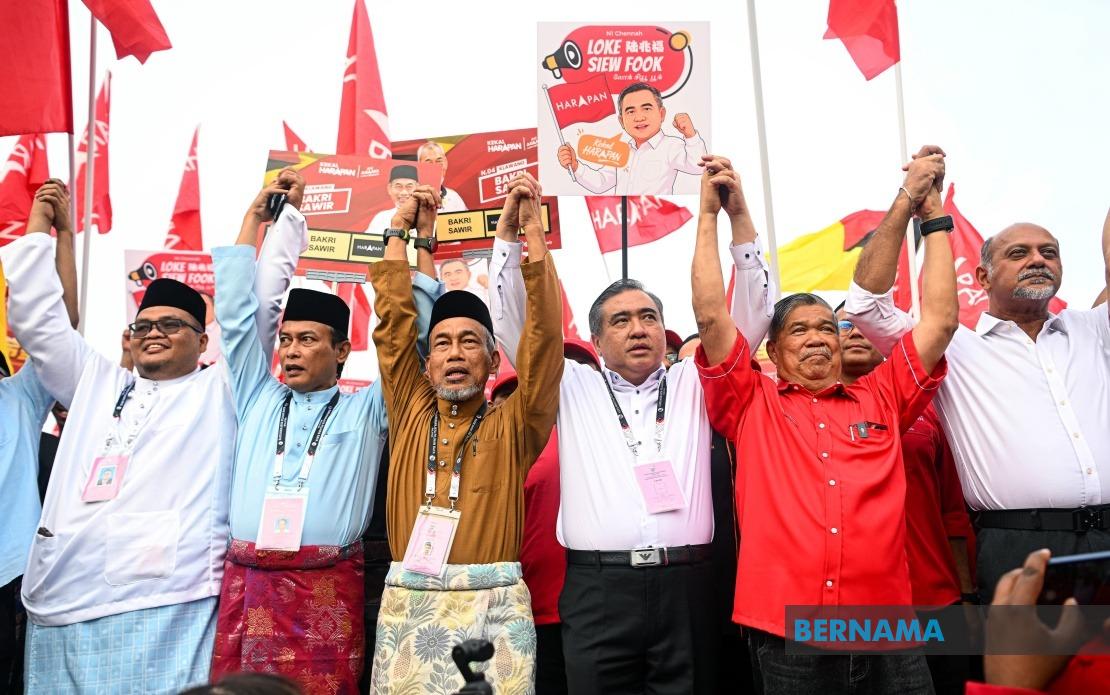
The stage is set for a closely watched contest in Negeri Sembilan's Jelebu constituency, where DAP secretary-general Anthony Loke will defend his Chennah state seat against a direct challenge from Barisan Nasional. The straight fight between the two candidates emerged after the nomination process concluded at the Dewan Besar Kuala Klawang on July 18, with the Jelebu Parliamentary returning officer Abdul Rahim A Aziz confirming the two-way race following the closure of nominations at 10 am.
Loke, who combines his role as Seremban Member of Parliament with his position as Transport Minister, filed his nomination papers at 9.05 am, just four minutes before his challenger, state MCA Youth chief Siow Kong Choon, submitted his own documents at 9.09 am. The timing underscores the intensity of competition for this strategically important seat in the opposition-held state. Loke's parliamentary status and cabinet position have made him a prominent figure in Malaysian politics, yet he faces a determined opponent backed by the machinery and resources of BN, which remains a formidable electoral force despite recent setbacks.
The Chennah seat represents something of a personal stronghold for Loke, having been his possession since 2013. His tenure spanning more than a decade reflects considerable support within the constituency and speaks to his political organisation on the ground. However, political fortunes can shift rapidly, and the fact that BN has fielded Siow Kong Choon—a figure with visibility through his youth movement leadership—suggests the coalition sees genuine opportunity to reclaim the seat. MCA's involvement in the contest also reflects broader BN efforts to rebuild its footprint in Negeri Sembilan, a state where DAP and Pakatan Harapan have consolidated influence following recent electoral cycles.
In the most recent state election held in 2023, Loke demonstrated commanding support by securing 5,888 votes, defeating his Perikatan Nasional opponent Rosmadi Arif with a comfortable 2,200-vote majority. That result suggested strong voter preference for his representation and indicated a decisive margin that would have provided some insulation against challenge. Yet two years in electoral politics represent an eternity, and circumstances have shifted considerably. The Malaysian political landscape has been marked by significant flux, with changing coalitions, shifting voter sentiment on particular issues, and evolving economic conditions all capable of reshaping constituency-level dynamics.
Siow Kong Choon enters the contest as challenger but carries the weight of BN's institutional support, extensive party machinery, and the coalition's historical strength in some Negeri Sembilan pockets. As MCA Youth chief, he represents the Chinese-majority party's commitment to regaining ground in constituencies where it has lost purchase. The targeting of Loke's seat reflects BN's broader strategy of focusing resources on winnable contests where DAP or PKR incumbents might face genuine electoral vulnerability. Whether Siow can convert BN backing into actual votes will depend on his personal appeal, local ground organisation, and whether specific issues in Chennah favour his candidacy.
The election timeline provides both campaigns with roughly two weeks to mobilise support. The Election Commission has scheduled early voting for July 28, with the main polling day set for August 1 in the 16th Negeri Sembilan state election. This compressed timeframe means both camps must execute their ground operations efficiently, from door-to-door canvassing to social media engagement to targeted voter outreach. For an incumbent like Loke, the challenge lies in consolidating existing support while neutralising criticism or complacency. For Siow and BN, the imperative is to convince voters that change offers tangible benefits over continuity.
The broader context matters significantly for understanding this contest. Negeri Sembilan remains under opposition governance following the last general election, with DAP performing particularly well in urban and semi-urban constituencies. The state has been marked by relative political stability compared to Selangor or Johor, though not immune to the national dynamics that have reshaped Malaysian politics. Loke's prominence in transport policy and DAP leadership circles makes him a figure of interest beyond Negeri Sembilan, as his performance could carry implications for how voters assess the coalition's broader capabilities and momentum entering the final years before the next general election.
Economic concerns, infrastructure development, and bread-and-butter issues typically dominate constituency-level campaigns, and Chennah will likely follow this pattern. Voters in the seat will be evaluating which candidate and party can better deliver on local priorities, whether enhanced connectivity, commercial development, or improved public services. Loke's incumbency advantage in being able to point to projects or advocacy conducted over his years of representation must be weighed against any frustrations or unmet expectations among voters. Siow's pitch will necessarily emphasise what BN could deliver differently, though this requires careful calibration given voter weariness with traditional party politics.
The nomination of just two candidates in what could have been a multi-cornered contest reflects the polarisation of Malaysian politics along increasingly clear coalition lines. Perikatan Nasional's absence from Chennah—at least at the nomination stage—suggests calculations that resources were better deployed elsewhere, or that PKR or Amanah was better positioned to challenge in this particular seat. This concentration of contest into a binary choice between DAP and BN simplifies voter decision-making but also raises stakes for both sides, as there is no third force to fracture the vote. The straight fight format means whichever candidate fails to secure victory will have no ambiguity about the reasons for defeat.
For Malaysia's broader political trajectory, the Negeri Sembilan state election serves as an important barometer of coalition health and voter sentiment. Loke's defence or loss of Chennah will be read as a marker of DAP's standing and PKR's performance in the state more generally. Should BN make gains, it would signal renewed electoral competitiveness and potentially reshape perceptions of the coalition's viability. Conversely, sustained DAP dominance would reinforce the current trajectory and suggest that voters remain committed to the opposition's governance model in the state. These nuances may seem parochial, yet at the state and national levels, cumulative results across constituencies determine which forces govern and the mandates they claim.

