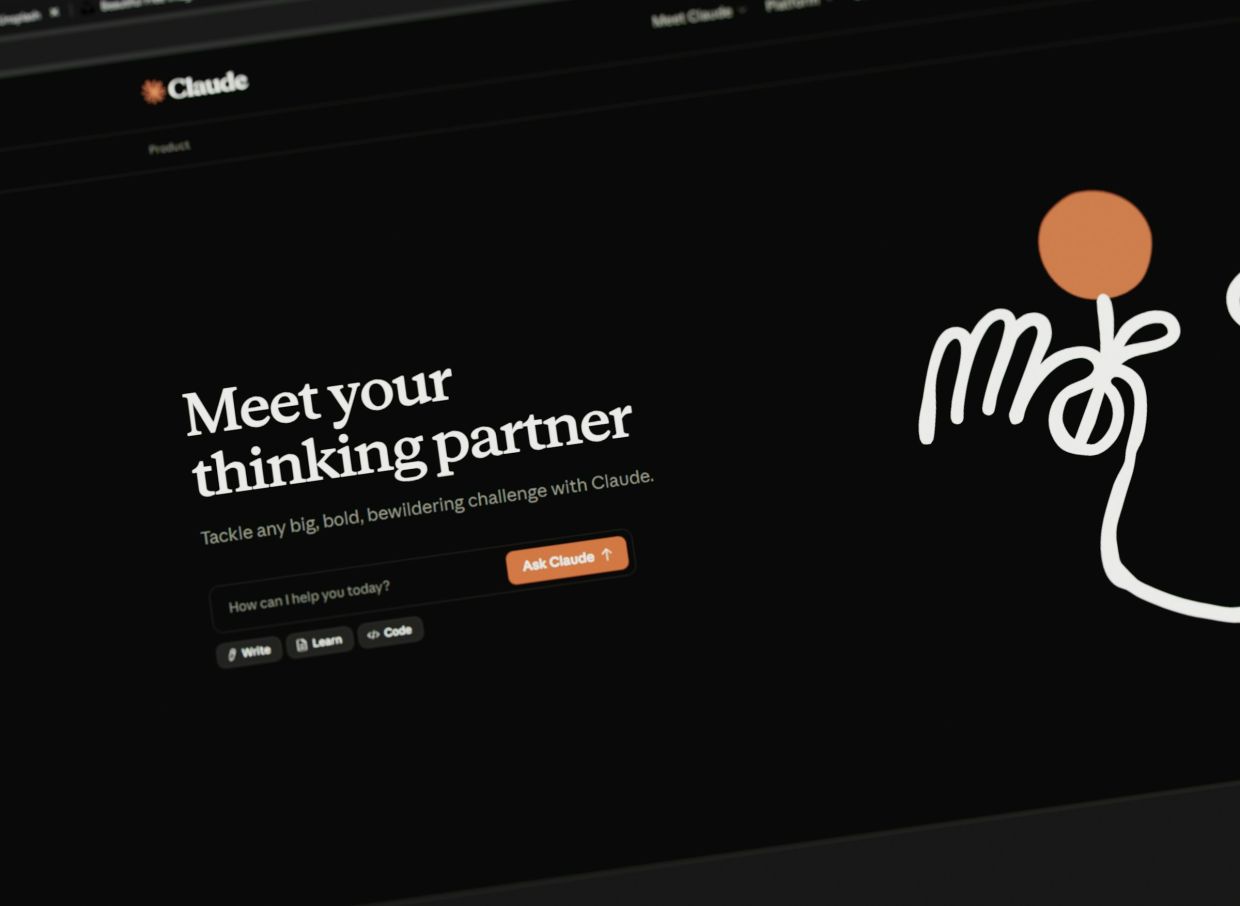
Anthropic has announced Claude Tag, a significant expansion of its artificial intelligence capabilities into workplace communication platforms. The new feature, unveiled on June 23, transforms Slack from a simple messaging application into an integrated workspace where Claude functions as an active participant monitoring conversations and contributing to team discussions. Rather than requiring manual prompts for each interaction, Claude Tag operates autonomously within designated channels, fundamentally changing how teams might approach routine communication and task management.
The functionality of Claude Tag extends across several workplace applications that teams regularly depend on. The system can maintain continuous surveillance of channel activity, identifying posts and discussions that may affect specific users and alerting them accordingly. Beyond passive monitoring, Claude Tag can proactively insert comments into ongoing conversations when contextually appropriate, and it possesses the capability to diagnose and resolve code-related issues without human intervention. This represents a departure from traditional chatbot implementations, which typically require explicit user prompts before engaging with any workplace discussion.
The integration reflects a broader strategic initiative undertaken by leading artificial intelligence companies. Both Anthropic and competitor OpenAI have invested considerable resources throughout the past year in developing sophisticated AI tools designed to streamline diverse professional functions across multiple sectors. Financial services firms, healthcare providers, and technology companies all represent potential clients for these emerging solutions. The underlying business motivation is transparent: by establishing AI as indispensable to professional workflows, these companies aim to expand their customer bases substantially while validating the astronomical valuations the industry has assigned to them. Anthropic's current valuation of US$965 billion (RM4 trillion) positions the company as one of the world's most valuable private enterprises, with observers noting that a potential initial public offering would represent a watershed moment for the generative AI sector.
Implementing Claude Tag's more sophisticated capabilities requires careful configuration and data integration. Users must establish connections between Claude Tag and various organisational data sources and services, including calendar systems and email platforms, to unlock the tool's full potential for managing complex professional workflows. Cat Wu, Anthropic's head of product for Claude Code and Cowork, disclosed that approximately 65 percent of the Anthropic product team's internal code generation now occurs through an in-house iteration of Claude Tag. This substantial reliance on the tool within Anthropic itself suggests the company possesses considerable confidence in its reliability and effectiveness for technical work, representing a form of internal validation that the product team depends on it daily.
Wu characterised the operational impact of Claude Tag as transformative. She stated that the tool has fundamentally altered how Anthropic's internal operations function, implying that the efficiency gains and workflow improvements justify the transition to AI-assisted development practices. This internal adoption demonstrates how the company's own employees view the technology not as a supplementary assistant but as a core component of how professional teams accomplish objectives. For Malaysian and Southeast Asian organisations considering similar implementations, Anthropic's experience suggests that the transition requires genuine commitment and organisational readiness rather than simple tool implementation.
The timing of Claude Tag's release intersects with significant restrictions imposed on Anthropic's most advanced AI systems. Less than two weeks before the announcement, Anthropic restricted access to Fable 5 and Mythos 5, its most powerful models, in response to executive orders from the Trump administration designed to prevent foreign nationals from accessing cutting-edge artificial intelligence technology. The geopolitical dimension of this restriction carries implications for Southeast Asian users and organisations with international teams. Wu stated that Anthropic originally intended Fable 5 to serve as the underlying foundation for Claude Tag, viewing it as the optimal model for powering the tool's various functions.
Fable 5's capabilities specifically suit the demanding requirements Claude Tag must satisfy. Wu explained that Fable 5 outperforms the alternative model Opus 4.8, which Anthropic released in May, particularly regarding code-related tasks. More significantly, Fable 5 demonstrates superior capacity for executing assignments with minimal human guidance and for determining when to autonomously participate in conversations. These capabilities define the distinction between a tool requiring constant supervision and one capable of functioning semi-independently within workplace environments. The restriction on Fable 5 access therefore potentially limits Claude Tag's functionality for certain users and organisations, particularly those with international operations or foreign-national employees.
AnthropHelpinc has previously integrated Claude into Slack, though in substantially more limited configurations. Claude Tag represents a comprehensive replacement of the existing Claude Slack application rather than a supplementary feature layered atop existing functionality. This wholesale replacement strategy suggests that Anthropic considers the new tool sufficiently mature and comprehensive to justify discontinuing the earlier implementation. The rollout targets Anthropic's enterprise and team subscription users initially, allowing the company to monitor performance and gather feedback from professional environments that depend substantially on Slack for daily operations.
For Malaysian enterprises and regional organisations, Claude Tag introduces considerations regarding workplace automation and data governance. Teams must evaluate how autonomous AI systems integrate with existing information security protocols, intellectual property protections, and employment practices. The tool's capacity to monitor conversations and contribute to discussions raises questions about transparency, employee monitoring, and the appropriate boundaries for AI participation in human workplace communication. Southeast Asian businesses with growing remote and distributed teams may find particular value in Claude Tag's monitoring and alert capabilities, yet the technology simultaneously demands careful governance frameworks to ensure ethical implementation.
The broader competitive landscape in enterprise AI continues intensifying as major technology providers race to embed artificial intelligence throughout professional software ecosystems. Anthropic's Claude Tag initiative positions the company within this competitive struggle by offering integration with Slack, the world's most widely adopted workplace messaging platform among knowledge workers. This strategic placement suggests Anthropic recognises that achieving substantial enterprise adoption requires not building entirely new applications but rather enhancing tools and platforms that teams already rely upon daily. The success of Claude Tag may significantly influence how rapidly other AI developers pursue similar integrations with critical workplace infrastructure.
Looking forward, the implications of Claude Tag extend beyond simple productivity enhancement. As autonomous AI systems participate more directly in workplace communication and decision-making, organisations must confront questions about accountability, accuracy, and the appropriate division of labour between human judgment and algorithmic decision-making. Regional businesses considering adoption must weigh productivity gains against potential risks and governance challenges. The transformation of Slack into a workplace hosting both human and artificial intelligence participants represents a meaningful shift in how professional teams collaborate, one that carries both significant promise and considerable complexity for organisations seeking to integrate such systems responsibly.