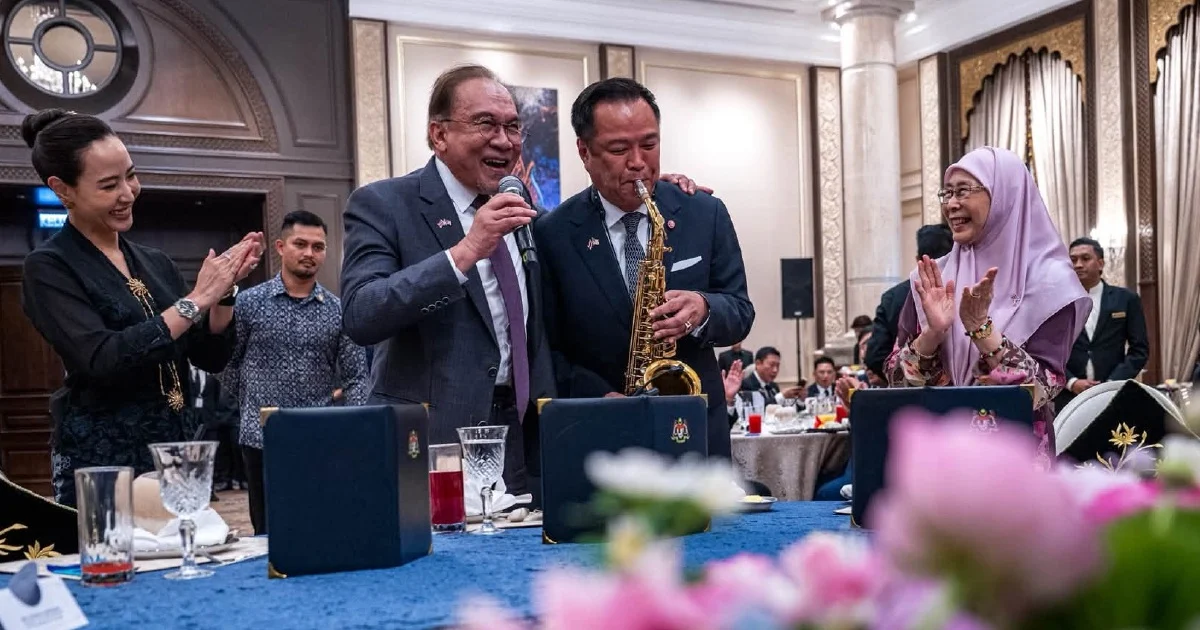
The bilateral relationship between Malaysia and Thailand took on an unexpectedly musical character during the official luncheon following talks between Prime Minister Datuk Seri Anwar Ibrahim and Thai Prime Minister Anutin Charnvirakul in Putrajaya. In a moment that departed significantly from the formality typically associated with high-level diplomatic engagements, both leaders elected to perform together, with Anwar Ibrahim singing the classic Frank Sinatra composition My Way whilst Anutin Charnvirakul accompanied him on the saxophone. The impromptu performance provided a refreshing counterpoint to the substantive policy discussions that had preceded it, suggesting a comfort level and rapport between the two neighbouring premiers.
Such informal moments at diplomatic functions often carry deeper significance than their superficial charm might suggest. Cultural and personal interactions between national leaders frequently shape the trajectory of bilateral relations in ways that formal communiqués cannot fully capture. The choice to perform together at a state luncheon, rather than maintaining the customary distance between principals and entertainment, signals a desire by both governments to project a vision of Malaysia-Thailand relations characterised by genuine warmth and mutual respect. This is particularly noteworthy given the complex history between the two nations, marked by periodic tensions over maritime boundaries, irregular migration patterns, and competing economic interests in the region.
The musical interlude also reflects evolving diplomatic practices across Southeast Asia, where regional leaders increasingly recognise the value of humanising high-level encounters through shared cultural moments. Such gestures contribute to a broader narrative of regional cohesion and people-to-people connectivity that transcends the strictly transactional nature of government-to-government dealings. The performance at the Putrajaya luncheon exemplifies this trend, offering journalists and social media users alike a memorable image that goes well beyond the standard photographs of handshakes and official statements that typically dominate coverage of prime ministerial visits.
Anutin Charnvirakul's proficiency on the saxophone adds another dimension to this encounter. The Thai premier's willingness to demonstrate musical skill publicly suggests a confidence in projecting a more rounded, accessible image of leadership compared to the often rigid formality that characterises state visits in the region. For Malaysian audiences, the moment represents their own Prime Minister engaging authentically with his counterpart, moving beyond the scripted exchanges and prepared remarks that usually define such occasions. This human dimension resonates particularly strongly in an era when citizens increasingly crave evidence that their leaders possess qualities beyond mere political acumen.
The timing of this performance deserves consideration within the broader context of Malaysia-Thailand relations. Both nations face overlapping challenges in the region, from managing Myanmar's political instability and its ramifications for refugee flows, to coordinating positions on maritime security and trade arrangements within ASEAN frameworks. The unofficial nature of a musical performance, stripped of the bureaucratic weight that accompanies formal communiqués, can sometimes facilitate more genuine communication between principals than official channels permit. The apparent camaraderie on display during the luncheon may therefore reflect substantive progress in bilateral discussions or at minimum indicate a mutual commitment to strengthening cooperative ties.
For those observing the performance through social media, the video captures a moment of spontaneous international diplomacy that defies the stereotype of sombre, grey-suited officials engaged in opaque negotiations. The accessibility of the internet and platforms like YouTube have fundamentally altered how diplomatic moments circulate globally. What might have previously remained confined to official photographers and print media now reaches millions instantaneously, shaping public perception of bilateral relationships through relatively informal visual narratives. This democratisation of diplomatic imagery means that Anwar Ibrahim and Anutin Charnvirakul's musical duet will likely influence how ordinary Malaysians and Thais perceive the relationship between their nations.
The choice of Frank Sinatra's My Way carries its own symbolic weight, particularly given its themes of individual agency, personal integrity, and non-conformity. The song's lyrics celebrating a life lived on one's own terms resonate across cultures and generations, making it an interesting selection for an international diplomatic event. Both leaders' participation in performing this quintessentially American standard perhaps subtly underscores a shared commitment to independent policy-making within the Southeast Asian context, whilst simultaneously honouring a musical tradition that transcends national boundaries. The song has become iconic precisely because its themes prove universally relatable, regardless of cultural background or national origin.
From a Malaysian perspective, such moments serve important domestic political functions as well. Public displays of cordial, even affectionate relations with neighbouring leaders contribute to Anwar Ibrahim's broader narrative regarding regional stability, economic cooperation, and Malaysia's role as a bridge-builder within ASEAN. Voters and observers at home interpret such gestures as evidence of effective leadership and diplomatic skill. The capacity to establish genuine rapport with international counterparts, as demonstrated through the impromptu performance, subtly reinforces narratives about competent, forward-thinking governance that prioritises collaborative solutions to shared regional challenges.
The luncheon performance also highlights the increasingly diverse toolkits that modern diplomacy employs. Beyond traditional bilateral meetings, press conferences, and formal dinners, contemporary diplomatic engagement increasingly incorporates cultural exchange, sports cooperation, and informal social interactions designed to humanise government-to-government relationships. This reflects a recognition among policymakers that sustainable international relationships rest partly on personal connections and shared experiences between leaders. The musical duet exemplifies this evolution, suggesting that both Malaysian and Thai governments understand the value of projecting an image of friendly, approachable leadership to domestic and international audiences alike.

