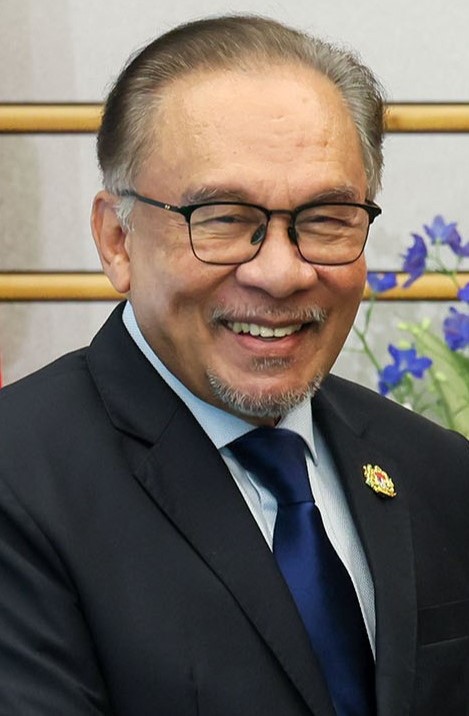
Prime Minister Anwar Ibrahim has reaffirmed the federal government's dedication to maintaining constructive working relationships with Johor's state administration during a meeting with Johor Regent Tunku Ismail Sultan Ibrahim in Kuala Lumpur. The discussion underscores the continued emphasis on inter-governmental cooperation across Malaysia's political hierarchy, particularly given Johor's significance as one of the nation's most economically influential states.
The audience between Anwar and the Regent reflects broader efforts to ensure that divergences in political alignment do not derail essential governance coordination. Johor, governed by different political leadership than the federal government in recent years, represents a crucial arena where state-federal collaboration determines policy implementation on matters ranging from infrastructure development to economic initiatives.
Geographically positioned as Malaysia's southern gateway and home to significant industrial and commercial hubs, Johor's political stability carries implications extending beyond state boundaries. The state's ports, manufacturing sectors, and service industries intersect with federal trade policies, making sustained goodwill between administrations essential for seamless operational continuity. Any friction between tiers of government can complicate business operations and deter investments in these critical economic zones.
The meeting arrives at a time when Malaysia's political landscape remains fluid, with state-level politics increasingly distinct from federal dynamics. Johor's previous electoral outcomes demonstrated voter preferences that sometimes diverged from national trends, making the Regent's role as constitutional anchor particularly relevant. His position permits him to exercise influence beyond ceremonial bounds, particularly in shaping discourse around governance standards and institutional relationships.
Anwar's initiative to seek the Regent's counsel carries symbolic weight. Such audiences traditionally signal respect for established institutions and acknowledgement of the constitutional monarchy's stabilising function within Malaysia's federal structure. The Prime Minister's willingness to engage directly with state-level custodians of power suggests a recognition that effective governance demands more than centralised decision-making.
For Johor's citizens and businesses, maintained federal-state harmony translates into predictable policy environments. When governments at different levels operate at cross-purposes, bureaucratic processes slow, investment hesitates, and public services suffer from coordination failures. The agreement to preserve good relations therefore carries practical significance beyond political optics.
The Regent's perspective carries particular weight given his prominent public engagement on governance issues. His statements and actions frequently influence perceptions of institutional health and political direction. By publicly aligning with federal commitments to cooperative governance, both leaders send reassuring signals to markets, investors, and the general population that leadership discord will not disrupt essential functions.
This diplomatic encounter also contextualises Malaysia's broader federal arrangement. Unlike more centralised systems, Malaysian governance distributes significant authority to state governments, particularly in matters affecting land, local ordinances, and resource management. The federal system's success depends substantially on goodwill between these tiers. When friction emerges, implementation of national policies becomes complicated by state-level resistance or non-cooperation, potentially undermining national development objectives.
The Johor administration's cooperation proves especially consequential for sectors requiring coordinated national strategy. Economic corridors spanning multiple states need state government endorsement and participation. Infrastructure megaprojects involving federal funding but state-level implementation require administrative alignment. Educational and healthcare initiatives reaching across administrative boundaries depend on inter-governmental trust and coordination mechanisms.
Looking forward, this meeting establishes a framework for addressing potential friction through dialogue rather than escalation. Both leaders have signalled openness to engagement, establishing channels for resolving inevitable disagreements constructively. This pragmatic approach acknowledges that political parties in power at state and federal levels need not align perfectly to collaborate effectively on shared objectives.
The agreement also reflects evolving Malaysian political maturity, where institutional relationships increasingly transcend partisan considerations. Younger political generations demonstrate greater acceptance that voters' preferences across different elections need not produce identical political outcomes at all levels—and that such outcomes remain compatible with functional governance.
For Southeast Asia's broader context, Malaysia's capacity to maintain governmental coherence across political divides offers lessons in federal stability. The region contains several nations navigating similar challenges around power distribution and inter-governmental relations. Malaysia's pragmatic approach to such tensions provides a model emphasising continuity and institutional respect over political confrontation.
Moving forward, the commitment articulated during this Kuala Lumpur meeting will face practical tests as both administrations navigate upcoming policy decisions affecting Johor's development trajectory. The strength of this pledge will ultimately be measured not through ceremonial statements, but through observable cooperation on concrete matters affecting the state's residents and economic performance.