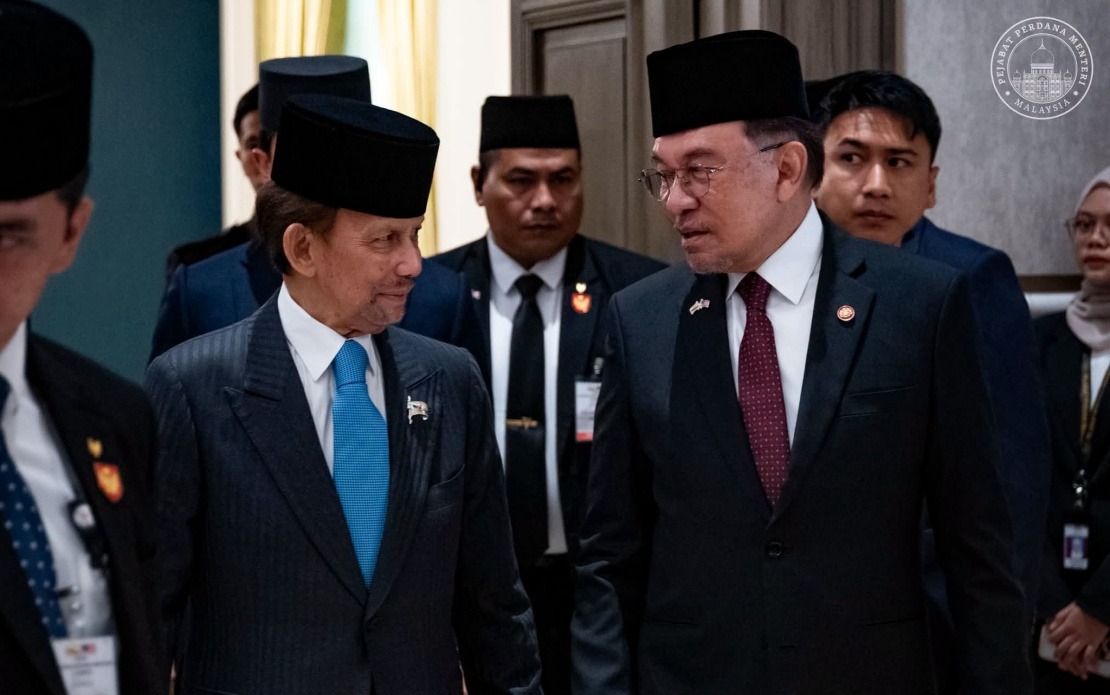
Prime Minister Datuk Seri Anwar Ibrahim received a telephone call from Brunei's Sultan Hassanal Bolkiah on August 12, in which the Brunei monarch enquired about the Malaysian leader's health and offered prayers for his wellbeing. Anwar subsequently took to Facebook to express his appreciation for this gesture of support from his counterpart in the neighbouring nation, underscoring the personal warmth that characterises bilateral ties between Malaysia and Brunei despite their respective political systems and geographical separation along the island of Borneo.
The Malaysian Prime Minister reciprocated the sentiments by praying that Sultan Hassanal Bolkiah would continue to enjoy good health and remain protected by divine grace. Such exchanges of courtesies between regional leaders, though seemingly ceremonial, reflect the enduring diplomatic bonds that exist within Southeast Asia and demonstrate how matters of personal health can transcend formal state relations, particularly when leaders share religious and cultural contexts.
Anwar's health update came approximately one week after he underwent an elective laparoscopic surgical procedure to address a para-umbilical hernia, a condition requiring minimally invasive intervention. Following the operation, he remained under the watchful eye of a team of medical specialists who have been monitoring his recovery closely. The relatively non-invasive nature of laparoscopic surgery has allowed the Prime Minister to maintain certain aspects of his official duties whilst recuperating, though his medical team has necessarily restricted his schedule to ensure full recovery.
The timing of Sultan Hassanal Bolkiah's call proved fortuitous, as it preceded a scheduled bilateral engagement between the two nations. Anwar indicated that he would travel to Bandar Seri Begawan the following week to meet with the Brunei Sultan in an official capacity. This meeting would coincide with the 27th Annual Leaders' Consultation between Malaysia and Brunei, a longstanding institutional forum through which the two countries address matters of mutual concern and chart pathways for enhanced cooperation across economic, security, and social dimensions.
The Annual Leaders' Consultation represents one of the most significant diplomatic fixtures in Malaysia-Brunei relations, providing a platform at the highest level for substantive discussions on bilateral and regional issues. These consultations have historically covered ground ranging from maritime boundary considerations to defence partnerships, trade facilitation, and responses to transnational challenges such as piracy and human trafficking in regional waters. The durability of this mechanism, now in its twenty-seventh iteration, attests to the institutional maturity of the Malaysia-Brunei relationship.
For Malaysian observers, the incident underscores the personal dimension of statecraft in Southeast Asia, where relationships between national leaders often carry weight beyond formal protocols. The fact that Sultan Hassanal Bolkiah took time to make a personal call, rather than dispatching a formal message through diplomatic channels, suggests a degree of personal regard between the two leaders. Such gestures can have subtle but meaningful impacts on the tenor of bilateral relations and the willingness of governments to cooperate on sensitive matters requiring political will.
Anwar's recovery also holds implications for Malaysia's diplomatic agenda more broadly. As Prime Minister, his ability to travel and engage in face-to-face diplomacy affects Malaysia's capacity to advance its interests in regional forums and bilateral relationships. The medical team's close monitoring suggests a measured approach to his return to full schedule, balancing the demands of high office against the imperatives of physical recovery. The planned visit to Brunei, undertaken whilst still in the initial recovery phase, demonstrates a determination to maintain momentum in regional engagement.
The para-umbilical hernia procedure itself, while routine in medical terms, became a matter of public interest and international diplomatic attention precisely because it involved the nation's chief executive. In Malaysia's political context, where transitions of power carry significant ramifications for government policy and ministerial appointments, any extended absence of the Prime Minister triggers speculation about succession and continuity. The transparency with which Anwar's medical team released information about the procedure and his recovery status thus served an important confidence-building function for both domestic and international audiences.
Brunei's Sultan Hassanal Bolkiah, who has ruled his sultanate since 1967, maintains a particularly prominent role in regional diplomatic circles and frequently hosts important gatherings and bilateral consultations. His willingness to reach out personally to Anwar speaks to the importance both nations attach to their partnership. Beyond the ceremonial aspects of such contact, the Malaysia-Brunei relationship encompasses practical cooperation on maritime issues, given their shared maritime boundaries in the South China Sea, as well as coordination on ASEAN matters where both nations maintain active roles.
The forthcoming Leaders' Consultation will likely address regional security developments, economic ties, and potentially matters related to the evolving strategic environment in Southeast Asia. Both Malaysia and Brunei, as ASEAN members, share interests in maintaining regional stability and managing great power engagement within the region. The ability of their leaders to meet regularly and maintain strong personal rapport facilitates the kind of candid dialogue necessary for addressing delicate issues that affect both nations' interests and security postures.
Anwar's planned journey to Bandar Seri Begawan, scheduled for the week following his phone conversation with the Sultan, represents a clear signal that his recovery is progressing satisfactorily and that he remains committed to fulfilling his international obligations. For Malaysia's diplomatic corps and officials involved in Malaysia-Brunei relations, confirmation of his attendance at the Leaders' Consultation provides certainty for planning substantive discussions and preparing position papers on matters of bilateral importance. The meeting will also offer an opportunity to assess the trajectory of Malaysia-Brunei cooperation and identify areas for deepened collaboration in the coming year.

