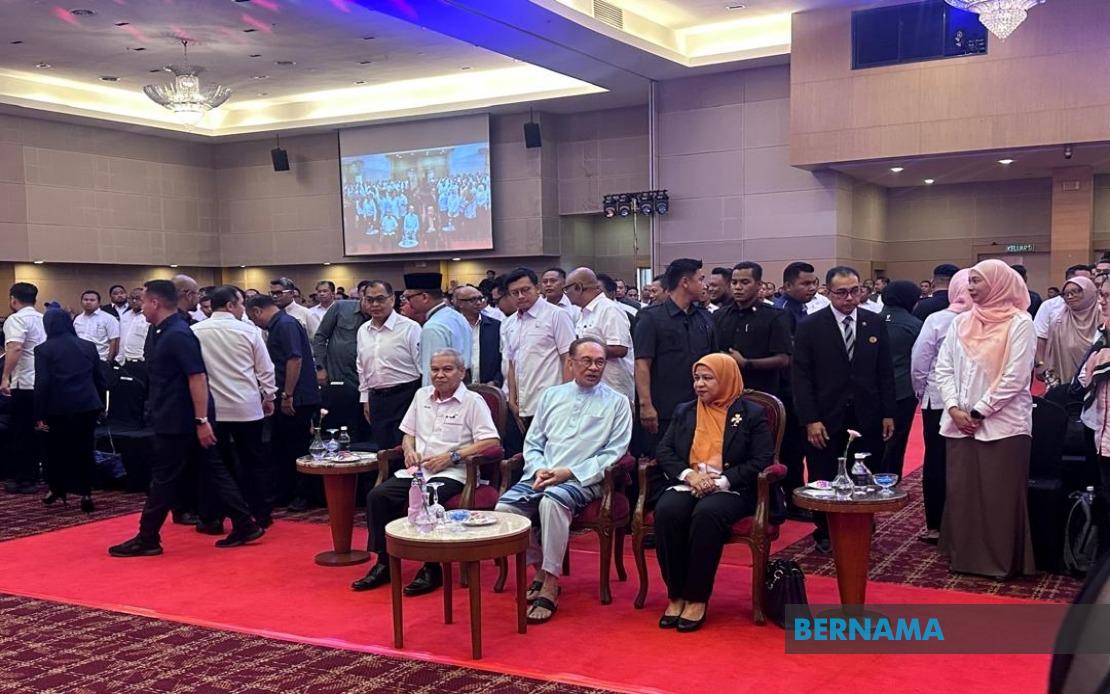
Prime Minister Datuk Seri Anwar Ibrahim has indicated that he will defer making any public statement regarding the Federal Land Development Authority until the investigating body completes its comprehensive assessment of the organisation's affairs. Speaking at Tenera Hotel in Bangi on August 21, Anwar underscored his intention to allow the Special Task Force sufficient time to conduct a thorough examination before releasing conclusions to the public.
The investigation represents a significant governance initiative aimed at scrutinising the massive land agency that has long been central to Malaysia's rural development strategy. FELDA, which manages vast tracts of agricultural land and affects the livelihoods of hundreds of thousands of smallholder farmers across the country, has faced recurring questions about operational efficiency and resource management over the years. The decision to establish a special task force signals the government's commitment to examining these concerns systematically rather than through piecemeal commentary.
Anwar elaborated on the scope of the inquiry, noting that investigators would examine multiple dimensions of institutional function. He emphasised that the task force would investigate historical challenges within the authority while simultaneously focusing on present-day operations and strategic planning. This dual approach reflects a pragmatic understanding that while identifying past missteps remains important for accountability, the primary objective centers on strengthening current systems and establishing a credible path forward for the agency.
The prime minister's remarks came during an official engagement with senior FELDA personnel, including chairman Tan Sri Ahmad Badri Mohd Zahir and director-general Datuk Dr Suzana Idayu Wati Osman. The gathering itself underscored the government's active involvement in steering the organisation toward improved performance. By meeting directly with leadership, Anwar demonstrated that FELDA's future remains a priority within cabinet-level deliberations.
Anwar stated that preliminary work by the task force had already begun, with formal findings anticipated within months. This timeline suggests the investigation is following a structured methodology rather than operating under artificial urgency that might compromise thoroughness. The gradual rollout of findings reflects best practice in institutional reviews, which typically require extensive documentation review, stakeholder consultations, and analytical work before conclusions can be reliably presented.
When the findings eventually emerge, Anwar indicated his administration plans to make them fully accessible to the public. He specifically referenced the Royal Commission of Inquiry report on Tabung Haji as a model for transparency, suggesting that Malaysian citizens should have unfiltered access to institutional audit findings. This approach contrasts with historical practices where sensitive reports remained compartmentalised within government, and signals a broader commitment to accountability in public institutions.
The FELDA investigation carries significance beyond the organisation itself. As Malaysia's largest land settlement agency, FELDA encompasses extensive real estate holdings, substantial agricultural operations, and fiduciary responsibilities toward settler communities. Any findings regarding management deficiencies could trigger reforms affecting rural economic policies more broadly. Investors, farmers, and development agencies across Southeast Asia monitor such investigations, as they influence confidence in Malaysia's institutional governance standards.
For the settler farmer communities who comprise FELDA's core constituency, the investigation offers potential pathways to redressing longstanding grievances. Many smallholders have raised concerns about declining productivity, inadequate support services, and disputes over land rights. A comprehensive task force report could validate these complaints and create mandate for policy corrections. The government's willingness to sponsor independent investigation suggests openness to systemic change, though actual implementation will depend on the specific recommendations and political will to enact them.
The phased disclosure strategy also reflects lessons learned from other institutional inquiries in Malaysia. Releasing findings progressively allows stakeholders to absorb information, raises public awareness incrementally, and provides opportunity for structured policy response rather than crisis management. By committing to eventual full transparency while allowing adequate investigation time, the government appears calibrated toward credible rather than rushed conclusions.
For regional observers, Malaysia's willingness to investigate state enterprises publicly demonstrates institutional maturity. Throughout Southeast Asia, questions about governance of large development organisations remain sensitive. Malaysia's approach—establishing formal task forces, committing to public disclosure, and maintaining active political oversight—sets a model that other governments scrutinise carefully. This transparency agenda reinforces Malaysia's standing as a relatively mature democracy despite persistent governance challenges.
The investigation also signals that FELDA's challenges are being taken seriously at the highest political levels. Rather than delegating such matters to routine administrative channels, the prime minister's personal involvement and public commitment to releasing findings indicates this remains a cabinet-priority issue. This elevates the investigation's credibility and increases likelihood that recommendations will translate into actual institutional change.
Looking forward, the task force's conclusions will likely shape FELDA's operational framework for years to come. Whether findings recommend structural reorganisation, management changes, policy revisions, or resource reallocation, the recommendations will ripple through rural development strategy nationally. Given FELDA's role in poverty alleviation and agricultural modernisation, the investigation's outcomes merit close attention from policymakers, investors, and development specialists across the region who view FELDA as a case study in large-scale land settlement implementation.

