%22%2F%3E%3C%2Fpattern%3E%3C%2Fdefs%3E%3Crect%20width%3D%22100%25%22%20height%3D%22100%25%22%20fill%3D%22url(%23ph2hujvg)%22%2F%3E%3Crect%20width%3D%22100%25%22%20height%3D%22100%25%22%20fill%3D%22url(%23ph2hujvp)%22%2F%3E%3Ctext%20x%3D%2250%25%22%20y%3D%2250%25%22%20text-anchor%3D%22middle%22%20dominant-baseline%3D%22central%22%20fill%3D%22rgba(255%2C255%2C255%2C0.95)%22%20font-family%3D%22Georgia%2C%20'Times%20New%20Roman'%2C%20serif%22%20font-weight%3D%22700%22%20font-size%3D%22272%22%20letter-spacing%3D%22-0.02em%22%3EAnwar%3C%2Ftext%3E%3C%2Fsvg%3E)
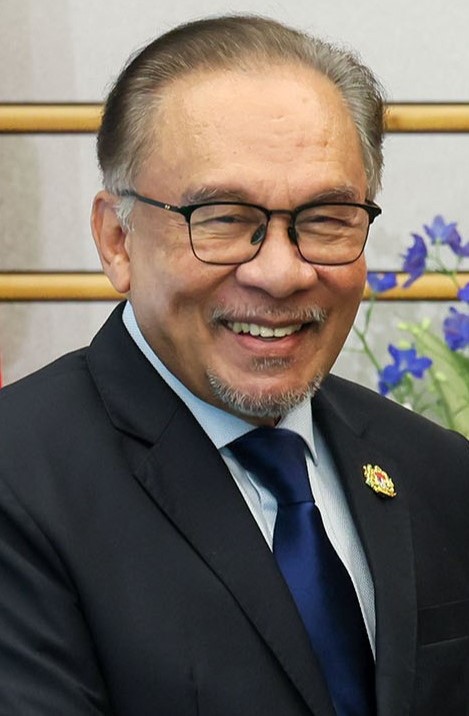
Prime Minister Datuk Seri Anwar Ibrahim has drawn a clear distinction between Malaysia's constitutional monarchy and the mechanics of electoral politics, arguing that campaigns and elections must remain the exclusive domain of political parties rather than involving the royal institutions. Speaking on the matter, Anwar underscored the necessity of preserving the sanctity of the monarchy by keeping it insulated from the partisan character of electoral competitions that define democratic practice in the nation.
The Prime Minister's remarks reflect an ongoing concern within Malaysia's political establishment about maintaining the traditional separation between the Crown and electoral politics. This principle, deeply embedded in Malaysian constitutional practice, reserves the monarchy's role to that of institutional guardian and ceremonial figurehead, while delegating the competitive aspects of democratic governance to political parties and their representatives. Anwar's intervention signals an effort to reinforce these constitutional boundaries at a moment when such distinctions may face pressure or require clarification.
Malaysia's political system operates within a framework where the monarchy occupies a uniquely revered position across the federation and within individual states. The Yang di-Pertuan Agong and the rulers of each state serve constitutional functions that transcend individual electoral cycles. By advocating for a strict demarcation between electoral contests and royal involvement, Anwar appears to be guarding against scenarios where partisan campaigns might attempt to leverage or invoke royal sanction, which could blur these critical institutional lines. Such protection of boundaries reflects international best practices whereby constitutional monarchies maintain political neutrality to preserve institutional credibility.
The timing of these statements carries particular significance for Malaysia's political landscape. The nation has experienced periods of intense electoral competition and occasional constitutional tensions. Maintaining clear protocols about what constitutes appropriate roles for different state institutions becomes especially important during campaign periods when political rhetoric intensifies and party operatives seek every available advantage. Anwar's emphasis on keeping elections strictly between parties suggests awareness of potential vulnerabilities in how electoral discourse might attempt to invoke royal associations or institutional prestige.
For Southeast Asian observers, Malaysia's approach to this issue demonstrates the region's varied approaches to balancing democratic institutions with constitutional monarchy. While democracies like Thailand, Cambodia, and others maintain strong monarchical institutions, Malaysia's model emphasises the Crown's studied distance from everyday political competition. This arrangement has historically contributed to political stability by ensuring that whoever loses an election cannot credibly claim that the monarchy has chosen sides, thereby preserving the Crown's utility as a unifying national symbol above partisan division.
The practical implications of maintaining these boundaries extend to electoral administration and campaign conduct. Official institutions like the Election Commission must ensure that campaign activities do not inadvertently implicate or appear to seek endorsement from royal institutions. Political parties similarly must discipline their campaigns to avoid rhetoric or imagery suggesting royal alignment. These operational details, while seemingly technical, form the foundation upon which public confidence in electoral fairness rests.
Anwar's intervention also speaks to the distinct nature of Malaysia's constitutional arrangement compared to Westminster democracies without active monarchies. In systems where the head of state is merely ceremonial or absent altogether, separating the institution from electoral politics is straightforward. In Malaysia, where the Yang di-Pertuan Agong holds specific constitutional powers, including dissolution authority and involvement in government formation, the separation requires active maintenance through political consensus about appropriate conduct. The Prime Minister appears to be restating that consensus in clear terms.
From a broader governance perspective, this statement reinforces principles about the proper scope of electoral competition. While political parties naturally compete vigorously for voter support, certain institutions must remain above that competition to maintain public trust in their impartiality. The judiciary, civil service, law enforcement, and the monarchy all benefit from presumptions of neutrality. When electoral politics attempt to penetrate these domains, whether through overt politicisation or subtle suggestion of alignment, the institutions themselves become politically contested, which ultimately weakens their authority and effectiveness.
The statement also carries implications for how political candidates and parties communicate with voters during campaign seasons. By establishing that elections involve only political parties, Anwar sets parameters for acceptable electoral discourse. Campaigns built around individual personalities or partisan platforms differ fundamentally from appeals that might invoke royal support or institutional blessing. Such clarity helps voters understand that electoral choices between competing visions for governance do not represent choices about the fundamental constitutional order or the role of the monarchy.
For Malaysia's democratic maturation, sustaining this separation demonstrates institutional confidence. A strong monarchy that maintains political neutrality becomes a stabilising force precisely because no electoral outcome threatens it or requires its intervention in partisan matters. Conversely, a monarchy drawn into electoral competition risks becoming weakened by association with victors and vanquished alike. By articulating the proper boundaries, Anwar reinforces an understanding that serves Malaysia's long-term institutional health and democratic credibility across the broader Southeast Asian region.