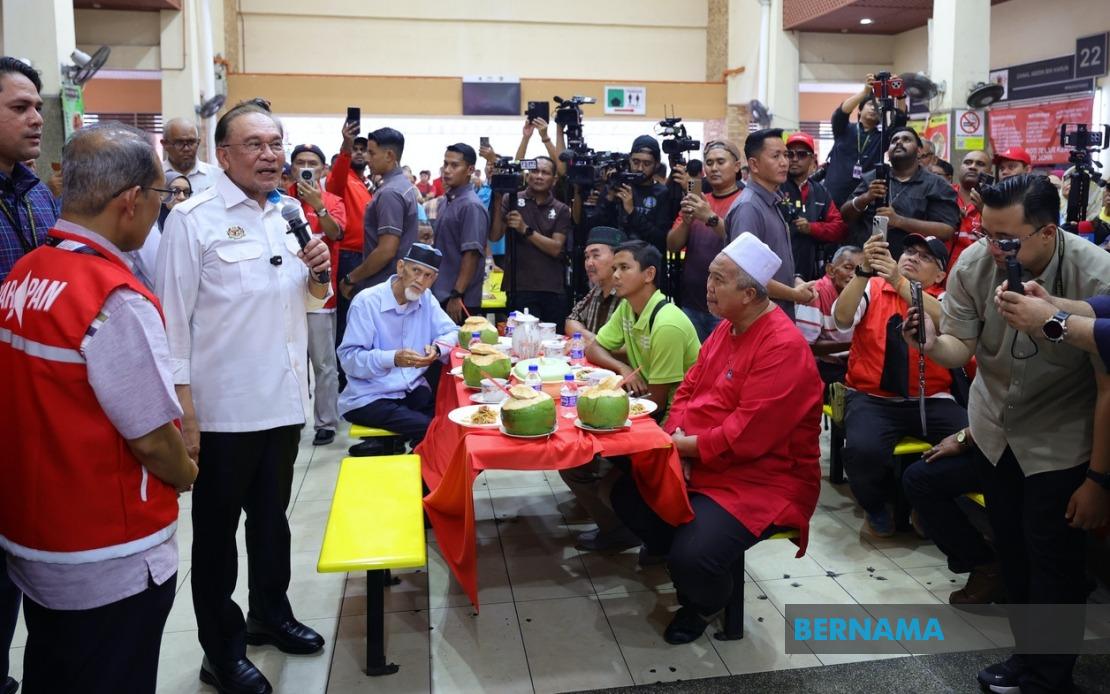
Prime Minister Datuk Seri Anwar Ibrahim made an appeal to voters in Negeri Sembilan on July 22 to maintain their backing for Pakatan Harapan, contending that renewed electoral support would be essential for preserving the political equilibrium necessary for effective governance. Speaking during a campaign visit to the state, Anwar characterised the upcoming poll as pivotal for sustaining the momentum of development initiatives and welfare programmes that depend on harmonious working relationships between state and federal authorities.
The prime minister, who also holds the position of PH chairman, anchored his campaign argument on the assertion that political consensus and institutional stability form the bedrock upon which state prosperity and citizen welfare are constructed. He positioned the election as a referendum not merely on PH's performance, but on the broader question of whether Negeri Sembilan should continue down a path of institutional continuity or risk disruption through fragmented political allegiances that might complicate coordination between governmental levels.
Anwar emphasised the track record of Menteri Besar Datuk Seri Aminuddin Harun, praising the administrator's three-year stewardship and attributing the state's stable governance environment to collaborative political arrangements among competing interests. By linking the Menteri Besar's achievements to broader party performance, Anwar sought to create a narrative in which voting for PH candidates represented not merely partisan preference but endorsement of demonstrated administrative competence at the state level.
Acknowledging that neither the state administration nor any government functions perfectly, Anwar adopted a measured tone that invited continued public feedback while framing PH's tenure as iterative rather than final. This rhetorical approach—admitting imperfection while requesting another opportunity—addresses a common voter concern in Malaysian politics: the perception that ruling parties become complacent. By inviting criticism and pledging responsiveness to constituent concerns, Anwar attempted to position PH as genuinely accountable rather than entitled to power.
The campaign visit occurred as PH prepares for the 16th Negeri Sembilan state election, scheduled for August 1 with early voting commencing on July 28. The coalition has committed substantial resources to the contest, fielding candidates across all 36 state seats through a carefully calibrated distribution: PKR fielding 16 candidates, DAP 11, and Amanah nine. This allocation reflects internal negotiations within PH about seat distribution and perceived electoral competitiveness across different constituencies.
Negeri Sembilan's electoral significance extends beyond its 36 seats. The state has historically served as a bellwether for broader political sentiment in Malaysia, and an election held during Anwar's premiership carries particular symbolic weight. A strong PH showing would validate the coalition's broader political strategy at the federal level, while electoral setbacks could embolden opposition forces and potentially destabilise PH's federal position. This dynamic explains why PH leadership, including the prime minister himself, has invested considerable campaign effort into what might otherwise be characterised as a routine state election.
Anwar's emphasis on stability carries particular resonance given Malaysia's recent political history. The country experienced multiple changes of federal government between 2018 and 2022, creating investment uncertainty and complicating long-term planning for both government and private sector. From this perspective, Anwar's campaign message resonates with an electorate potentially fatigued by political instability and concerned about its economic consequences. Voters who prioritise predictability and continuity may find his stability argument persuasive.
However, the opposition forces contesting the election, primarily Barisan Nasional and Perikatan Nasional, will likely counter that stability under current leadership represents stagnation, and that they offer superior developmental vision and governance. The electoral competition will ultimately turn on how effectively each coalition communicates its conception of stability—whether as positive continuity or defensive status quo maintenance—and which conception resonates more powerfully with Negeri Sembilan voters.
The Prime Minister's campaign activities in Seremban underscore PH's determination to consolidate power at the state level precisely when federal stability remains contested and dependent on careful management of coalition partners with divergent interests. A decisive PH victory in Negeri Sembilan would strengthen Anwar's position within the coalition and potentially facilitate more ambitious federal policy implementation. Conversely, a narrow victory or unexpected losses might complicate his political calculations heading into the broader political calendar, where urban by-elections and other contests will test PH's enduring appeal across different demographic and geographic constituencies throughout the remainder of this political term.

