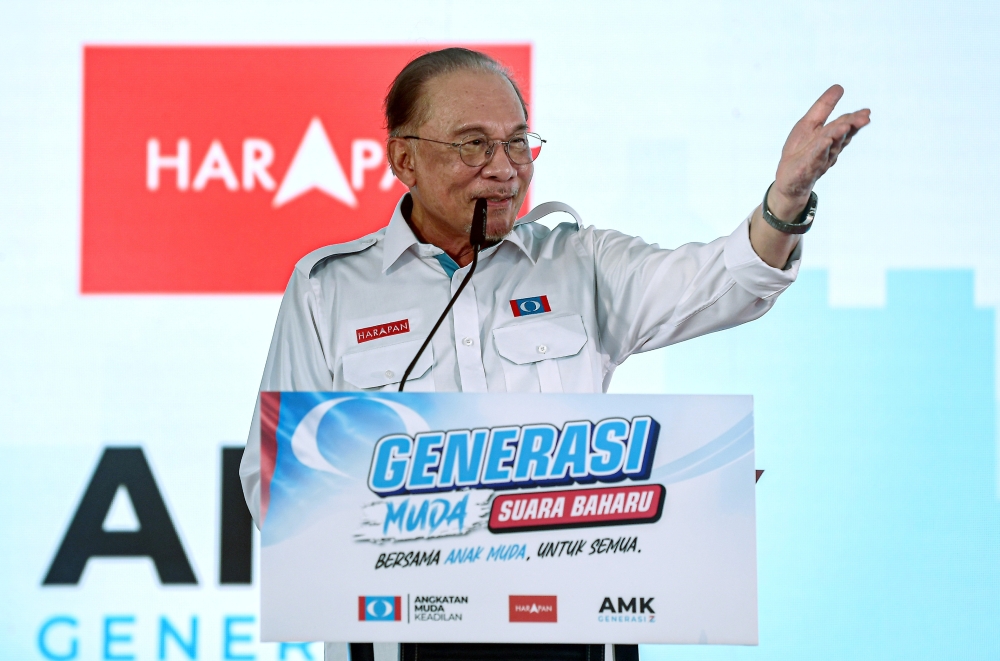
Prime Minister Datuk Seri Anwar Ibrahim has made an impassioned appeal for Malaysia's political landscape to undergo a fundamental transformation, targeting Generation Z as agents of this necessary change. Speaking in Petaling Jaya, Anwar articulated a vision where leaders are selected based on competence and vision rather than the divisive identity politics that have long characterised Malaysian campaigns. His remarks represent a deliberate repositioning of the government's approach toward younger demographics who, demographic trends suggest, increasingly view traditional racial and religious grievance narratives as outdated and counterproductive.
The Prime Minister's intervention arrives at a critical juncture for Malaysian politics. The country's youth bulge—with Gen Z comprising a growing share of the voting-eligible population—presents both opportunity and risk for established parties. Anwar's framing positions the administration as the agent of modernisation, signalling that perpetuating what he termed the "old politics of fear and race" represents a failure to meet contemporary voter expectations. This rhetorical move serves multiple purposes: it distances his government from the communal tensions that have historically benefited opposition narratives, while simultaneously challenging rivals to justify why they continue employing such strategies.
The emphasis on merit-based selection of leaders addresses a persistent frustration among educated, urban voters—the demographic most receptive to Anwar's PKR party. Young Malaysians entering the workforce face intense competition in a slowing economy, and many view patronage and identity-based advancement as impediments to their own social mobility. By framing leadership selection around competence, Anwar taps into aspirations for a more transparent, performance-driven system that rewards talent regardless of background. This messaging strategy differs markedly from opposition parties that have relied on communal mobilisation, potentially widening the generational divide in electoral behaviour.
The rejection of fear-based politics carries particular significance given Malaysia's recent electoral history. Both the 2018 and 2022 general elections witnessed intensive campaigns centred on existential anxieties—whether regarding Islam, Bumiputera privileges, or Chinese economic dominance. These narratives, while mobilising their core constituencies, have increasingly alienated younger, more cosmopolitan voters who perceive such frameworks as divisive and economically counterproductive. Anwar's appeal implicitly critiques the opposition's continued reliance on such messaging, positioning the government as forward-thinking while casting competitors as wedded to outdated approaches.
Yet implementing this vision faces substantial obstacles. Malaysian political identity remains deeply intertwined with ethnicity and religion, institutional structures embedded in the Federal Constitution privilege communal concerns, and regional tensions across Southeast Asia reinforce group-based political thinking. The Democratic Action Party and Pakatan Harapan's other partners must navigate between Anwar's modernising rhetoric and the material interests of their own constituencies. Additionally, Perikatan Nasional and other opposition blocs retain considerable appeal precisely because they continue articulating community-specific grievances that resonate with voters feeling economically displaced or culturally threatened.
The generational dimension warrants deeper examination. Gen Z voters in Malaysia have grown up amid globalisation, social media connectivity, and economic uncertainty—factors that have reshaped political expectations compared to previous cohorts. Issues like climate change, education quality, housing affordability, and employment opportunities transcend traditional racial boundaries and demand policy solutions rather than communal reassurance. Anwar's appeal effectively reframes political competition around these axes, though translating such rhetoric into legislative outcomes remains challenging given parliament's multiethnic composition and the coalition's internal bargaining dynamics.
International parallels suggest both promise and caution. Younger voters in established democracies have increasingly rejected identity politics in favour of issue-based competition, yet backlash movements powered by communal grievance narratives have simultaneously surged in several contexts. Malaysia's trajectory will likely depend on whether the government can deliver tangible improvements in areas Gen Z prioritises—particularly economic opportunity and educational outcomes—while sustaining inclusive rhetoric. Failure to demonstrate material progress risks discrediting Anwar's vision and driving frustrated younger voters toward populist alternatives.
The opposition's response to this generational pitch will be instructive. Conservative parties cannot easily abandon identity-based appeals without risking their traditional support base, yet ignoring younger voters carries obvious electoral costs. Some may attempt synthesising Anwar's merit-based language with community-focused substance, while others might double down on their existing approach, gambling that demographic segments outside Gen Z remain decisive. This strategic divergence will likely sharpen over the approaching electoral cycle.
From a regional perspective, Anwar's emphasis on moving beyond race and fear-based politics reflects broader Southeast Asian trends. Thailand, Indonesia, and the Philippines have all witnessed younger voters gravitating toward issue-focused rather than communal political identities, though with mixed results. Malaysia's particular constitutional commitment to Bumiputera provisions and Islam's constitutional role means any transition will be more constrained than in neighbouring democracies. Anwar's challenge involves expanding political space for merit-based competition while respecting these institutional foundations—a narrow pathway requiring sophisticated political management.
The success of this generational appeal ultimately hinges on whether Anwar can maintain coherence between his modernising vision and the material conditions young Malaysians experience. Economic growth, job creation, and genuine meritocratic advancement in both public and private sectors must follow from this rhetorical shift. Should economic conditions deteriorate or inequality deepen, even articulate appeals to abandon divisive politics lose persuasive force. For now, Anwar's initiative represents an important recalibration of government messaging, though whether it fundamentally reshapes Malaysian political culture will become apparent only through implementation and sustained generational shifts in voting behaviour.

