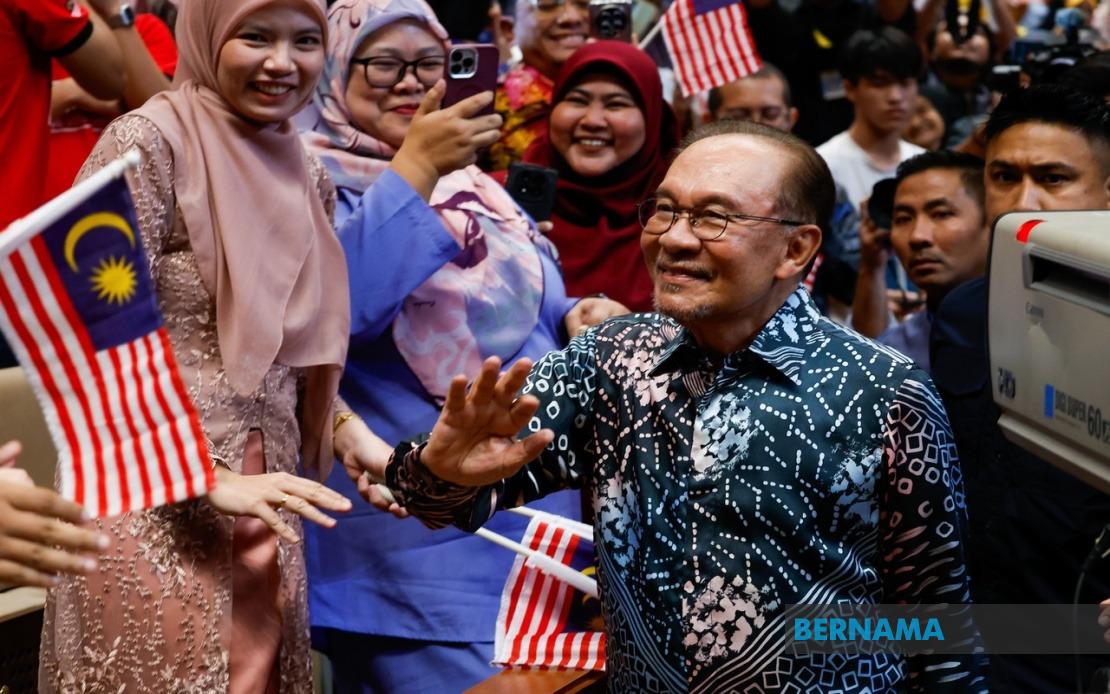
Prime Minister Datuk Seri Anwar Ibrahim has issued a powerful reminder that the essence of independence transcends constitutional frameworks and governmental systems, instead rooting itself in the mindset and values of individual citizens. Delivering his National Day address at the Putrajaya International Convention Centre on Friday, Anwar emphasised that building a truly independent Malaysia demands a sustained commitment to nurturing this foundational spirit across all segments of society.
Anwar articulated a distinction that proves critical for contemporary nation-building discourse in Malaysia. Independence, he argued, is not merely a historical milestone achieved through political separation, nor is it confined to institutional structures that govern a sovereign state. Rather, independence constitutes an intrinsic quality that must permeate the consciousness of every person within the nation's borders. This philosophical framing suggests that national strength ultimately derives from the collective psychological and moral independence of citizens, their capacity to think critically, act responsibly, and resist influences that undermine collective wellbeing.
The Prime Minister identified the cultivation of this independence spirit as the paramount challenge facing contemporary Malaysia. In acknowledging the obstacles ahead, Anwar pointed toward the necessity of comprehensive national renewal. He contended that reconstructing the nation from whatever remnants of difficulty exist requires deliberate, systematic effort to instil principles of independence into the foundational consciousness of society. This articulation resonates particularly in a regional context where several Southeast Asian nations grapple with questions of institutional integrity, citizen engagement, and national cohesion.
Central to Anwar's vision is an inclusive model of unity that explicitly transcends traditional demographic categories. He referenced the foundational principles articulated by Malaysia's independence-era leaders, who envisioned cohesion not organised around ethnic lines, geographic districts, or regional boundaries. Instead, the vision encompassed every generation of citizens, each bearing responsibility for maintaining and strengthening the national fabric. This intergenerational framing carries particular significance given Malaysia's demographic composition and the evolving expectations of younger citizens regarding governance and national direction.
Anwar specifically delineated the role of different communities within this unified framework. While acknowledging Malays and Bumiputera as constituting the foundational core of Malaysia's constitutional settlement, he emphasised that all communities must remain engaged participants in the nation-building enterprise. Their continued involvement constitutes not merely a political accommodation but a functional necessity for effective governance and social stability. This positioning attempts to reconcile Malaysia's constitutional arrangements with inclusive participation, suggesting that constitutional primacy and communal cooperation need not remain in tension.
The practical implications Anwar outlined centre on two interconnected responsibilities: defending rights and upholding justice. These twin pillars suggest that an independent spirit finds expression through active citizenship focused on ensuring systemic fairness and protecting individual and collective liberties. In the Malaysian context, where questions about judicial independence, press freedom, and protection of minority rights periodically surface in domestic and international discourse, Anwar's emphasis on justice carries pronounced significance.
The gathering at the Putrajaya International Convention Centre included senior government figures, among them Deputy Prime Minister Datuk Seri Dr Ahmad Zahid Hamidi, Communications Minister Datuk Seri Fahmi Fadzil, and Chief Secretary to the Government Tan Sri Shamsul Azri Abu Bakar. Their presence underscored the significance accorded to the address within governmental hierarchy and suggested alignment with the Prime Minister's framing of national priorities.
Anwar's articulation of independence as a psychological and moral condition rather than merely a political fact reflects broader currents within contemporary Asian political thought. Several regional leaders have similarly emphasised citizen consciousness as central to nation-building, particularly as societies navigate globalisation, rapid technological change, and evolving generational values. For Malaysian audiences specifically, this emphasis potentially invites reflection on how civic engagement translates into institutional reform, administrative effectiveness, and responsive governance.
The timing of this message during National Day observances carries symbolic weight. Rather than treating independence as a historical accomplishment requiring ceremonial acknowledgment, Anwar positioned it as an ongoing endeavour demanding renewed commitment across generations and communities. This reframing potentially reshapes how Malaysians conceptualise their relationship to national identity and collective purpose. It suggests that independence remains incompletely realised—not as a political matter, but as a lived reality of citizens fully exercising agency, critical judgment, and commitment to communal wellbeing while maintaining individual integrity.
For Malaysia's neighbours in Southeast Asia observing the address, Anwar's emphasis on unity amidst diversity and the primacy of citizen consciousness in national life offers perspective on how multicultural societies might approach governance challenges. The tension between constitutional arrangements, community expectations, and aspirations for national cohesion represents a shared regional concern, making the Malaysian Prime Minister's publicly articulated vision relevant beyond Malaysia's borders.

