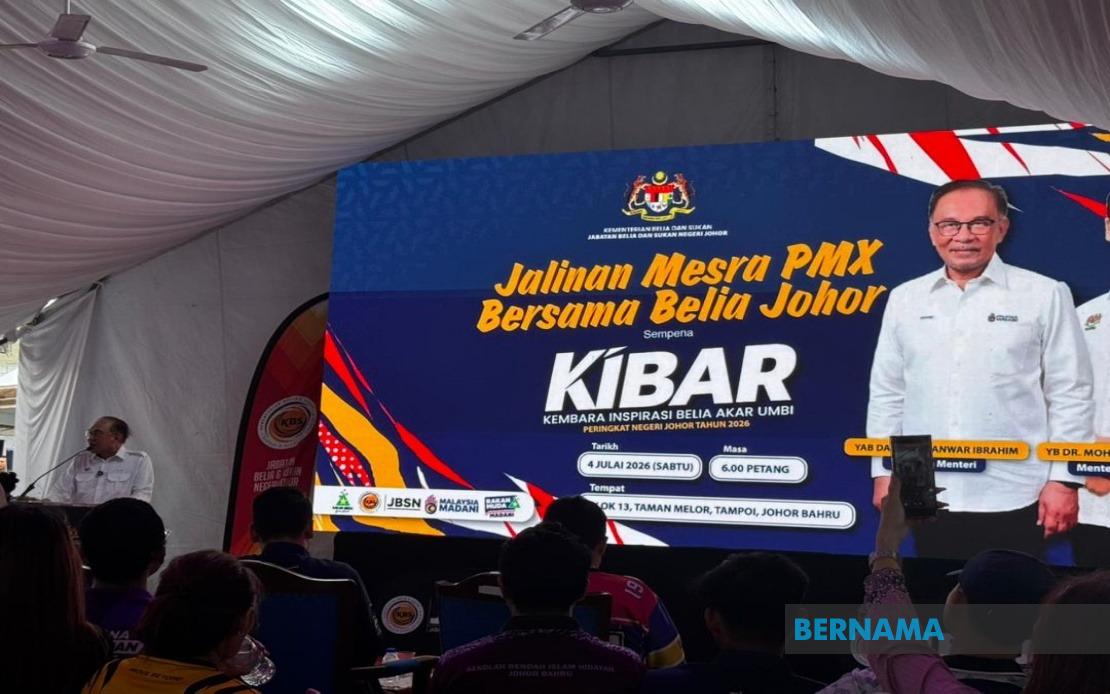
Prime Minister Datuk Seri Anwar Ibrahim has launched a pointed critique at political parties that leverage Malay supremacy as a rallying cry during election campaigns, only to abandon these principles once in power. Speaking at a youth engagement event in Johor Bahru on July 4, Anwar highlighted what he described as a widespread disconnect between electoral promises and post-election conduct, particularly regarding the protection of Malay-designated assets and land reserves.
The Prime Minister's remarks represent a significant statement on governance authenticity within Malaysia's multiethnic political landscape. Rather than accepting the traditional practice of invoking communal pride as campaign material, Anwar has signalled his administration's expectation that political actors demonstrate commitment to Malay interests through substantive policy implementation and transparent resource management. This framing positions good governance and accountability as central to ethnic protection—a departure from rhetoric-heavy approaches that have dominated Malaysian electoral discourse.
Anwar's specific concern centres on the erosion of Malay reserve land, a constitutionally protected asset designed to safeguard Malay-Muslim economic interests. His assertion that "a great deal of Malay reserve land has been lost to others" suggests systemic vulnerabilities in enforcement mechanisms or deliberate negligence by previous administrators. This observation carries particular weight given Malaysia's federal structure, where land administration falls under state jurisdiction, making accountability mechanisms more complex and dispersed.
The Prime Minister directly challenged parties that frequently champion Bumiputera principles and Malay welfare to demonstrate when they last created new Malay reserve land or successfully defended existing reserves. This rhetorical question implies that contemporary political discourse prioritises symbolic assertions over measurable outcomes. By inverting the burden of proof—asking champions of Malay rights to produce tangible evidence of their commitment—Anwar reframes the debate from sentiment to substance.
Anwar's criticism extends to what he characterises as opportunistic capture of Malay-designated economic benefits. His reference to parties that "seize Malay contracts, Malay projects and Malay assets after gaining power" suggests concerns about elite appropriation of communal-designated resources. This pattern, if widespread, would represent a fundamental betrayal of the constitutional social contract that reserves certain economic rights for Malays, with these benefits intended to uplift the broader community rather than enrich connected individuals or corporations.
The venue and audience for these remarks warrant consideration. Addressing youth participants in the Kembara Inspirasi Belia Akar Umbi (KIBAR) programme indicates an attempt to reshape how younger Malays evaluate political performance. Rather than accepting inherited narratives about which parties best represent Malay interests, Anwar appears to be encouraging a generation of voters to demand evidence-based assessment of political claims. This generational reorientation could prove significant for Malaysia's evolving political dynamics.
The presence of Selangor Menteri Besar Datuk Seri Amirudin Shari and Youth and Sports Minister Dr Mohammed Taufiq Johari alongside the Prime Minister signals unified messaging from the Pakatan Harapan coalition on this issue. Both officials represent states and portfolios with direct relevance to Bumiputera policy implementation, suggesting the government intends to translate this rhetoric into coordinated administrative action across federal and state levels.
For Malaysian readers, particularly Malay-Muslim voters who have historically formed the backbone of electoral coalitions built on communal appeals, Anwar's message introduces a testing framework for political accountability. He implicitly argues that genuine defence of Malay interests requires transparent mechanisms for monitoring land reserves, auditable allocation of contracts and projects, and demonstrated institutional capacity to prevent elite capture. This approach potentially elevates the standards by which Malaysian voters should evaluate political performance.
The broader implications extend to Southeast Asia's similar struggles with reconciling communal interests within plural societies. Malaysia's constitutional framework of Bumiputera protections represents an attempt to balance ethnic majority rights with broader national development. Anwar's emphasis on implementation and transparency rather than symbolic gestures offers a model for how such protections might be modernised—maintaining their protective intent while subjecting their administration to stricter accountability standards that benefit the intended beneficiaries rather than political elites.
Looking forward, Anwar's challenge to his political opponents on Malay reserve land specifically creates measurable benchmarks against which his own administration's performance can be assessed. If the government cannot demonstrate creation of new reserves or reversal of historical losses, the critique risks being perceived as political positioning rather than genuine commitment. Conversely, tangible success in these areas could significantly alter electoral calculations by reframing Malay interest protection as a governance competency issue rather than purely a matter of political identity.

