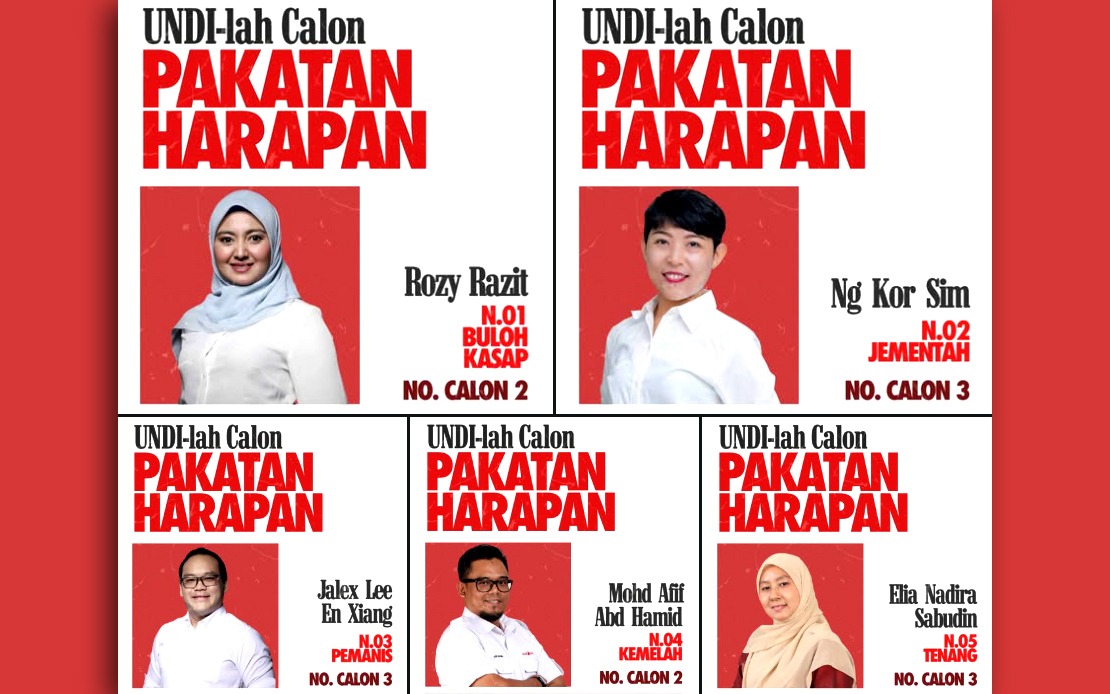
Prime Minister Datuk Seri Anwar Ibrahim has made a direct appeal to voters in Johor to entrust Pakatan Harapan with the state's governance for the next five years, underlining the coalition's readiness to assume responsibility for the diverse and economically significant state. The PKR president conveyed his message through a Facebook post, framing the election as an opportunity for Johoreans to extend their support to the opposition-turned-ruling coalition as it continues its political transformation at the state level.
Anwar's appeal comes as Pakatan Harapan prepares for a comprehensive contest in Johor, fielding candidates across all 56 state assembly seats in what represents a significant commitment of organisational resources and political capital. This full-slate participation reflects the coalition's strategic ambitions in a state that has historically been a political stronghold for other formations, making the scale of PH's engagement noteworthy for observers tracking coalition dynamics in Malaysia's electoral landscape.
The prime minister's message carried a pledge that Pakatan Harapan would execute its responsibilities with unwavering dedication and would not forfeit the confidence that voters place in the coalition. This undertaking addresses a persistent concern among some Malaysians regarding political accountability and the reliability of electoral promises, particularly given the shifting political alignments that have characterised Malaysian politics over recent years. By explicitly committing to honour voter trust, Anwar sought to distinguish Pakatan Harapan's approach from perceptions of political opportunism.
In crafting his appeal, Anwar drew upon religious symbolism, citing Verse 58 of Surah An-Nisa from the Quran, which emphasises the sacred duty to fulfil trusts and maintain justice in affairs. This invocation reflects a common practice among Malaysian political leaders seeking to ground their messages in moral and religious frameworks that resonate with the Muslim-majority electorate. The verse's emphasis on trustworthiness and equitable governance served as a thematic anchor for Anwar's broader argument that Pakatan Harapan deserves the mandate to steer Johor's development and administration.
The electoral timeline for the Johor state election spans several weeks of campaigning intensity. Early voting is scheduled for July 7, allowing certain categories of voters—including military personnel, police officers, and election officials—to cast their ballots ahead of the main polling day. The primary election day falls on July 11, when the majority of registered voters will have the opportunity to determine which parties and candidates will represent their constituencies in the state assembly for the ensuing term.
Johor's political significance extends beyond its 56 seats and substantial population. As Malaysia's southernmost peninsula state and home to major urban centres including Johor Bahru, the state exercises considerable influence over national political trajectories and serves as a barometer for broader electoral sentiment. Control of Johor carries implications for coalition stability at the federal level, making this contest relevant not merely to state administration but to the balance of power within the national government structure.
Pakatan Harapan's decision to contest every available seat reflects confidence in its organisational machinery and resonance with voters across diverse demographic and geographic segments within Johor. The coalition comprises multiple parties with distinct voter bases and regional strengths, requiring careful candidate selection and coordination to maximise electoral performance while managing internal party dynamics. The comprehensive slate also signals that the coalition views this election as consequential for its political renewal and legitimacy in a state where it has traditionally faced headwinds.
For Johor voters, the election presents choices about which coalition or parties should direct state policy on education, infrastructure, agriculture, and economic development in coming years. The state faces ongoing challenges related to urban planning, water management, and economic diversification that will fall within the purview of the state government, making the electoral outcome consequential for residents' lived experience and the state's trajectory.
Anwar's public appeal represents the senior leadership's direct engagement in the state campaign, underscoring the importance Pakatan Harapan assigns to the outcome. His messaging strategy combined personal credibility as prime minister with religious and moral appeals, seeking to mobilise support across demographic constituencies by emphasising trustworthiness and justice as governing principles. The appeal also implicitly frames the election as an endorsement of the coalition's federal administration, linking state and national political considerations in voters' minds.
As the campaign period unfolds, both Pakatan Harapan and competing coalitions will intensify their efforts to convince Johor voters of their capacity to govern effectively and address local priorities. The state election will provide insights into electoral preferences within Malaysia's broader political landscape and may influence calculations regarding future electoral contests at the national and other state levels.

