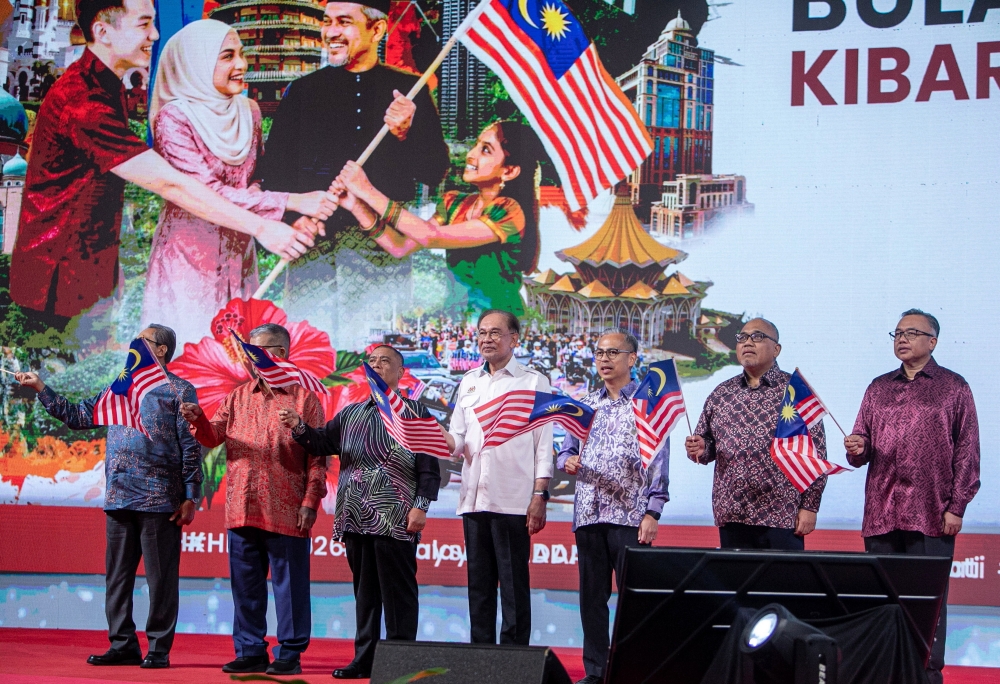
Prime Minister Datuk Seri Anwar Ibrahim delivered a pointed reminder to Malaysia's younger generation on July 19 in Ipoh, stressing the critical importance of understanding and appreciating the monumental efforts that secured the nation's independence. Speaking at an official engagement, Anwar emphasised that contemporary Malaysians must not allow the memory of those struggles to fade, particularly as the country continues to navigate complex challenges in the modern era.
Anwar's message comes at a significant juncture in Malaysia's national timeline, when commemorating the independence movement serves as more than mere historical reflection. The Prime Minister's emphasis on intergenerational responsibility underscores a growing concern among senior leadership that younger citizens, who have only known independent Malaysia, may lack a visceral connection to the sacrifices and determination required to achieve nationhood. This concern reflects broader debates across Southeast Asia about how post-colonial nations maintain continuity with their founding narratives while adapting to contemporary realities.
The Prime Minister's appeal targets a demographic that is increasingly engaged with global narratives and digital platforms, often at the expense of domestic historical consciousness. By repositioning the independence struggle not as dusty historiography but as a living legacy with ongoing implications, Anwar seeks to bridge the generational divide that threatens to sever younger Malaysians from their national foundations. This approach acknowledges that abstract historical knowledge alone may prove insufficient; the challenge lies in making these narratives relevant and compelling to citizens whose lived experience differs fundamentally from their predecessors.
Anwar's remarks also implicitly reference the evolving political and social landscape within Malaysia itself. The independence struggle was characterised by complex negotiations, compromises, and coalition-building across diverse communities. By invoking this history, the Prime Minister appears to be subtly encouraging contemporary Malaysians to embrace the pragmatism and mutual respect that defined that era, offering a counterpoint to current political polarisation and communal tensions. The historical parallel suggests that national progress has always required transcending narrow sectional interests in pursuit of collective good.
For Malaysian youth specifically, understanding the independence movement provides essential context for comprehending the constitutional and institutional frameworks that govern their country today. The Federal Constitution, established at independence, continues to shape everything from citizenship rights to religious freedoms to the structure of parliamentary democracy. Younger generations who lack familiarity with the intellectual and political debates surrounding these foundational documents may struggle to appreciate why certain constitutional provisions exist or why they generate contemporary controversy.
Anwar's exhortation also carries implicit economic and social dimensions. The early independence leaders faced the formidable challenge of nation-building amid limited resources, regional uncertainty, and the pressures of the Cold War. Acknowledging these obstacles and how they were overcome provides younger Malaysians with historical perspective on their own challenges. Whether addressing income inequality, educational access, or regional competitiveness, understanding how previous generations confronted comparable obstacles offers both inspiration and practical lessons in resilience and strategic thinking.
The regional context further amplifies the significance of Anwar's message. Across Southeast Asia, nations grapple with the challenge of maintaining national cohesion and purpose as they advance economically and socially. Indonesia, Thailand, Vietnam, and the Philippines all contend with varying degrees of success in ensuring their youth understand and value their independence narratives. Malaysia's multicultural composition adds particular complexity; the independence struggle involved negotiations between Malay, Chinese, Indian, and other communities that resulted in the unique Malaysian social contract. Forgetting this history risks unravelling the carefully calibrated understandings that underpin interethnic peace.
The Prime Minister's emphasis on remembrance also reflects contemporary concerns about external influences and globalization's impact on national identity. As Malaysian youth consume international media and engage in global digital communities, there is a perceived risk that local and national narratives lose salience. By actively promoting engagement with independence history, Anwar positions the government as custodian of national memory in an era when such custodianship faces unprecedented challenges from decentralized information ecosystems.
Moreover, Anwar's message acknowledges that younger Malaysians inherit not only the benefits of independence but also the unfinished business from that era. Questions surrounding the full integration of different communities, the balance between development and environmental protection, and Malaysia's optimal role in regional and global affairs all trace their origins to independence-era debates. Young citizens equipped with knowledge of these historical discussions are better positioned to engage thoughtfully with contemporary policy questions rather than approaching them as entirely novel challenges.
The Prime Minister's intervention also signals recognition that national narratives require active transmission and renewal rather than passive inheritance. Simply assuming that youth will absorb independence history through curriculum or cultural osmosis has proven insufficient. Direct, explicit appeals from the highest political leadership, delivered in accessible contexts, serve to elevate the priority of historical consciousness and suggest that remembrance constitutes a civic responsibility rather than optional nostalgia.
Anwar's call ultimately reflects a broader philosophical commitment to what might be termed historical citizenship—the notion that being a full participant in national life requires understanding one's country's origins, struggles, and founding principles. For Malaysia particularly, a nation founded on negotiated consensus across diverse communities, this historical awareness becomes essential to maintaining the delicate equilibrium that enables peaceful coexistence. Whether younger Malaysians heed this exhortation will significantly influence the nation's capacity to maintain social cohesion and political stability as it confronts an increasingly complex future.

