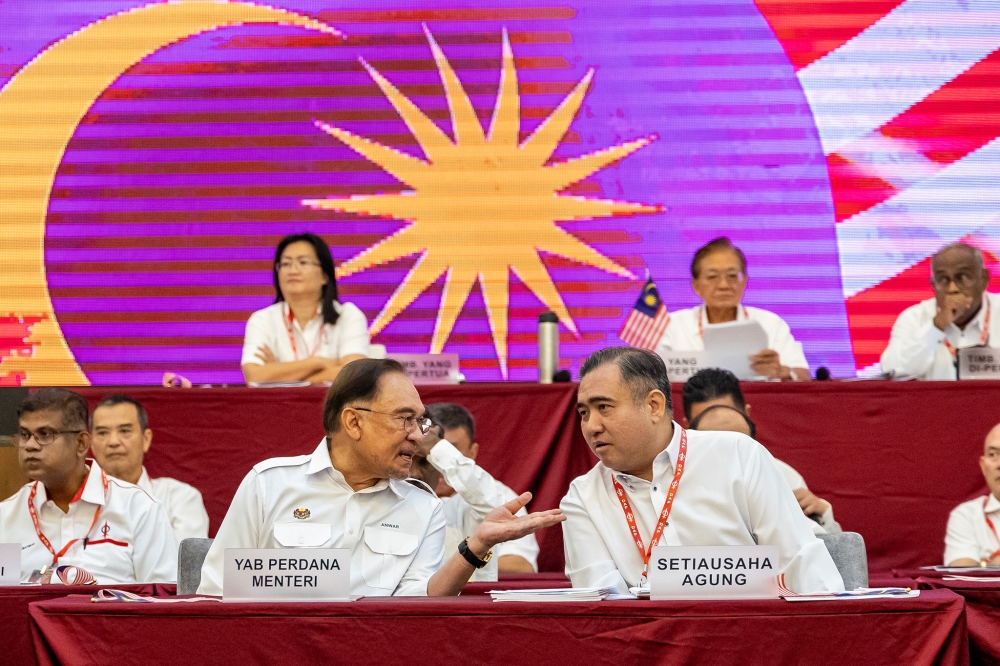
Prime Minister Datuk Seri Anwar Ibrahim has made a direct plea to Melaka's Democratic Action Party (DAP) branch to rethink its withdrawal from the state administration, underscoring the delicate nature of maintaining coalition cohesion within Malaysia's ruling Pakatan Harapan alliance. Speaking in Port Dickson on July 14, Anwar appealed for the party to shelve its exit plans and continue contributing to the Melaka state government's functioning until voters go to the polls, framing the decision as one that affects not just local politics but the broader stability of the federal government itself.
The timing of Anwar's intervention reflects growing friction within Pakatan Harapan, where ideological and strategic differences between component parties—particularly DAP and its Malay-Muslim-majority partners—have periodically threatened to destabilize the coalition. Melaka has become a flashpoint for these tensions, with DAP's decision to leave signalling deeper dissatisfaction over representation, policy direction, and the party's diminishing influence in state-level decision-making. The controversy highlights a structural challenge facing Malaysia's ruling coalition: balancing the interests of secular, Chinese-majority and bumiputera-centric parties within a single political framework.
Anwar's appeal carries weight beyond mere persuasion, as Prime Minister he effectively holds leverage over federal resources and support that benefit state governments. His personal intervention suggests the situation had escalated sufficiently to warrant damage control at the highest level. The DAP's presence in Melaka's government, while numerically modest, symbolizes multi-ethnic cooperation and provides legitimacy to the Pakatan Harapan administration across different demographic segments. Its departure would not only reduce the coalition's parliamentary cushion but also signal weakness in managing internal disagreements, potentially emboldening opposition movements.
Malaysia's political landscape has become increasingly fragmented since the 2022 general election, with no single coalition commanding a decisive parliamentary majority. This precarious arithmetic means that losses in state governments can have cascading effects on federal stability. Melaka, as a strategically located state with growing economic importance as part of the southern economic corridor, carries disproportionate symbolic value. A coalition collapse at the state level risks creating momentum for further defections or by-election losses that could eventually threaten Anwar's federal government.
DAP's grievances in Melaka likely stem from a combination of factors common to Malaysian coalition politics. The party, predominantly drawing support from urban, non-Malay voters, often finds itself pressured to accept secondary roles in Malay-majority states where national security and Islam-centric policies take precedence. Policy concessions that DAP members view as compromising the party's secular, progressive platform frequently become points of internal tension. Additionally, competition over ministerial positions and resource allocation between coalition partners creates ongoing friction that periodically threatens relationships.
The decision to remain in government until the next election, if DAP accepts Anwar's appeal, would represent a commitment to continuity and coalition discipline. Conversely, an exit would signal that DAP's patience with the arrangement has exhausted. Historical precedent offers mixed lessons: parties that have withdrawn from coalitions have sometimes strengthened their negotiating position for future agreements, while others have suffered electoral losses from appearing untrustworthy partners. For DAP specifically, any move must be carefully calibrated to avoid appearing both too accommodating and too confrontational to its base.
Regional observers note that Melaka's political trajectory often presages broader shifts within Malaysian coalitions. The state has experienced multiple government transitions and coalition reshuffles in recent years, making it a bellwether for alliance stability. A successful retention of DAP within the Melaka government through Anwar's intervention would demonstrate the coalition's capacity to manage internal disputes through dialogue. Failure would suggest that the structural tensions within Pakatan Harapan remain unresolved and capable of rupturing arrangements deemed essential to federal governance.
For Malaysian voters and regional observers, this episode illuminates a fundamental challenge confronting Southeast Asian democracies with diverse coalitions: sustaining unity among parties with fundamentally different constituencies and ideologies. Anwar's plea represents an effort to prioritize coalition stability over individual party preferences, a calculus that becomes increasingly difficult as electoral uncertainty grows. The outcome will likely influence how component parties evaluate their long-term commitment to Pakatan Harapan versus potential alternative arrangements.
The coming weeks will prove critical as DAP deliberates on Anwar's appeal. Should the party agree to postpone its withdrawal, it demonstrates that federal-level pressure and persuasion can override local grievances. Should it proceed with exiting despite the Prime Minister's intervention, it signals a fundamental breakdown in coalition discipline that extends beyond Melaka and raises questions about the durability of Malaysia's current ruling arrangement. Either outcome carries implications for federal stability, state-level administration, and the trajectory of Malaysia's coalition politics heading toward future electoral contests.

