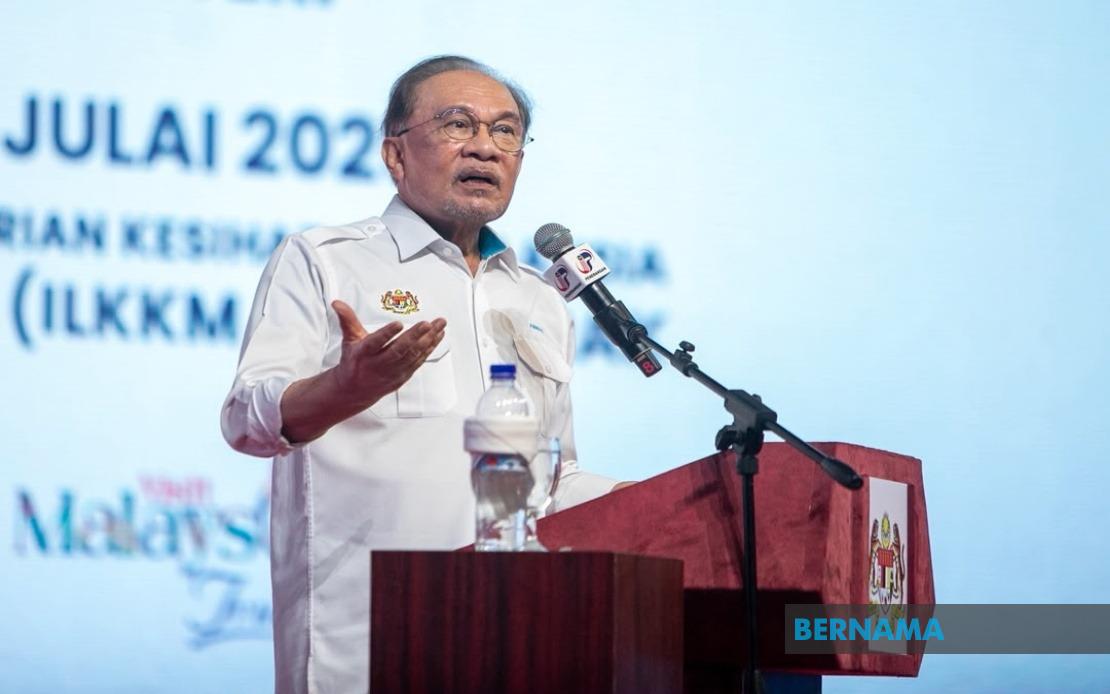
Prime Minister Datuk Seri Anwar Ibrahim has challenged Malaysia's younger generation to deepen their understanding of the country's independence movement and to recognise the profound costs borne by those who secured the nation's freedom. Speaking in Ipoh during the inauguration of the 2026 National Month and Fly the Jalur Gemilang Campaign, Anwar framed national pride not as mere ceremonial observance but as a conscious appreciation rooted in historical awareness and gratitude for sacrifices made decades ago.
Anwar's remarks underscore a recurring concern among Malaysia's political leadership about generational disconnect from the nation's foundational narrative. As Malaysia moves further into the 21st century, the immediacy of independence—achieved in 1957—grows increasingly distant for those born in the 1990s and 2000s. The Prime Minister's emphasis on revisiting historical records and understanding the genuine toll of liberation struggles suggests anxiety about whether younger Malaysians fully comprehend the conditions their predecessors endured to establish the nation-state they now inhabit.
The Prime Minister articulated a three-part framework for national observance: first, reconnecting with historical memory through deliberate study of Malaysia's independence journey; second, using symbolic acts like flying the national flag as expressions of unity; and third, channelling that historical consciousness into building a prosperous future. This approach moves beyond ritualistic flag-waving to propose that patriotism requires intellectual engagement with the past and collective commitment to shared aspirations.
Anwar specifically referenced the personal costs absorbed by independence fighters—invoking imagery of blood, sweat and tears as shorthand for the material hardships, violence, and emotional toll of the liberation struggle. By repeatedly drawing attention to these sacrifices, he appeared to be cautioning against what he might view as complacency or entitlement among younger Malaysians who have never experienced colonial subjugation or the immediate threat to national survival. The warning carries implicit weight in a context where younger voters have demonstrated shifting priorities regarding governance, corruption, and institutional performance rather than historical grievance or nationalist sentiment.
The campaign launch drew senior government figures including Communications Minister Datuk Seri Fahmi Fadzil, National Unity Minister Datuk Aaron Ago Dagang, and Perak Menteri Besar Datuk Seri Saarani Mohamad, reflecting the nationwide scope and political significance of the initiative. The participation of the National Unity Ministry alongside Communications signals that the government views historical commemoration as integral to managing social cohesion and inter-communal harmony, particularly as Malaysia navigates questions of identity and belonging in an increasingly pluralistic society.
For Malaysian readers, Anwar's appeal carries several layers of meaning. On the surface, it represents the annual invocation of national pride surrounding Merdeka Day celebrations. However, the timing and emphasis suggest deeper concerns about the cohesiveness of Malaysian society as different demographic groups hold diverging views on what independence signifies, who deserves credit for its achievement, and what obligations it creates for contemporary citizens. Younger Malaysians, notably, report lower attachment to traditional narratives of national founding, presenting challenges for political leaders invested in consensus around shared historical understanding.
The National Month campaign itself serves as a mechanism for institutionalising patriotic observance throughout August, with the flag-flying initiative providing visible markers of national sentiment across communities. Yet Anwar's framing suggests the government recognises that symbolic gestures alone prove insufficient without corresponding historical literacy and emotional investment in the meaning those symbols represent. This reflects a subtle but significant shift in how nationalist appeals are being constructed, moving from mere celebration toward education and contemplation.
The implications for Southeast Asia extend beyond Malaysia's borders. Across the region, governments confront similar generational challenges regarding historical memory, particularly regarding independence narratives and anti-colonial struggles that remain foundational to national identities. Whether in Thailand, Indonesia, Philippines, or Vietnam, younger citizens often exhibit less attachment to historical narratives emphasising liberation or resistance compared to older generations who directly experienced colonial or quasi-colonial rule. Anwar's intervention thus represents one regional leader's attempt to bridge this gap through deliberate pedagogical and symbolic effort.
For business and civic leaders in Malaysia, Anwar's message functions simultaneously as exhortation and implicit criticism. By emphasising what past generations sacrificed, he invites contemporary Malaysians to consider what they are willing to sacrifice or invest in perpetuating the nation-state and its values. This carries particular resonance at a moment when Malaysian society grapples with concerns about institutional integrity, economic opportunity, and equitable treatment—issues that younger Malaysians prioritise more heavily than historical consciousness.
Moving forward, the effectiveness of the 2026 National Month campaign will depend on whether the government successfully translates Anwar's rhetoric into educational content and experiential programming that genuinely engages younger audiences rather than simply reproducing familiar patriotic scripts. The challenge lies in making the independence struggle feel relevant to Malaysians navigating contemporary challenges around education, employment, climate change, and technological transformation—concerns that may feel distant from historical narratives focused on mid-20th century liberation movements.
Ultimately, Anwar's address in Ipoh represents a deliberate attempt to reinvigorate national consciousness during a period of significant generational turnover in Malaysia's electorate and workforce. Whether through museum exhibitions, educational curricula, digital storytelling, or community dialogues, the coming months will reveal whether this campaign achieves the Prime Minister's stated objective of fostering genuine historical appreciation rather than ceremonial compliance with national commemoration traditions.

