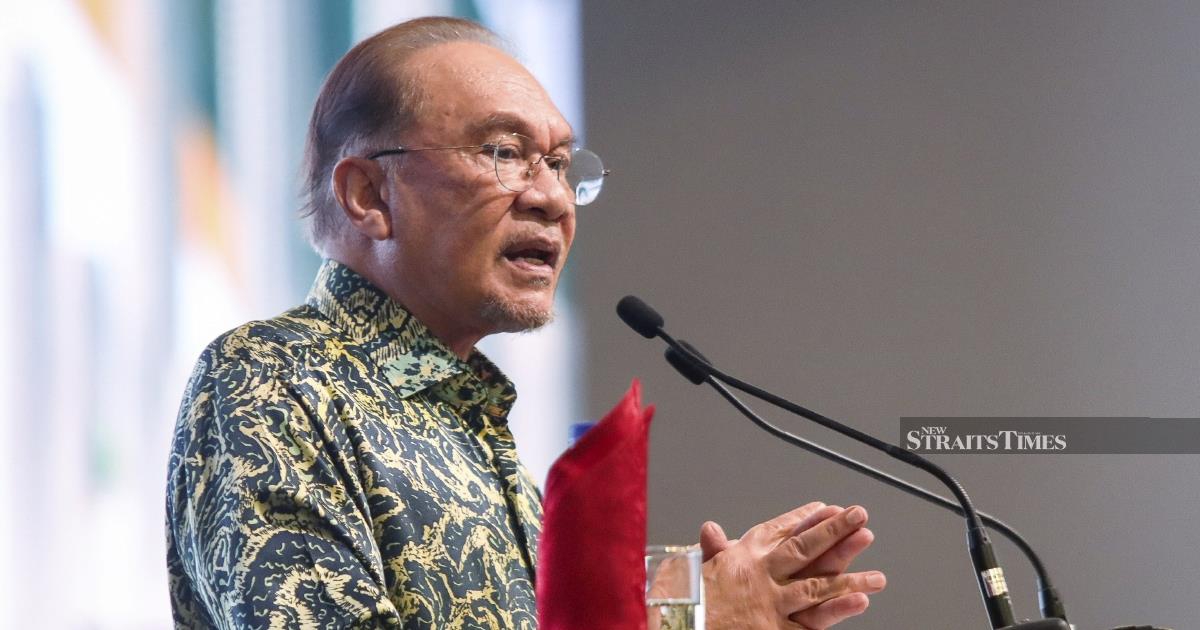
Prime Minister Datuk Seri Anwar Ibrahim has reached out to Malaysia's youth population with a message emphasizing the importance of turning away from polarizing viewpoints, while simultaneously pledging that his administration remains attuned to the concerns voiced by young citizens. Speaking at Permatang Pauh, Anwar positioned the government as a willing partner in addressing youth-related challenges, seeking to counter what he views as corrosive narratives that threaten national cohesion.
The appeal reflects broader anxieties within Malaysian political circles about generational disengagement and the proliferation of divisive rhetoric across social media platforms and grassroots communities. Young voters, particularly those between 18 and 40, represent an increasingly influential demographic bloc that has demonstrated capacity for political mobilization and sentiment-shifting during recent electoral cycles. Anwar's overture acknowledges that winning back youth confidence requires more than policy announcements—it demands active listening and visible commitment to inclusivity.
Anwar's call for rejection of divisive ideologies carries particular resonance in a Malaysian context where identity-based politics, religious differences, and socioeconomic inequalities have historically fueled communal tensions. The phrase "divisive narratives" likely encompasses a spectrum of rhetoric, from communal antagonism to economically-charged populism that frames certain groups as exploitative or illegitimate. Such framing has proven especially potent among younger demographics with limited lived experience of Malaysia's earlier communal conflicts, making them potentially more vulnerable to polarizing messaging.
The prime minister's reassurance that government institutions remain receptive to youth grievances represents an implicit critique of perceptions that the state apparatus has become unresponsive or detached from younger Malaysians' daily realities. Economic concerns—particularly employment opportunities, housing affordability, and educational prospects—dominate youth conversations across the region. By positioning his administration as solution-oriented, Anwar attempts to reclaim narrative space from opposition voices and grassroots movements that have capitalized on youth frustration.
Government engagement with youth constituencies has evolved considerably in recent years, reflecting recognition that disconnection breeds both political vulnerability and social instability. Earlier cycles of youth-led activism, from campus movements to social media-coordinated protests, prompted policymakers to establish dedicated youth councils and consultation mechanisms. Anwar's speech suggests continuation and reinforcement of these institutional efforts, though tangible outcomes remain critical to credibility.
The strategic timing of such messaging often correlates with preparation for electoral contests or anticipated shifts in public sentiment. Youth voting patterns have demonstrated volatility, with individual charismatic leaders, issue-specific campaigns, and peer networks exerting disproportionate influence relative to traditional party machinery. This volatility elevates the stakes of youth engagement for any sitting government navigating toward re-election or attempting to consolidate support.
Regional context matters significantly here. Across Southeast Asia, governments face similar challenges mobilizing youth populations while countering alternative power centers—whether online influencers, activist networks, or opposition coalitions—that speak more directly to generational anxieties. Malaysia's particular vulnerability stems from its multicommunal composition, which creates multiple potential fault lines that divisive narratives can exploit. Anwar's framing positions resistance to polarization as a prerequisite for national progress rather than mere political hygiene.
The effectiveness of such appeals depends substantially on whether government commitments translate into visible improvements in youth-relevant domains. Announcements carry limited weight against persistent unemployment, inadequate wages for entry-level positions, or stagnant opportunities for social mobility. Youth audiences increasingly demand evidence of implementation rather than rhetorical flourishes. Parallel initiatives addressing specific grievances—whether through targeted economic programs, meaningful anti-corruption measures, or educational reform—would significantly strengthen Anwar's appeal.
Divisive ideologies, from the government's perspective, potentially encompass messaging that questions institutional legitimacy or promotes alternative power structures beyond formal democratic channels. However, distinguishing between legitimate dissent and corrosive divisiveness remains perpetually contested terrain. Youth must navigate this space, evaluating whether calls for "unity" represent genuine inclusive governance or rhetorical efforts to suppress critical voices. The government's credibility hinges on demonstrating openness to contrary viewpoints alongside firm opposition to genuinely destabilizing rhetoric.
Looking forward, Anwar's appeal represents an opening gambit in sustained competition for youth political allegiance. Measurable success would involve demonstrable shifts in youth perception regarding government responsiveness, coupled with observable reductions in circulation of polarizing content within youth networks. Conversely, if economic conditions deteriorate or institutional trust further erodes, even repeated appeals to reject divisiveness may prove insufficient to retain generational support. The challenge for Malaysia's leadership remains translating rhetorical commitment into institutional performance that resonates authentically with a demographic increasingly skeptical of establishment narratives, regardless of origin.

