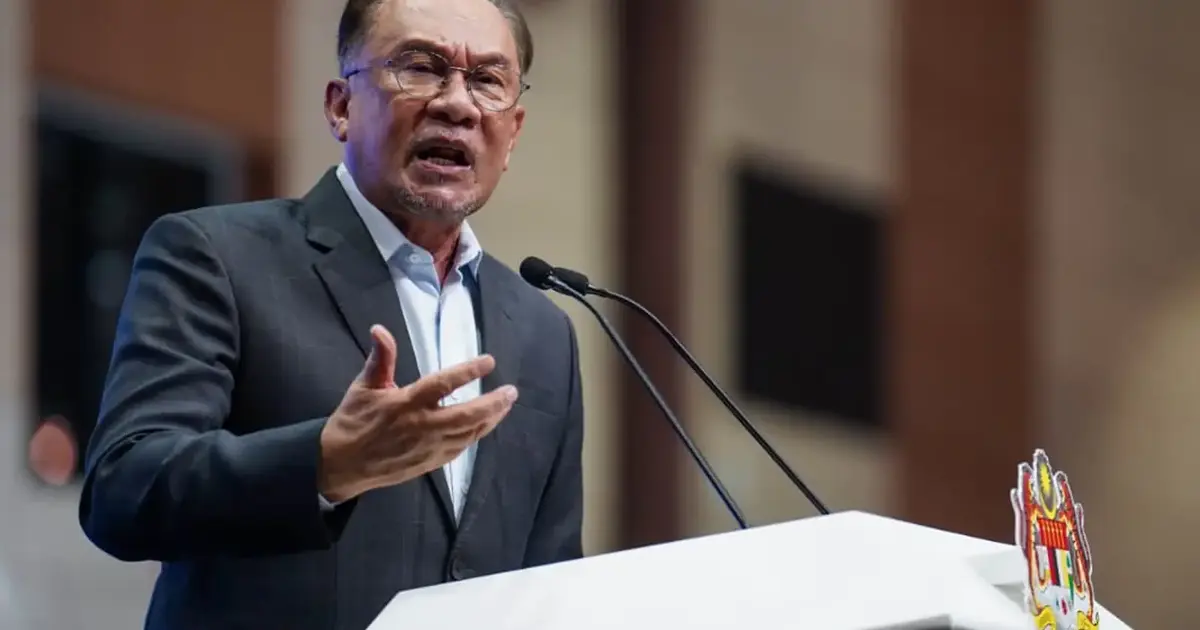
Prime Minister Anwar Ibrahim retains the capacity to revitalise his political fortunes through substantive reform efforts, according to Khairy Jamaluddin, the former Umno Youth chief and prominent voice within the ruling coalition. The assessment comes as Malaysia's political landscape continues to evolve following Anwar's transition to the nation's top office, with questions persisting about how he might consolidate power and manage the competing interests within his multi-party government.
Khairy's intervention reflects a wider conversation among political analysts and senior figures about the trajectory of Anwar's premiership. The former youth leader has suggested the Prime Minister essentially faces a strategic fork in the road: he can either dedicate his remaining political capital to fulfilling the sweeping institutional reforms that formed the cornerstone of his electoral messaging, or he can pivot toward leveraging the considerable machinery of his office to strengthen his political position and entrench his coalition's dominance.
The distinction between these two paths carries significant implications for Malaysia's governance and political stability. Pursuing genuine reform would mean advancing the kinds of systemic changes that civil society advocates have long championed, including strengthening parliamentary oversight, enhancing institutional independence, and tackling entrenched governance challenges. Such an approach aligns with Anwar's pre-election rhetoric and the reformist expectations of voters who backed his coalition. However, reform-focused governance is invariably time-consuming, politically risky, and requires navigating resistance from vested interests within the government itself.
Conversely, consolidating political standing represents a more immediate and readily achievable objective for any prime minister. This would involve deploying state resources, appointments, and patronage networks to secure loyalty within the coalition, neutralise potential challengers, and build a firmer political foundation for governance. While such tactics are conventional in Malaysian politics, they represent a departure from the reform narrative that propelled Anwar's coalition to victory and that continues to energise segments of his supporter base.
Khairy's framing of these options suggests neither choice is inherently illegitimate; rather, they represent genuine strategic alternatives that reflect competing priorities in any government. The observation also carries an implicit acknowledgment that the dual pursuit of both ambitious reform and aggressive power consolidation may prove neither feasible nor advisable given Malaysia's political constraints and the fragility of Anwar's coalition arithmetic.
Anwar's political standing has demonstrated considerable resilience despite the numerous challenges his administration has confronted. From managing inflation and external economic pressures to navigating the delicate balance within a coalition that encompasses parties with divergent ideological positions, his government has maintained broad support across multiple constituencies. The Prime Minister has also benefited from a general public appetite for change and reform following years of political turbulence. However, this goodwill is not unlimited, and expectations require careful management.
The reform agenda that Anwar championed during the campaign extends across multiple domains. Strengthening institutions, reducing corruption, improving fiscal transparency, and enhancing democratic participation all featured prominently in his party's messaging. These are not merely symbolic commitments; they represent substantive policy areas where visible progress would meaningfully alter public perception of his government's performance and vindicate the electoral choice made by Malaysian voters.
Yet the practical challenges in advancing such reforms are formidable. Any serious effort to strengthen parliamentary independence or enhance institutional autonomy must contend with political actors who have benefited from the existing system and possess leverage within government. Similarly, transparency initiatives often uncover uncomfortable truths about past administrations and present actors, potentially destabilising coalition unity at moments when consensus proves essential for legislative action.
From a Southeast Asian perspective, Malaysia's choice between these paths carries broader significance. The region's democracies frequently struggle with the tension between delivering on reform mandates and managing the exigencies of political survival. Anwar's decisions in the coming period may offer lessons for other leaders attempting to balance similar pressures. A government that successfully implements meaningful institutional reforms while maintaining political cohesion would constitute a notable regional achievement, demonstrating that transformation and stability need not be mutually exclusive.
Khairy's assessment implicitly acknowledges that time represents a finite resource for Anwar's ambitions. Political capital depreciates if not spent purposefully, and reform efforts deferred tend to be indefinitely postponed. The further Anwar's administration proceeds without tangible progress on institutional transformation, the more difficult it becomes for supporters to distinguish his government from its predecessors on substantive grounds rather than personnel.
The former Umno Youth leader's intervention also reflects recognition that Malaysian voters increasingly differentiate between symbolic gestures and substantive change. Communities affected by governance challenges, corruption, or institutional dysfunction cannot be indefinitely satisfied through rhetoric alone. Anwar's coalition, though relatively cohesive compared to previous Malaysian administrations, contains constituencies with distinct expectations regarding government performance.
Ultimately, Khairy's observation presents the Prime Minister not as constrained by circumstances but as a decision-maker with genuine strategic options. The choice between reform and consolidation is neither predetermined nor costless. How Anwar navigates this decision in the coming months will substantially determine how his premiership is remembered and whether the electoral mandate for change translates into meaningful institutional transformation.

