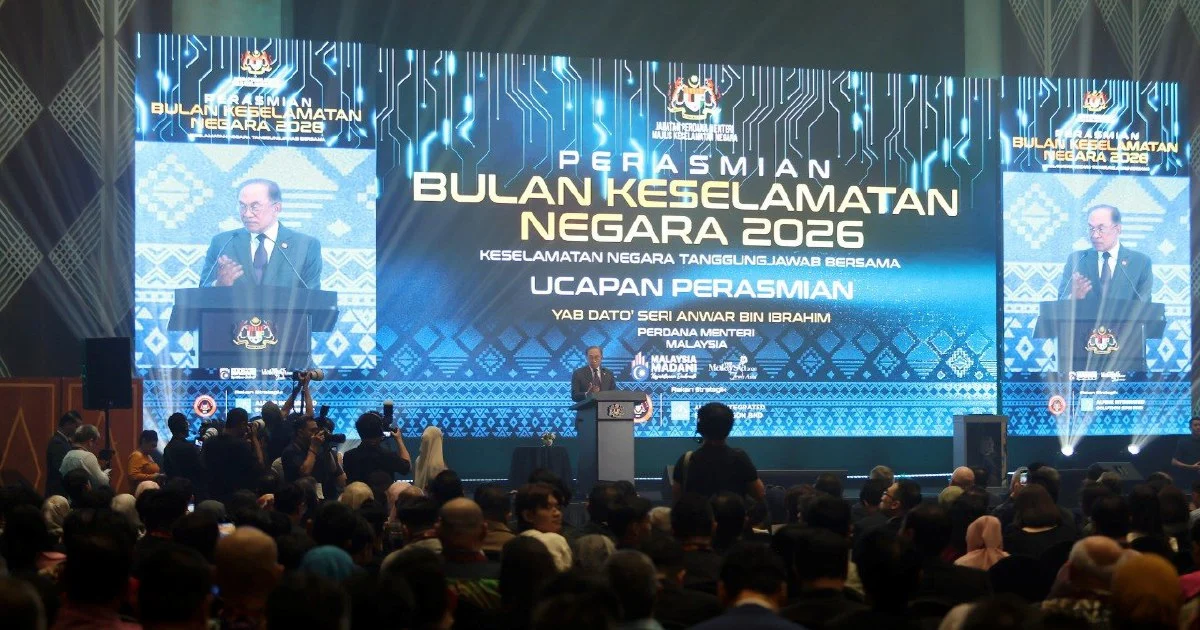
Prime Minister Datuk Seri Anwar Ibrahim has sounded the alarm over the resurgence of race-based political messaging in Malaysian public discourse, particularly as Johor state approaches its electoral contest. Speaking from Putrajaya, the premier expressed deep concern that the nation continues to gravitate towards divisive rhetoric centred on ethnicity and geography rather than substantive policy platforms and shared national interests. His intervention signals growing unease within the federal government about the tone and content of campaigning at the state level, where traditional fault lines have historically been exploited by competing political factions.
The Malaysian political landscape has long been shaped by communal voting patterns and identity-based appeals, a legacy that persists despite decades of nation-building efforts. However, contemporary discussions among observers and party strategists suggest that recent years have witnessed an intensification of such messaging, particularly during hotly contested state elections. Johor, as Malaysia's second-largest state by population and a traditionally important political battleground, occupies considerable significance within this broader pattern. The state has historically served as a testing ground for different political coalitions and campaigns, making the approach adopted by parties contesting there closely watched by analysts and rival camps throughout the country.
Anwar's remarks carry particular weight given his own evolution as a political figure. Throughout his career, he has positioned himself as an advocate for multiracial cooperation and inclusive governance frameworks, distinguishing his approach from more communal-focused alternatives within the Malaysian political spectrum. His current intervention therefore reflects not merely tactical positioning but a philosophical stance that has characterised much of his public leadership. By publicly cautioning against racial narratives at this juncture, he effectively challenges participating parties to elevate their campaign discourse and demonstrate commitment to principle beyond electoral cycle dynamics.
The timing of the Prime Minister's statement carries significance for the broader political equilibrium in Malaysia. With Johor preparing for elections, several political coalitions are mobilising resources and crafting messages designed to appeal to the state's diverse electorate. The state's demographic composition requires candidates and parties to construct winning coalitions across different communities, yet historical patterns reveal that success has sometimes been achieved through appeals that emphasise group identities rather than common ground. Anwar's public warning serves as a corrective, suggesting that federal leadership will closely monitor the nature of campaigns and their consistency with stated national values.
The concern about regional narratives intersects with long-standing debates about Malaysia's federal structure and the distribution of power between state and federal governments. Johor, as a state with considerable autonomy and significant economic importance, has at times pursued distinctive political directions that diverge from federal trends. Campaigns that emphasise regional pride or state-specific grievances can effectively mobilise voters, but they carry the risk of fragmenting national cohesion if articulated through exclusionary frameworks. The Prime Minister's intervention implicitly acknowledges this tension, suggesting that legitimate state interests need not be pursued through divisive racial framing.
The electoral contest in Johor takes place within a broader context of political realignment in Malaysia. The country's political parties continue to negotiate their positions and coalition structures following shifts in voter preferences and generational change. Younger voters, in particular, have demonstrated willingness to evaluate candidates on performance and policy rather than communal affiliation alone, creating space for campaigns that transcend traditional dividing lines. Anwar's remarks effectively position the federal government as supportive of this evolving voter sentiment and as willing to encourage parties to respond to these changing preferences.
Implementing such principles requires sustained effort from multiple stakeholders. Election observers, media outlets, and civil society organisations all play roles in either amplifying or constraining the prevalence of divisive messaging. When political leaders from the highest levels explicitly caution against such approaches, they create space for alternative voices and campaign strategies. Parties that choose to focus on development records, infrastructure investment, education, and economic opportunity rather than communal appeals may find such positioning both principled and politically viable, particularly if they receive implicit support from federal authorities.
The challenge facing Malaysia involves transforming such rhetorical emphasis into structural political change. While warnings from the Prime Minister set important tone, sustaining change requires building constituencies that genuinely value multiracial governance and inclusive policy platforms. This development depends partly on enabling conditions created by federal leadership but ultimately rests on voter preferences expressed through electoral choices. If Johor voters demonstrate through their ballots that they reward inclusive campaigns and punish divisive ones, subsequent contests will naturally adjust accordingly.
Anwar's intervention also reflects anxieties within ruling coalitions about internal cohesion and electoral performance. Parties within the federal coalition maintain distinct bases and sometimes emphasise different themes, creating potential tensions. By publicly advocating for transcendence of racial narratives, the Prime Minister effectively signals expected behavioural norms for coalition partners and competitors alike. This approach aims to preserve necessary unity while establishing clear parameters for acceptable political competition. The extent to which his warning translates into actual campaign behaviour will reveal much about party discipline and commitment to federal-level directives within Malaysia's decentralised political system.

