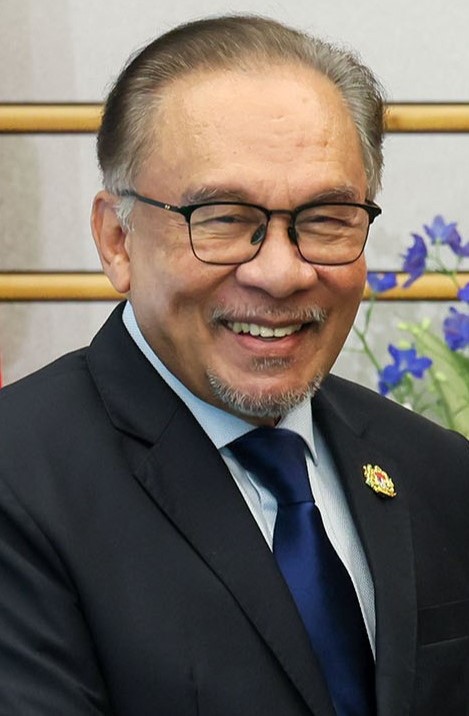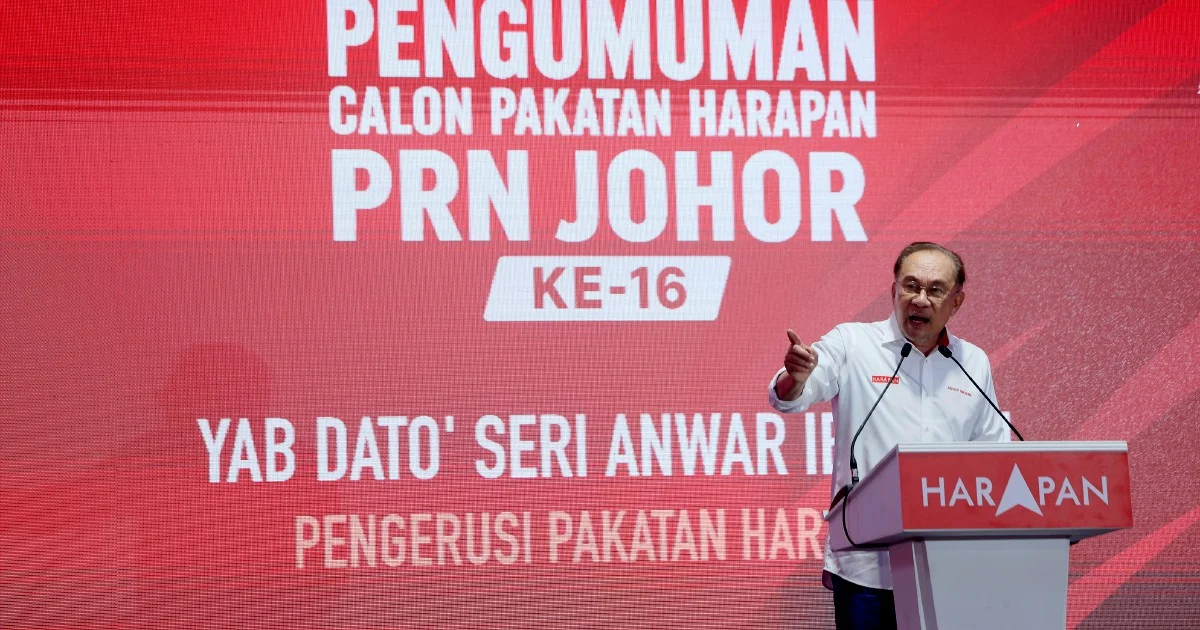
Prime Minister Datuk Seri Anwar Ibrahim has escalated scrutiny of how federal resources have been distributed to Johor, urging the state's executive councillors to directly challenge the accounting practices of the two administrations that preceded his government. Speaking in Tangkak, Anwar emphasised the need for state officials to demand clear answers from both the Barisan Nasional coalition that governed until 2018 and the subsequent Perikatan Nasional federal administration regarding what Johor claims has been an inequitable allocation of revenue.
The Prime Minister's intervention reflects a broader push by the federal government to examine historical fiscal relationships between Kuala Lumpur and the states, particularly resource-rich regions that argue they have been systematically under-compensated. Johor, as Malaysia's second-largest economy and a significant contributor to national revenues through taxation, investment, and commerce, has long maintained that its fiscal contributions far exceed the federal transfers it receives. This grievance has simmered across multiple electoral cycles and political administrations.
Anwar's direction to the state executive council represents a strategic political move that accomplishes multiple objectives simultaneously. By encouraging Johor's representatives to pursue these questions themselves, rather than directing a federal inquiry, the Prime Minister positions his administration as responsive to state-level concerns whilst maintaining plausible distance from what could be perceived as partisan finger-pointing at predecessors. The approach also empowers Johor's leadership to take ownership of addressing a longstanding complaint from their constituents.
The timing of this statement carries particular significance in Malaysian politics. Johor has historically been a Barisan Nasional stronghold, and questioning the previous federal administrations under BN and PN potentially addresses voter frustrations without antagonising the state government's current alignment. For Perikatan Nasional, which currently governs Kelantan and Terengganu, such scrutiny may further strain its relationship with the federal coalition government led by Anwar's Pakatan Harapan.
Accounting for the precise allocation of federal revenue to states involves complex formulae that distribute shared taxes, development grants, and special allocations according to criteria established in Malaysia's constitutional framework. States argue that these distribution mechanisms fail to account for their actual contribution to national GDP and tax revenue, creating persistent imbalances where economically productive regions receive proportionally less federal support than demographically larger but less economically developed states.
Johor's specific complaint centres on this structural discrepancy. Despite generating substantial economic output through petrochemicals, manufacturing, agriculture, and trade, Johor receives federal allocations that do not correspond to its fiscal contribution. State officials have articulated that this disparity has constrained development projects, infrastructure maintenance, and service delivery in critical areas including education and healthcare. The accumulated effect of these under-allocations compounds over years and decades, creating visible infrastructure gaps in comparison to other states receiving higher per-capita federal support.
For the Johor state executive council, Anwar's encouragement represents both opportunity and responsibility. State representatives can now pursue detailed financial audits and comparative analyses of revenue distribution across the past two federal administrations without appearing to initiate a politically motivated witch-hunt. By framing this as an executive council-led investigation, the process gains legitimacy as a state-level accountability exercise rather than federal political theatre.
The broader implications extend to Malaysia's federal-state fiscal architecture. If Johor substantiates claims of systematic under-allocation, pressure will mount for reforming the revenue-sharing formulae that govern federal transfers. Such reforms could affect not only Johor but the entire distribution system, potentially reshaping the financial relationship between Putrajaya and state capitals. Revenue-rich states like Selangor, which also harbour similar complaints about federal allocations relative to their economic contribution, may intensify their own demands for restructured fiscal relationships.
For the Pakatan Harapan-led federal government, addressing legitimate state grievances offers opportunities to differentiate its governance from predecessors whilst building political capital in economically important regions. Johor's political leanings remain fluid following the 2022 elections, when Barisan Nasional's dominance was challenged. Demonstrating responsiveness to Johor's fiscal concerns could strengthen federal-state relations and build goodwill among voters evaluating the government's track record on economic management and fair resource distribution.
The challenge for Anwar's administration lies in translating political rhetoric into concrete fiscal adjustments. Even if the Johor investigation confirms under-allocation under previous administrations, implementing corrective measures involves reallocation decisions that may disadvantage other states or require substantial additional federal revenue. Such trade-offs invite opposition from affected regions and add complexity to coalition politics, as different states within the Pakatan Harapan partnership may prioritise competing fiscal interests.
Moving forward, Johor's response to Anwar's call will be closely monitored. How aggressively the state pursues these questions, what their investigation reveals about past practices, and whether the findings translate into concrete fiscal reform will determine whether this intervention produces substantive change or remains political positioning. For Malaysian federalism, the outcome carries implications extending well beyond Johor's borders.