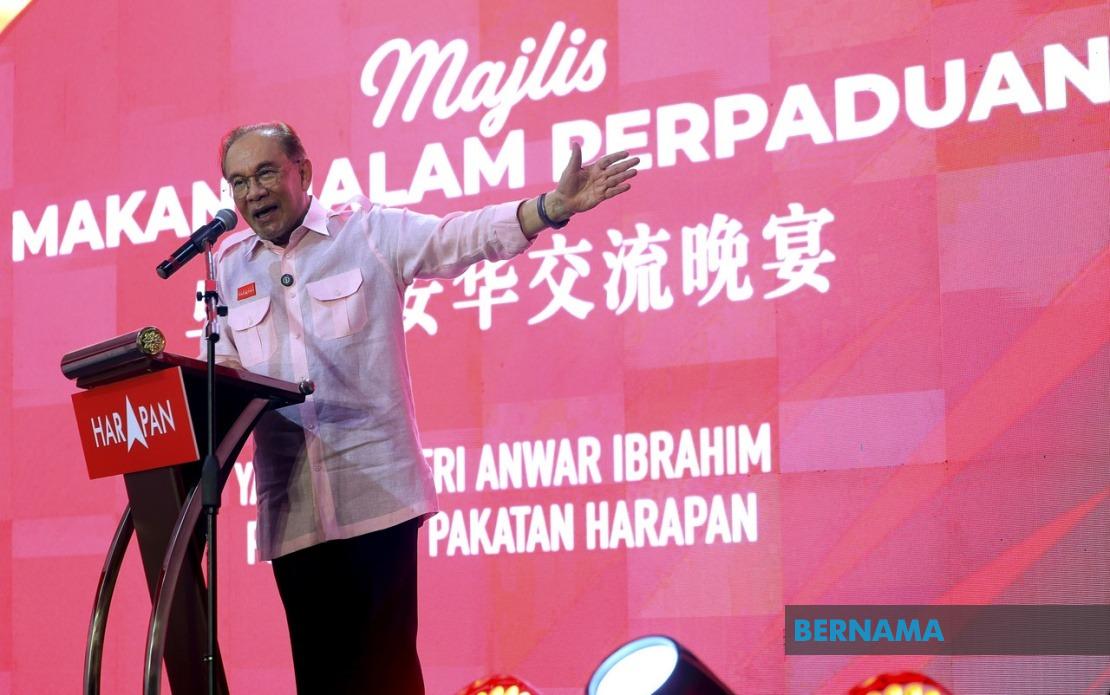
Prime Minister Datuk Seri Anwar Ibrahim has taken a swipe at opposition rivals he claims are already competing for the menteri besar position in Negeri Sembilan even before the state election is held. Speaking at a campaign dinner in Sikamat on July 22, the Pakatan Harapan chairman painted a picture of internal discord within the opposing coalition, suggesting that fractious leadership contests would distract from serving constituents. His remarks encapsulate a broader campaign strategy by PH to position itself as the stable, unified choice against what the ruling coalition portrays as an opposition beset by personal ambitions and power struggles.
Anwar's critique went beyond mere political theatre. He articulated a philosophical argument about electoral priorities, contending that voters should fundamentally ask whether their chosen representatives possess the competence and integrity to govern effectively. This framing attempts to shift the conversation away from opposition accusations of PH mismanagement or controversial policies, instead promoting a narrative where capability and proven track record should override other considerations. The tactic reflects PH's broader effort to anchor its campaign messaging around governance credentials rather than ideological or identity-based appeals.
The timing of Anwar's remarks carries significance as Negeri Sembilan prepares for polling on August 1. The state election represents a key test of PH's electoral appeal outside its traditional strongholds, particularly after the coalition faced setbacks in recent by-elections and internal organisational challenges. Negeri Sembilan, with its compact 36-seat assembly, has historically been a politically fluid state where voter sentiment can shift dramatically. The outcome will carry implications not merely for state administration but for PH's broader credibility heading into potential federal election discussions.
To reinforce his message, Anwar pointed specifically to the incumbent menteri besar, Datuk Seri Aminuddin Harun, whom he positioned as embodying PH's commitment to transparent, accountable leadership. Aminuddin's tenure has been relatively uncontroversial by Malaysian standards, avoiding the headline-grabbing corruption scandals or administrative failures that have plagued other state governments. By highlighting Aminuddin's track record of steering clear of abuse of power allegations, Anwar effectively contrasted PH's governance model with the implied chaos of opposition-led administrations or the fractious internal dynamics he attributed to his rivals.
The menteri besar himself was present at the campaign event, alongside other PH candidates contesting in different constituencies including Nor Azman Mohamad in Sikamat and Datuk Muhammad Nazri Kassim in Ampangan. This deliberate show of party unity served as a visual counter-narrative to Anwar's accusations of opposition infighting, suggesting that PH operates as a cohesive team rather than a collection of competing interest groups. The gathering functioned simultaneously as a morale-boosting exercise for party machinery and a media opportunity to reinforce campaign themes.
Anwar also directed his criticism toward what he termed the racial narratives being mobilised by certain quarters during the campaign. This reference likely alluded to opposition parties' invocation of communal or religious concerns as electoral platforms, a traditional strategy in Malaysian politics that PH has previously employed itself but now frames as divisive and counterproductive. The prime minister countered by emphasising the Unity Government's commitment to inclusive governance that purportedly assists all communities regardless of ethnic or religious background through expanded socio-economic programmes, housing schemes, and civil service salary enhancements.
The mention of concrete policy initiatives—increased allocations for social welfare, housing projects, and public sector remuneration—grounds PH's appeal in tangible benefits rather than abstract principles. These programmes theoretically appeal across communal lines by addressing universal concerns about cost of living, housing affordability, and public servant welfare. However, the effectiveness of such messaging depends on voter perception of whether PH has genuinely delivered on similar promises at the federal level since taking office in 2022. Sceptical voters may view such campaign assurances as rhetorical flourishes disconnected from lived experience of inflation, housing costs, and civil service salaries that many feel remain inadequate.
PH's candidate distribution across Negeri Sembilan reflects deliberate calculations about party strength and voter preferences in different constituencies. The party is fielding candidates in all 36 seats, with its largest contingent coming from PKR with 16 candidates, followed by DAP with 11 and Amanah with nine. This distribution demonstrates the relative organisational heft of each coalition member, with PKR's dominance reflecting its status as the largest PH component and Anwar's party of origin. The strategic allocation seeks to maximise PH's appeal across different demographic and geographic segments within the state, pairing urban-oriented DAP representatives with PKR's stronger rural presence and Amanah's capacity to appeal to particular constituencies.
The campaigning environment is compressed, with early voting scheduled for July 28 and polling day on August 1. This truncated timeline means that each campaign statement carries disproportionate weight, as parties have limited opportunity to reshape narratives once initial impressions solidify among voters. Anwar's preemptive strike against opposition leadership scrambles attempts to define the frame before opposition parties can establish their own counter-narratives or articulate alternative visions for state governance. The seven-day window between early voting and final polling day allows for last-minute campaign pushes but little opportunity for sustained media engagement or voter conversion efforts.
For Malaysian observers and regional analysts, the Negeri Sembilan election holds implications beyond the state itself. As Southeast Asia's democracies grapple with questions about coalition stability, inclusive governance, and the balance between identity politics and material improvement, Negeri Sembilan's results may provide insights into voter prioritisation of these competing concerns. Should PH prevail convincingly, it could suggest that electorate discomfort with opposition infighting and appreciation for economic governance outweigh other considerations. Conversely, a disappointing performance might indicate that Anwar's government faces credibility challenges despite efforts to highlight administrative achievements.
The Negeri Sembilan contest also reflects broader shifts in Malaysian political competition. The traditional bipolar framework of BN versus opposition has fractured into more complex multipolarity, with PH itself comprising ideologically distinct parties managing an uneasy coalition. Anwar's critique of opposition leadership competition inadvertently highlights the very challenges that PH navigates internally, managing competing ambitions among PKR, DAP, and Amanah while maintaining sufficient unity to govern. The difference, according to PH's campaign narrative, lies in subordinating personal advancement to collective governance objectives—a claim that will be tested both through the Negeri Sembilan outcome and through PH's capacity to maintain coalition cohesion through inevitable future pressures and opportunities for political realignment.

