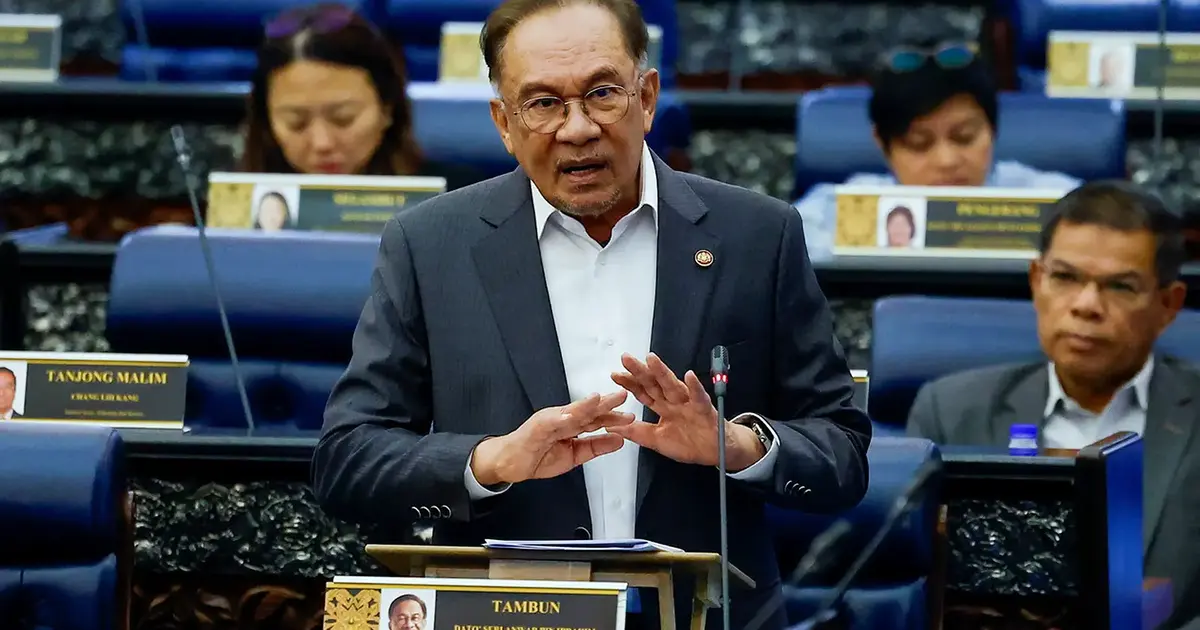
Prime Minister Anwar Ibrahim has attributed the substantial increase in special federal grants to Sabah to prior agreements forged during the tenure of the previous Warisan state administration, insisting that the enhanced funding arrangements were neither arbitrary nor unauthorised. According to the premier, successive tranches of special allocations have been progressively enlarged, with baseline figures of RM53.4 million allocated for the fiscal years 2020 and 2021, ultimately reaching RM106.8 million by 2024—a doubling of the original outlay within just four years.
The assertion carries significance in the context of Malaysia's federal-state fiscal architecture, wherein special grants function as a mechanism through which the federal government channels discretionary resources to states, often contingent upon political alignment and negotiated agreements between administrations. Sabah, as one of the nation's resource-rich but developmentally challenged territories, has historically relied upon such supplementary funding streams to augment its domestic revenue base and finance critical infrastructure and social programmes. The trajectory of grant increases Anwar describes suggests a deliberate policy of escalation rather than one-off allocations, implying structured commitment across multiple fiscal cycles.
The timing of Anwar's clarification appears designed to preempt criticism regarding the allocation methodology or to establish historical legitimacy for the enhanced grants under the Warisan government's stewardship. By tethering current funding levels to antecedent agreements, the federal administration positions itself as honouring commitments made by its predecessor, thereby deflecting potential accusations of playing favourites or deploying grants as political leverage. This rhetorical strategy is particularly relevant given Malaysia's competitive political landscape, wherein state and federal governments controlled by different coalitions frequently contest funding decisions and resource distribution.
Sabah's political landscape underwent substantial reconfiguration in recent years, with electoral outcomes and coalition shifts altering the state's relationship with federal power. The Warisan party, which previously governed the state, has since ceded control, introducing questions about continuity and consistency in federal-state financial arrangements. Anwar's comments suggest an effort to demonstrate that regardless of which political grouping administers Sabah at the state level, the federal government remains committed to honouring previously negotiated fiscal commitments—a position with implications for inter-governmental trust and the predictability of public finances at the state level.
The magnitude of the grant escalation—from RM53.4 million to RM106.8 million—merits closer examination in terms of what it signifies for Sabah's development trajectory and fiscal autonomy. While doubling represents a substantial nominal increase, contextualising this against Sabah's total budget allocation, federal revenue transfers, and the state's development requirements would provide fuller understanding of whether such grants address genuine fiscal gaps or represent supplementary resources for discretionary deployment. The special nature of these grants suggests they fall outside normal revenue-sharing formulae and may be tied to specific infrastructure projects, regional development initiatives, or addressing particular disparities.
For Malaysian observers, particularly those in other states, the Sabah precedent raises questions about the equity and consistency of federal grant distribution mechanisms. If special grants of this magnitude have been negotiated and approved for Sabah, comparable analyses might be conducted regarding allocations to other states, whether comparable justifications exist for differential treatment, and how such arrangements fit within broader national fiscal policy frameworks. The absence of transparent criteria for allocating special grants can foster inter-state resentment and complicate national development planning.
Anwar's public acknowledgement of the Warisan government's role in consenting to the increased grants also serves a diplomatic function, acknowledging the contributions and agreements of the previous administration while establishing continuity of governance principles. In Malaysian politics, where transitions of power frequently involve contentious handovers and disputes over legacy decisions, the prime minister's validation of the prior government's fiscal determinations demonstrates institutional respect and commitment to honouring agreements irrespective of electoral outcomes. This approach may facilitate smoother transitions and encourage incoming administrations to honour commitments made by their predecessors.
The matter also intersects with broader questions about fiscal federalism in Malaysia and whether the constitutional framework for revenue distribution between federal and state governments adequately addresses regional disparities and development needs. Special grants, while offering flexibility, exist somewhat outside formal mechanisms and may lack the transparency and predictability associated with constitutionally mandated revenue sharing. As Malaysia continues to grapple with uneven development across its states and territories, the role of such discretionary allocations in addressing regional imbalances remains contested and requires ongoing scrutiny.
Looking forward, Anwar's clarification may establish expectations that subsequent tranches of Sabah's special grants will continue the escalation trajectory established through the Warisan agreement, or conversely, provide rationale for re-evaluating whether such allocations remain justified or should be redirected to other regions or purposes. The public nature of his statement creates a form of political commitment that may constrain future fiscal decision-making, particularly if economic conditions or federal priorities shift in coming years. The precedent set by honouring the Warisan-era arrangement will likely inform how other states and political actors assess the reliability and consistency of federal commitments in their own negotiations.

