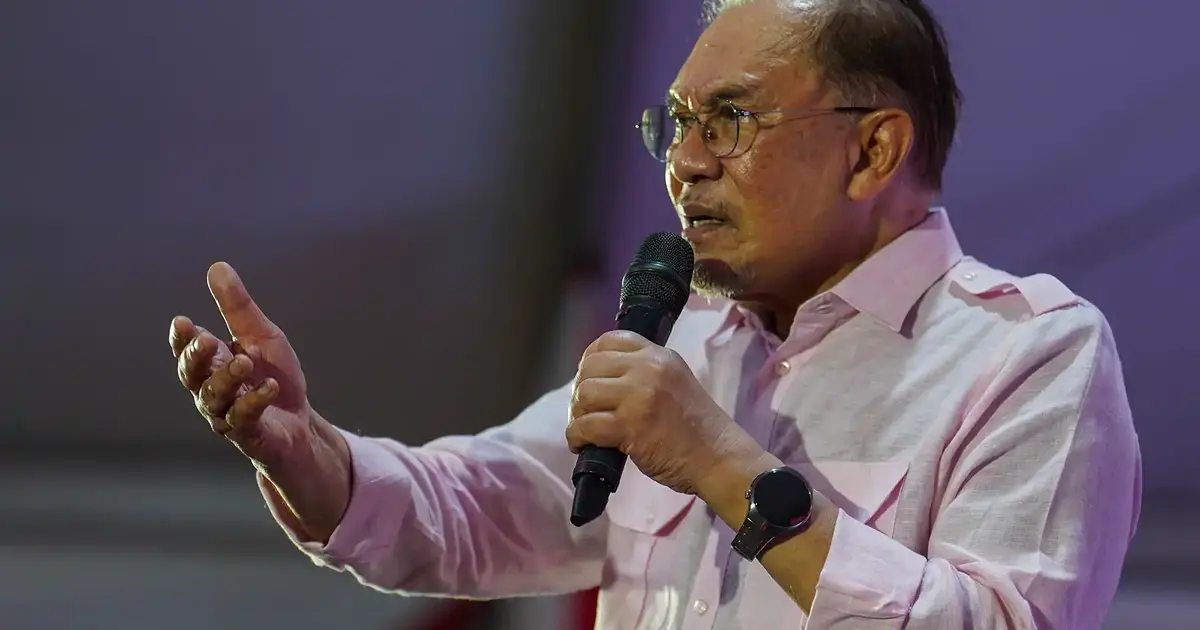
Prime Minister Anwar Ibrahim has made clear that substantial new allocations announced for the Subang and Petaling Jaya parliamentary constituencies are intended exclusively to serve constituent interests, not to advance any political agenda. The funding packages, totalling RM4.6 million across both constituencies, represent fresh commitments to infrastructure and community development that will benefit residents regardless of their political affiliation.
Subang will receive an additional RM1.6 million in government resources, while Petaling Jaya is set to access RM3 million from the same funding pool. The prime minister's emphasis on the purely developmental nature of these allocations reflects an ongoing tension in Malaysian politics between the perception of pork-barrel spending and the genuine need for infrastructure investment in urban constituencies. By explicitly stating that these funds are for the people rather than for political actors, Anwar is attempting to reframe the narrative around government resource distribution in these two closely watched suburban areas in the Klang Valley.
The timing and context of these announcements carry particular significance for Malaysian politics. Both Subang and Petaling Jaya are strategically important constituencies that have historically swung between different political coalitions. They represent the demographic diversity and economic vitality of the greater Kuala Lumpur metropolitan region, where middle-class and upper-middle-class voters tend to be sensitive to issues of governance, accountability, and value for money in public spending. The fact that the prime minister felt compelled to publicly clarify the purpose of these allocations suggests awareness that Malaysian voters in these areas scrutinize how government funds are deployed.
From a governance perspective, the announcement reflects an attempt to channel development resources toward constituencies where infrastructure gaps remain despite their relative prosperity. Both Subang and Petaling Jaya, though economically vibrant, face challenges common to rapidly urbanising areas: congestion, aging public facilities, inadequate public transport connections, and pressure on local amenities. The RM4.6 million commitment, while significant, underscores the scale of development needs across Malaysia's urban landscape and raises questions about whether such allocations are sufficient to address persistent infrastructure deficits.
The prime minister's need to explicitly distinguish between personal political benefit and public welfare mirrors broader concerns about political financing and patronage in Southeast Asia. In many regional democracies, including Malaysia, there remains considerable public scepticism about whether government spending genuinely reaches intended beneficiaries or is diverted toward enhancing the popularity of specific politicians. By framing these funds as explicitly for constituent benefit rather than personal political gain, Anwar is positioning himself within a narrative of reformist governance that prioritizes public interest over partisan advantage.
For the MPs representing these constituencies, the announcement carries both opportunity and responsibility. They will be expected to oversee the effective implementation of projects funded by these allocations, and their constituents will likely hold them accountable for whether promised benefits materialise. In the context of Malaysian politics, where legislative representatives serve as crucial intermediaries between federal government and local communities, the credibility of both the government and individual MPs depends substantially on demonstrable delivery of promised infrastructure and services.
The significance of these allocations extends beyond the immediate constituencies. They signal the government's continuing commitment to the Klang Valley, a region that accounts for a substantial share of Malaysia's economic output and population. Investment in Subang and Petaling Jaya reflects recognition that maintaining the competitiveness and livability of Malaysia's premier urban centre requires sustained public sector commitment to infrastructure development. This has implications for broader national development priorities and the allocation of limited government resources across all 222 parliamentary constituencies.
Moreover, the announcement occurs within the broader context of Malaysia's transition toward a reformed political economy. The government has sought to position itself as different from its predecessors through emphasis on transparency and merit-based resource allocation. Whether these allocations are indeed distributed on need-based criteria or reflect other political calculations will likely influence public perception of government sincerity regarding governance reform. Malaysian voters, particularly in urban areas, have shown increasing willingness to punish what they perceive as wasteful or politically motivated spending.
The RM1.6 million and RM3 million figures themselves merit scrutiny. For constituencies with combined populations exceeding 300,000 residents, per-capita allocation remains modest, suggesting either that these represent only partial funding for larger projects or that the government's total development spending envelope for these areas extends beyond these announced figures. Understanding the full scope of planned investment in Subang and Petaling Jaya would provide clearer insight into whether announced allocations represent genuine developmental capacity or political window-dressing.
Anwar's insistence that these funds serve the people rather than political interests also reflects awareness that Malaysia's electorate has become increasingly sophisticated in distinguishing between genuine infrastructure investment and superficial patronage. The urban voters of Subang and Petaling Jaya, in particular, possess the informational resources and civic engagement to monitor how such funds are deployed. The prime minister's rhetorical emphasis on public benefit, while perhaps necessary, ultimately must be validated through transparent project implementation and visible improvement in constituent welfare.

