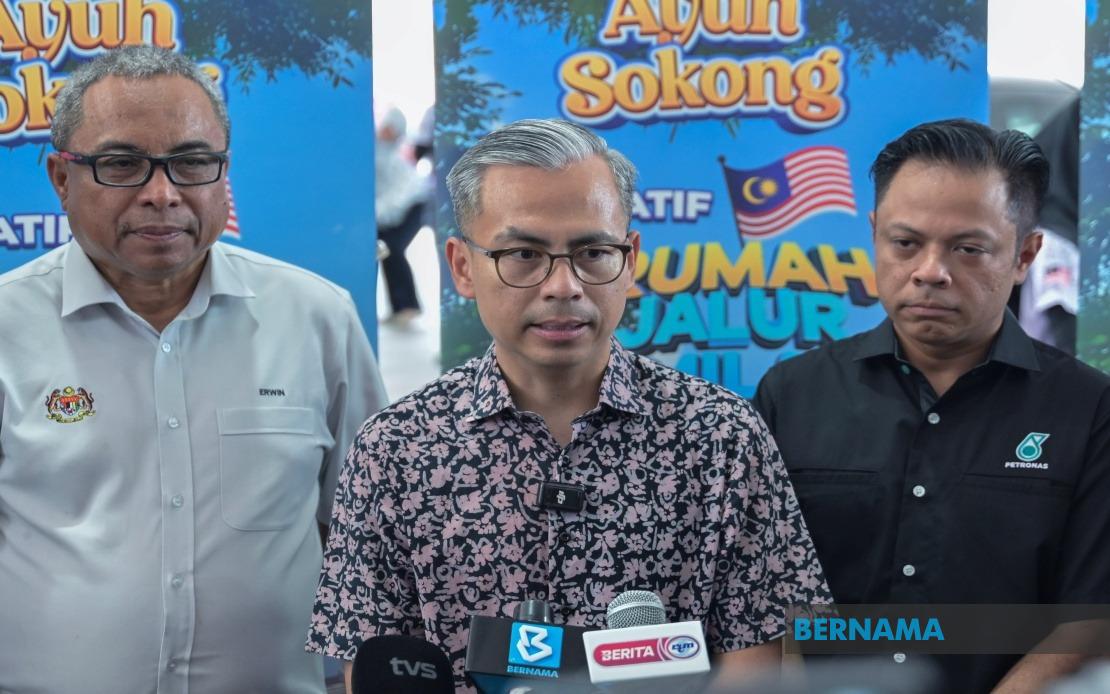
Prime Minister Datuk Seri Anwar Ibrahim has formally committed to advancing the expansion of the Sarawak State Legislative Assembly, directing the Election Commission to furnish an updated report on the redelineation initiative that would significantly increase the state's legislative representation. The announcement underscores the MADANI Government's focus on electoral reforms and institutional strengthening in Malaysia's largest state by area.
Government spokesman Datuk Seri Fahmi Fadzil disclosed that the Prime Minister raised the matter during a recent Cabinet session, reaffirming his administration's intention to proceed with the implementation. Fahmi explained that while the Cabinet has been briefed on the commitment, specific timelines have not yet been communicated because the process depends on several outstanding deliverables from the Election Commission. This measured approach suggests the government is ensuring proper procedural compliance before finalising implementation schedules.
The proposed redelineation seeks to add 17 new seats to the Sarawak State Legislative Assembly, expanding the total from 82 to 99 seats. This expansion, previously mentioned in reports regarding the Sarawak State Legislative Assembly (Composition of Membership) Bill 2025, represents a substantial restructuring of the state's electoral landscape. Such redistribution of legislative seats typically aims to address population growth and ensure more equitable representation across constituencies, though it also carries implications for power dynamics within state politics.
Minister of Women, Family and Community Development Datuk Seri Nancy Shukri and Minister of Works Datuk Seri Alexander Nanta Linggi spearheaded advocacy for the redelineation matter within Cabinet discussions, highlighting cross-portfolio support for the initiative. Their involvement demonstrates that the proposal enjoys backing from multiple government departments, suggesting it has been vetted through various governmental levels before reaching the Prime Minister's desk for final commitment.
For Malaysian political observers, the timing of this announcement reflects broader efforts by the federal government to strengthen institutional frameworks in Sarawak, a strategically important state in federal-level politics. Any significant expansion of Sarawak's state legislature could influence future state elections and the composition of national politics, given the state's substantial parliamentary representation. The move may also be seen as part of efforts to solidify MADANI's political standing in the crucial East Malaysian region.
Simultaneously, Fahmi indicated that the government is advancing preparations for the upcoming Melaka state election, demonstrating the administration's capacity to manage multiple electoral initiatives concurrently. The focus on logistical readiness reflects lessons learned from recent state elections in Johor and Negeri Sembilan, where the government has apparently identified areas requiring operational improvement.
Crucially, the Malaysian Communications and Multimedia Commission has been tasked with collaborating with the Election Commission to ensure adequate internet infrastructure at all polling centres in Melaka. This reflects contemporary electoral standards, where reliable digital connectivity supports polling day operations and post-election transparency. By addressing connectivity requirements proactively, the government aims to prevent potential bottlenecks that could undermine electoral efficiency.
The identification of media facilities and press centre locations for the Melaka election demonstrates meticulous advance planning. Adequate media infrastructure ensures transparent election coverage and facilitates information dissemination to the public, reinforcing democratic accountability. The government's attention to these technical details signals recognition that modern elections require sophisticated logistical orchestration beyond simply organizing polling itself.
Drawing from experiences in Johor and Negeri Sembilan elections, the government appears to be systematizing lessons learned and applying them to future electoral exercises. This cumulative learning approach suggests a maturing institutional capacity within Malaysian electoral administration. However, the extension of timelines for Sarawak redelineation also indicates that comprehensive reform initiatives require extended preparation periods and inter-agency coordination that cannot be rushed without sacrificing quality.
The commitment to Sarawak's redelineation carries implications extending beyond state politics. Expanding state legislative capacity typically requires constitutional amendments at the state level and coordination with federal institutions. The Election Commission's role becomes pivotal in determining feasibility, compliance with electoral boundaries principles, and implementation logistics.
Regionally, the expansion of Sarawak's legislative assembly reflects Malaysia's continued engagement with institutional reform and representation expansion. As the nation navigates post-electoral tensions from recent cycles, demonstrating responsive institutional adaptation helps reinforce democratic legitimacy. Sarawak's specific circumstances—geographic vastness, dispersed population, and distinct political dynamics—make this redelineation particularly significant for equitable representation.
The sequential approach outlined by Fahmi, whereby the Election Commission must first deliver updated reports before Cabinet receives implementation timelines, suggests a methodical process unlikely to conclude swiftly. For stakeholders in Sarawak, this indicates that while political commitment now exists, practical realization may extend over several months or longer, depending on technical requirements and procedural necessities identified by the electoral authorities.

