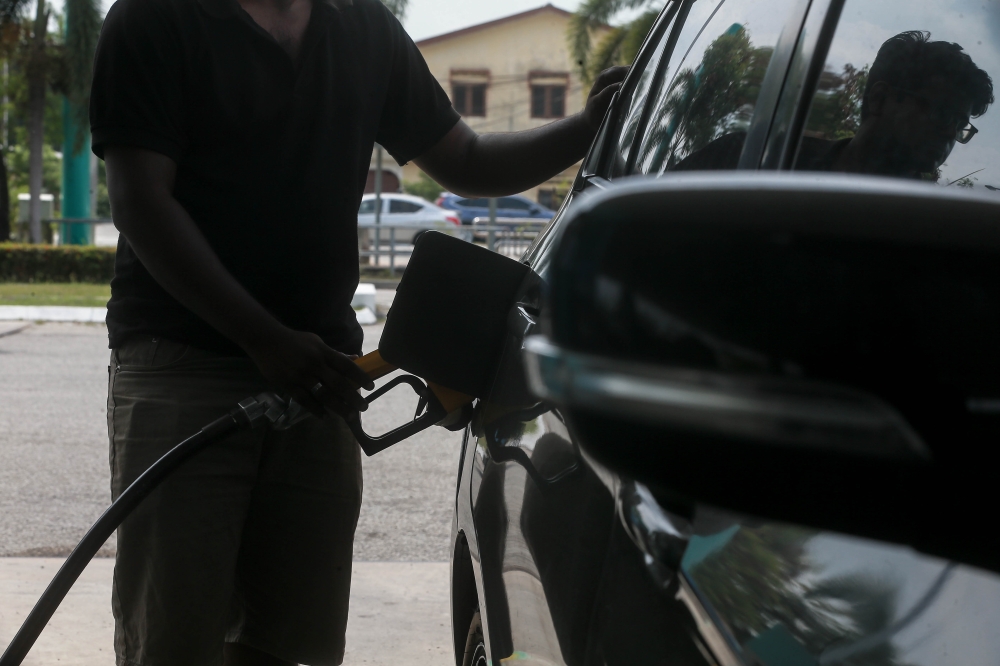
Prime Minister Datuk Seri Anwar Ibrahim moved to quell growing concerns over Malaysia's revamped fuel subsidy programme by asserting that the 200-litre monthly quota for BUDI95 represents an adequate allocation for the majority of drivers in the country. Speaking in Kuala Lumpur on July 16, Anwar emphasised that consumption data supports this threshold, positioning the government's policy as evidence-based rather than arbitrary.
The BUDI95 subsidy scheme represents a significant shift in how Malaysia manages fuel price support for its population. Rather than providing blanket subsidies across all fuel types regardless of consumption, the tiered approach targets support more precisely at ordinary motorists while attempting to reduce the fiscal burden on government coffers. The decision to implement monthly caps has sparked debate among transport operators, rural communities, and urban commuters who argue the restrictions inadequately serve different demographic groups and geographical regions.
Anwar's defence rested primarily on consumption statistics, suggesting that average drivers utilise approximately 100 litres of RON95 fuel monthly. This baseline measurement, when doubled to establish the 200-litre ceiling, theoretically provides a significant buffer above typical usage. The arithmetic appears straightforward: if the median driver consumes 100 litres, then 200 litres should comfortably cover ordinary transportation needs with room for occasional longer journeys. The Prime Minister's calculation implies that those exceeding the quota represent outlier cases rather than representative consumers.
However, the distinction between average and median usage deserves scrutiny in the Malaysian context. Urban professionals commuting across congested metropolitan areas, logistics operators serving regional networks, and families in sprawling suburban communities often require fuel consumption patterns substantially above national averages. Rural drivers face even greater challenges, as inadequate public transportation infrastructure necessitates personal vehicle reliance for accessing healthcare, education, and commercial services. Geographic and socioeconomic diversity within Malaysia means that blanket consumption figures mask significant variations in actual requirements across different population segments.
The government's approach reflects a broader policy reorientation toward subsidy rationalisation. Rather than indefinitely absorbing the cost of fuel price support—a significant budgetary commitment that constrains resources available for other developmental priorities—the administration seeks to target assistance more efficiently. This methodology aligns with international best practices in subsidy reform, where many nations have transitioned from universal support to targeted programmes benefiting specific groups or establishing reasonable consumption limits.
Yet implementation challenges persist. The BUDI95 system requires motorists to register vehicles and track consumption through designated outlets, introducing administrative complexity and potential logistical bottlenecks. For drivers who genuinely need more than 200 litres monthly due to occupational requirements or geographic circumstances, the quota effectively functions as a regressive burden that disproportionately impacts lower-income households unable to absorb additional fuel costs. Commercial operators and self-employed individuals whose livelihoods depend on fuel consumption face genuine financial pressures under the new framework.
The broader political context surrounding this defence reveals tensions within Malaysia's economic management strategy. The government must balance fiscal responsibility—particularly relevant given budget constraints and debt servicing obligations—against social cohesion concerns rooted in rising cost-of-living anxieties. Transport costs directly influence inflation perceptions, affecting public sentiment toward the administration regardless of technical economic indicators. Communities perceiving the policy as unjustly restrictive may view it as evidence of diminishing government commitment to supporting ordinary citizens.
Anwar's specific emphasis on consumption data suggests the government possesses or has commissioned internal research justifying the 200-litre threshold. Whether such research adequately accounts for occupational vehicle usage, geographic variations, and economic inequality remains unclear from public statements. Transparency regarding the methodology, sample size, and regional variations in this analysis would strengthen the government's credibility with sceptical communities.
The policy also intersects with Malaysia's environmental and energy transition objectives. While fuel subsidies traditionally serve social equity purposes, they simultaneously reduce incentives for fuel efficiency improvements and discourage adoption of alternative transportation modes or vehicle technologies. By establishing consumption ceilings, the government creates implicit pressure toward behavioural change and efficiency gains, subtly advancing decarbonisation goals alongside subsidy restraint. This multi-layered rationale extends beyond pure economic calculation into energy sustainability considerations.
Regional comparison provides additional context. Several Southeast Asian nations have implemented similar quota-based subsidy systems, recognising that universal support programmes become fiscally unsustainable as populations grow and vehicle ownership expands. Thailand, Indonesia, and Vietnam have all experimented with targeted approaches, though results have been mixed regarding public acceptance and implementation effectiveness. Malaysian policymakers likely studied these experiences when designing BUDI95, though local circumstances remain distinct.
Looking forward, the government faces pressure to monitor how the policy actually functions in practice. Consumption patterns may shift as motorists adapt to the subsidy structure, either by improving efficiency or by potentially seeking alternative fuel sources. Stakeholder feedback from commercial operators, rural communities, and transport associations will prove crucial in determining whether the quota requires adjustment. Anwar's public defence suggests the government intends to maintain the policy, but flexibility regarding implementation details may emerge if unintended consequences become apparent.
The BUDI95 quota ultimately reflects difficult trade-offs inherent in modern fiscal management. Unlimited fuel subsidies represent an unsustainable drain on government finances, yet overly restrictive quotas risk social friction and economic inefficiency. Whether 200 litres represents the optimal balance depends partly on empirical data—as Anwar stressed—but also on values regarding equity, environmental responsibility, and government's appropriate role in managing household costs during periods of economic adjustment.

