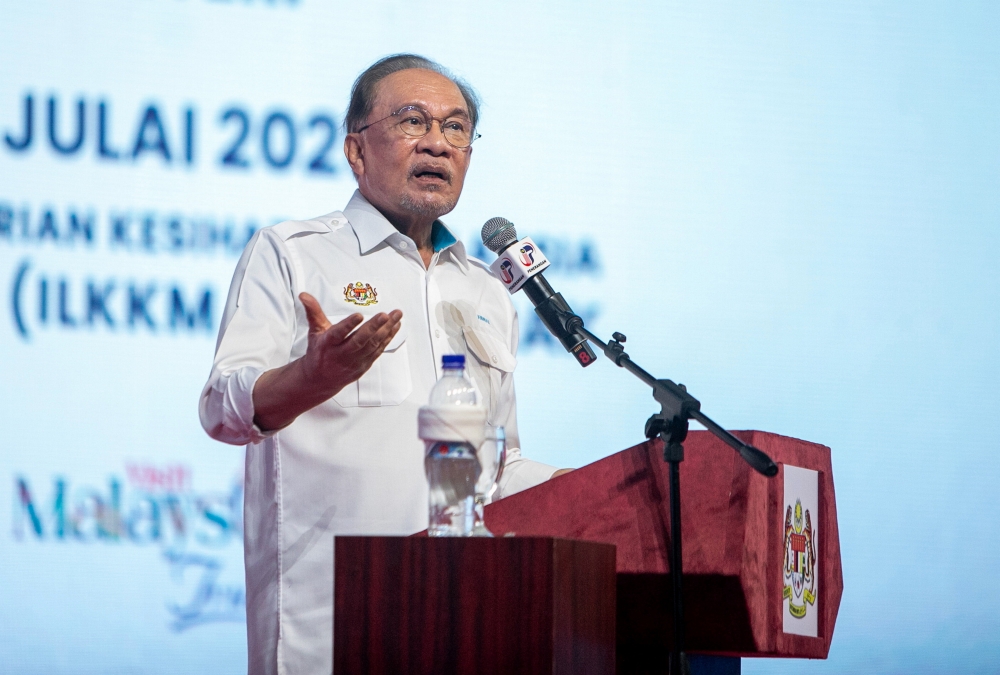
Prime Minister Datuk Seri Anwar Ibrahim has mounted a robust defence of the government's approach to fuel pricing, framing the policy as a necessary balance between protecting consumers and ensuring long-term financial stability. Speaking in Kajang on July 20, Anwar confronted the central tension facing policymakers in the region: how to shield households from global energy price volatility without accumulating crippling national debt that would constrain future governments' ability to invest in education, healthcare, and infrastructure.
The crux of Anwar's position centres on a fundamental question of accountability and sustainability. Rather than committing to unlimited subsidies that would eventually require significant tax increases or spending cuts elsewhere, the government has opted for a managed approach that allows fuel prices to reflect international market movements within controlled parameters. This strategy reflects lessons learned from previous episodes when frozen fuel prices created fiscal crises and distorted market incentives across Southeast Asia. Malaysia has grappled with similar challenges before, and Anwar's framing suggests the cabinet has studied those cautionary tales carefully.
The timing of these remarks carries significance. Global oil markets remain volatile, and Malaysia's exposure to energy price swings affects everything from transportation costs to manufacturing competitiveness. The Prime Minister's emphasis on fiscal discipline signals to international creditors and rating agencies that Malaysia remains committed to prudent debt management, which helps maintain the country's investment-grade credit rating and keeps borrowing costs reasonable. This macroeconomic stability ultimately protects ordinary Malaysians by preserving the government's capacity to borrow at affordable rates when genuine emergencies arise.
Anwar's implicit criticism of alternative approaches—maintaining price controls through spiralling debt—carries particular weight given Malaysia's demographic trajectory. As the population ages and healthcare and pension obligations expand, future fiscal space will become increasingly constrained. Building up energy subsidies today would simply postpone the problem, forcing harder choices on subsequent administrations. The Prime Minister's argument essentially holds that today's government has a responsibility to future generations to avoid mortgaging their opportunities through unsustainable spending.
The fuel pricing debate also reflects broader philosophical differences within Malaysian politics about the proper role of government. Some constituencies favour maximum state intervention to shield consumers from market forces, while others emphasise the dangers of permanent subsidies that discourage efficiency and create artificial demand patterns. By defending the current middle-ground approach, Anwar positioned the government as seeking pragmatic balance rather than ideological purity in either direction. This framing matters for political messaging, as it attempts to frame fiscal conservatism not as indifference to ordinary people's struggles but as genuine concern for their long-term welfare.
Malaysia's fuel subsidy structure also intersects with regional energy politics. Singapore's reliance on energy imports, Indonesia's domestic producer struggles, Thailand's price management systems, and the Philippines' energy security concerns all create a complex regional context. How Malaysia manages its fuel policy influences expectations throughout Southeast Asia about government responsibility for price stability. A nation abandoning subsidies entirely sends different signals than one maintaining them indefinitely. Anwar's middle path reflects an attempt to navigate these competing pressures.
The economic implications extend beyond household energy budgets. Excessive fuel subsidies distort investment decisions by artificially lowering transportation costs, which can reduce demand for public transit improvements and make inefficient logistics patterns appear economically viable. Over time, such distortions reduce overall economic productivity and competitiveness. By allowing prices to maintain some relationship with underlying costs, the government encourages rational resource allocation and incentivises efficiency improvements that ultimately benefit consumers through lower prices for goods and services.
Anwar's warning against debt accumulation also resonates with growing international concern about debt sustainability across emerging markets. Several developing nations have faced severe fiscal crises when subsidies spiralled out of control, forcing dramatic policy reversals that caused far greater disruption than gradual adjustments would have. Thailand, Indonesia, and other regional economies have experienced such crises, and their experience informs Malaysia's more cautious approach. The Prime Minister's framing essentially invokes this regional history as justification for restraint.
The political challenge Anwar navigates involves maintaining public confidence in government while avoiding the appearance of indifference to household cost-of-living pressures. By explicitly acknowledging the difficult tradeoffs inherent in fuel policy, the government demonstrates that it understands citizens' concerns rather than dismissing them. Simultaneously, by anchoring policy in fiscal sustainability principles, Anwar attempts to educate the public about why unlimited subsidies ultimately harm rather than help ordinary Malaysians through inflation, reduced investment in public services, and slower economic growth.
Looking forward, the government's fuel policy will likely remain a flashpoint in Malaysian politics, particularly if international oil prices spike dramatically or domestic economic conditions deteriorate. Anwar's robust defence of the current approach suggests the cabinet intends to maintain course despite political pressure, betting that the electorate will eventually recognise the wisdom of fiscal restraint. Whether that gamble succeeds depends partly on how effectively the government communicates the connections between today's difficult choices and tomorrow's economic opportunities, and partly on whether economic conditions generally remain favourable enough to avoid public revolt.

