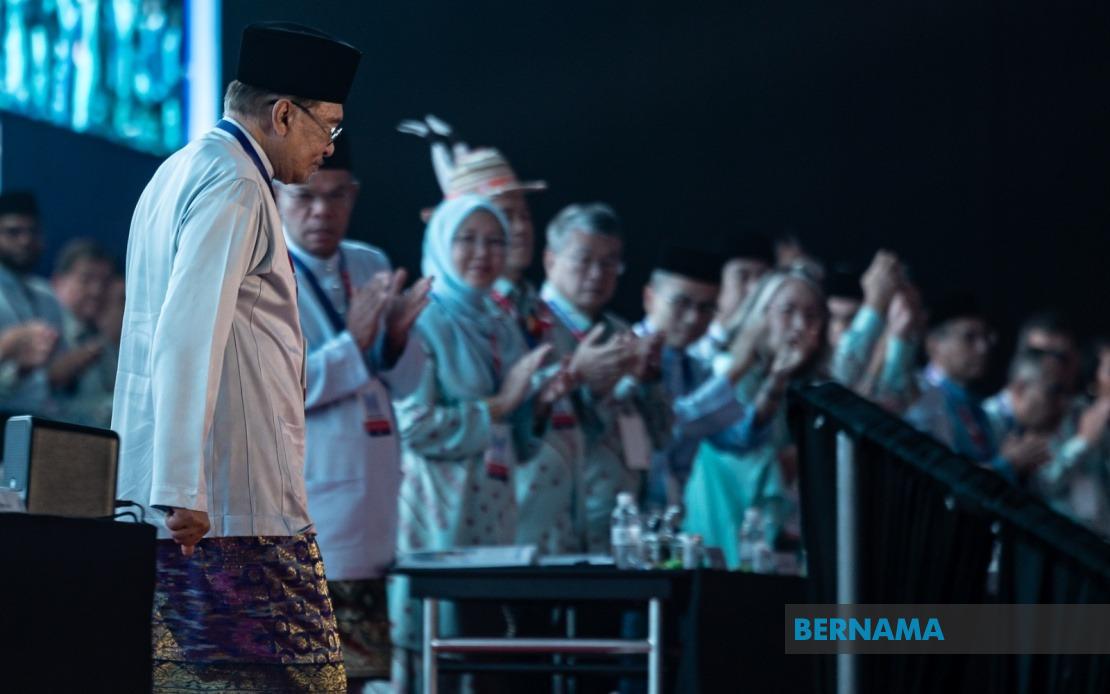
Prime Minister Datuk Seri Anwar Ibrahim has moved to push back against mounting pressure for accelerated reform, arguing that his administration deserves recognition for achievements already accomplished rather than focusing solely on what remains incomplete. Speaking at the 2026 PKR National Congress in Melaka on August 15, Anwar struck a deliberate balance between defending past accomplishments and acknowledging the ongoing nature of institutional change, a rhetorical position that reflects the delicate political ground occupied by Malaysia's government coalition.
Anwar's remarks came at a moment when various stakeholders—from civil society to opposition politicians to elements within the ruling coalition itself—have been calling for bolder and faster governmental transformation. His insistence that "things have already been done" represents an attempt to reframe the narrative around the MADANI reform agenda, shifting focus from incomplete promises to concrete legislative and administrative achievements. The Prime Minister specifically highlighted amendments to the Audit Act 1957, the Parliamentary Service Act, and the Public Finance and Fiscal Responsibility Act 2023 as evidence that substantial work has proceeded beyond mere rhetoric.
The strategic challenge facing Anwar reflects a broader Southeast Asian tension: how can governments demonstrate meaningful change while managing competing interests within coalition arrangements? The Unity Government formed after the 2022 general election brought together parties with differing agendas and constituencies, creating inherent constraints on the pace and scope of reform. Anwar acknowledged this reality explicitly, noting that Pakatan Harapan, despite being the principal coalition partner, must negotiate with other parties to maintain governmental stability. This pragmatic assessment suggests that reform advocates may be underestimating the political complexity of implementing change across a multi-party coalition spanning diverse ideological positions.
Beyond the legislative measures cited, Anwar pointed to the establishment of the Special Task Force on Agency Reform as evidence of institutional restructuring at deeper levels of government. The enactment of the Consumer Credit Act and new legislation addressing gig worker protections demonstrate attempts to modernize Malaysia's regulatory framework to address contemporary economic issues. These accomplishments, which have received relatively limited public attention compared to stalled initiatives, suggest that reform progress exists across multiple dimensions even if dramatic transformations remain elusive.
Anwar's framing also incorporated a historical dimension, noting that "for 60 years before this, things that should have been done were not done." This reference contextualizes the reform agenda within Malaysia's longer postcolonial trajectory, emphasizing that the current administration inherited a system resistant to change. By invoking this historical baseline, Anwar suggests that even modest progress represents a significant departure from preceding administrations' approaches to governance and institutional renewal.
The Prime Minister was careful to acknowledge that implementing reforms proves more difficult than campaigning for them. He conceded that not all governmental steps have been perfect, demonstrating a willingness to recognize shortcomings rather than defending every decision. This admission potentially carries strategic value by allowing Anwar to maintain credibility while explaining delays or incomplete initiatives without appearing defensive.
Crucially, Anwar articulated a philosophy of staged implementation, arguing that sustainable change requires building strong foundations before proceeding to subsequent phases. He explicitly rejected the notion that transforming everything simultaneously was feasible or wise, positioning gradualism not as reluctance but as requisite prudence. This represents a direct response to critics who have characterized the government's pace as insufficient, reframing gradualism as strategic necessity rather than political timidity.
For Malaysian observers, particularly those who supported reform-oriented promises during recent electoral campaigns, this speech encapsulates a fundamental tension in democratic politics: the gap between campaign rhetoric and governing reality. The constraints imposed by coalition politics, administrative capacity, and competing stakeholder interests inevitably moderate transformative ambitions. Southeast Asian politics regularly demonstrate this pattern, where reform movements discover that consolidating power differs markedly from wielding it effectively.
The implications for Malaysia's regional standing are worth noting. As other Southeast Asian nations grapple with governance challenges and reform demands, the Malaysian experience offers both cautionary lessons and potential models. A government that manages expectations while delivering incremental institutional improvements may ultimately prove more durable than one that promises revolutionary transformation and fails to deliver.
Anwar's remarks also address an internal PKR audience, where some younger members have expressed frustration with the pace of change. By emphasizing achievements and contextualizing constraints, he seeks to maintain party cohesion while managing internal expectations about what remains achievable within coalition governance. The presence of coalition partners including Amanah president Datuk Seri Mohamad Sabu and Gabungan Rakyat Sabah chairman Datuk Seri Hajiji Noor underscored the multi-party character of the government and the negotiation necessary to maintain its stability.
The government's positioning on reform will likely remain contested terrain in Malaysian politics. Opposition parties will continue arguing that progress is insufficient, while civil society organizations will maintain pressure for faster institutional change. Simultaneously, coalition partners may resist reforms perceived as threatening their interests or constituencies. Anwar's approach appears designed to maintain reform momentum while acknowledging political constraints—a balance that demands constant recalibration as external pressures and internal coalition dynamics evolve.
Looking forward, the government faces the challenge of maintaining reform momentum beyond rhetorical affirmation. Anwar's insistence that change requires time and phased approaches carries legitimacy, yet sustained public support may depend on demonstrable acceleration of progress on flagship initiatives. The test of his administration will lie not merely in defending past achievements but in delivering tangible progress on the reform agenda in ways that capture public attention and demonstrate governmental responsiveness to citizen demands for institutional modernization.

