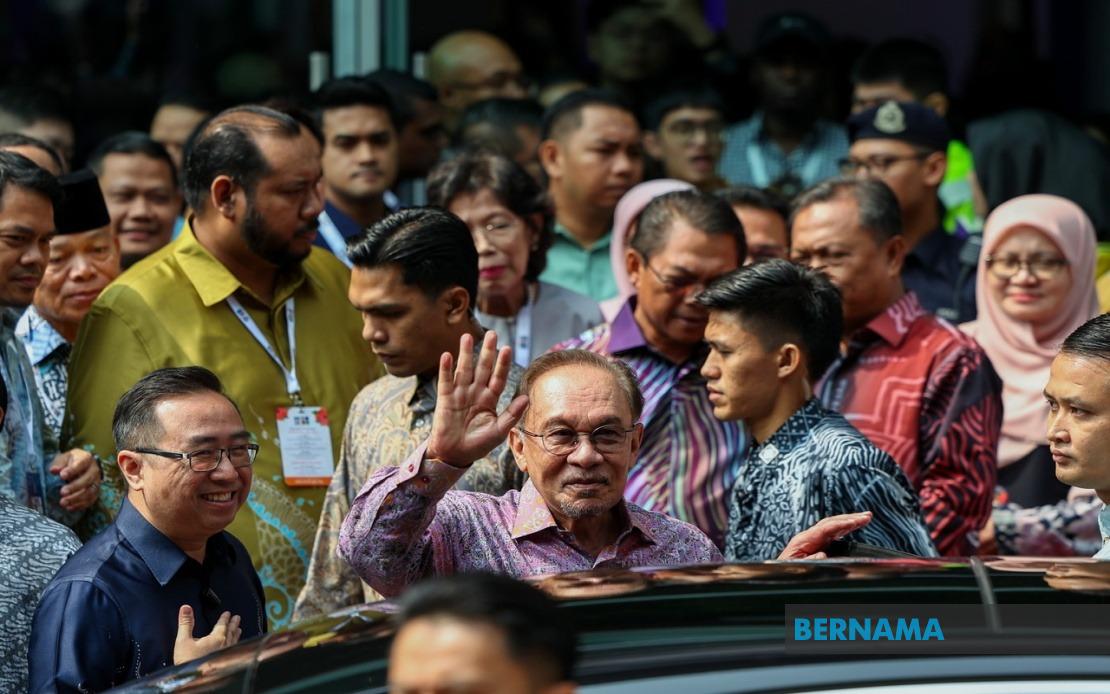
Prime Minister Datuk Seri Anwar Ibrahim has stated that he was not informed about any moves to invite former PKR deputy president Datuk Seri Mohamed Azmin Ali to rejoin the party. Speaking at the National Innovation and Commercialisation Expo (NICE) 2026 at the Kuala Lumpur Convention Centre (KLCC) on Tuesday, Anwar responded curtly when questioned about Azmin's potential return, insisting that no notification had reached him regarding such an invitation.
The comments come against a backdrop of reported efforts by PKR to bring back former party members into its fold. While the specifics of any recruitment campaign remain unclear, several high-profile figures have been mentioned in connection with potential returns to the party, suggesting a broader initiative to rebuild PKR's parliamentary and organisational strength.
Azmin, who now serves as secretary-general of Parti Pribumi Bersatu Malaysia (Bersatu), had previously indicated his commitment to his current party. Speaking on Tuesday, he reportedly rejected any notion of returning to PKR, despite invitations allegedly extended to former members. His categorical stance reflects the fractured political landscape that has characterised Malaysian politics over recent years, particularly within coalition structures.
The situation surrounding PKR's potential recruitment efforts reveals deeper tensions within the party leadership. If invitations were indeed being extended without Anwar's knowledge or approval, it raises questions about internal coordination and decision-making processes within Malaysia's largest component of the ruling coalition. Conversely, if such overtures did not occur, the reports suggest possible misinformation or speculation about party strategy that Anwar felt compelled to address.
Among the figures reportedly targeted for return are Datuk Kamarudin Jaffar, former Member of Parliament for Bandar Tun Razak, and Datuk Mansor Othman, who previously represented Nibong Tebal. Both departed the party under circumstances that reflected broader political realignments within the Federal Government. Their potential reintegration would provide PKR with additional parliamentary representation and experienced political operatives, though the feasibility of such moves remains uncertain.
A more concrete development involves Datuk Dr Xavier Jayakumar, the former PKR vice-president, who has already confirmed his return to the party. His decision to rejoin suggests that at least some party members view renewed engagement with PKR as viable, possibly indicating shifts in internal dynamics or changes in political calculations within the ruling coalition.
The episode underscores the complexity of managing a large, multi-component coalition government in Malaysia. PKR, as the largest party in the coalition and home to the Prime Minister, occupies a unique position where individual members' movements carry implications for overall coalition stability and parliamentary arithmetic. Any significant departures or returns consequently become matters of public and political significance.
From a regional perspective, this internal Malaysian political movement reflects patterns seen across Southeast Asia where coalition governments require constant attention to party dynamics and member retention. The fluidity of political allegiances and the movement of prominent figures between parties remains a defining characteristic of the region's political systems, creating both opportunities and vulnerabilities for incumbent coalitions.
Anwar's disclaimer about his involvement in invitation efforts may also serve a strategic purpose within PKR's internal politics. By distancing himself from any recruitment initiatives he did not personally oversee or approve, he potentially protects his authority and emphasises the need for coordinated decision-making at the party leadership level. Such positioning can prevent unauthorised actors from making commitments on behalf of the party.
The broader context of these recruitment discussions suggests PKR may be responding to perceived weaknesses in its parliamentary presence or factional concerns within the party structure. Bringing back experienced former members could address specific organisational gaps, though success would depend on whether returning members could genuinely reintegrate into the party's current culture and factional alignments.
Moving forward, the question of whether PKR will pursue systematic efforts to recruit former members remains unresolved. Anwar's comments suggest any such initiative would require explicit approval from the party president's office, establishing a clearer protocol for recruitment efforts. This approach, if implemented, could prevent confusion and ensure that party leadership maintains control over membership strategy.

