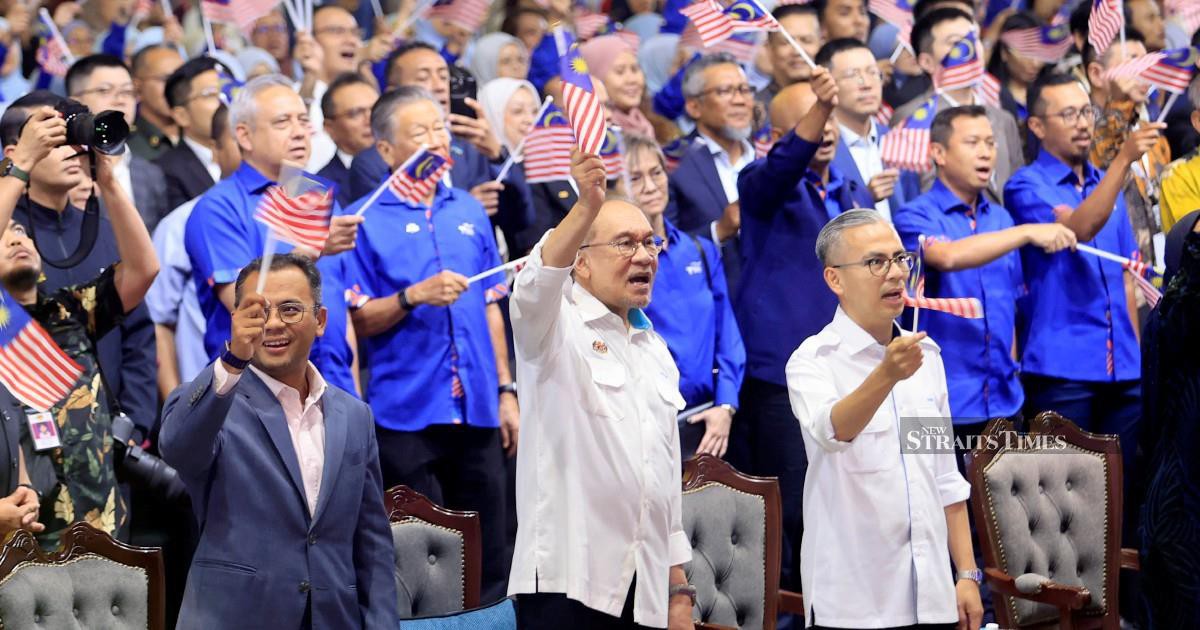
Prime Minister Datuk Seri Anwar Ibrahim has directed Malaysia's universities to implement immediate and comprehensive student freedoms, circumventing the need to await the formal legislative repeal of the Universities and University Colleges Act, commonly known as AUKU. The directive represents a significant shift in the government's approach to higher education governance and student rights, effectively dismantling long-standing restrictions through executive instruction rather than protracted legislative procedures.
The AUKU, enacted during Malaysia's colonial period and retained in post-independence legislation, has historically constrained student political participation and freedom of expression on university campuses. The law has prohibited students from engaging in political activities, organizing unions, and participating in public demonstrations without institutional approval—restrictions that have drawn sustained criticism from human rights organisations, civil society groups, and academic institutions internationally. These constraints have been widely regarded as anachronistic constraints that impede the development of democratic participation and civic engagement among Malaysia's youth.
Anwar's decision to mandate immediate implementation represents a strategic pivot that acknowledges the practical limitations and political costs of maintaining the status quo while formal legislative processes unfold. Rather than subjecting students to extended periods of restricted rights during parliamentary deliberations over AUKU's abolition, the Prime Minister has chosen to expedite substantive change through administrative channels. This approach demonstrates responsiveness to long-standing demands from student activists, university faculty, and progressive political constituencies who have consistently advocated for liberalisation of campus restrictions.
The directive places significant responsibility on university administrations to interpret and operationalise the concept of "full freedom" in practical terms. Institutions must now navigate the transition from decades of regulatory frameworks that specified permissible activities and required prior institutional approval for student organisations and events. University leadership will need to establish new protocols for student political engagement, social organisation, and public expression that align with the spirit of Anwar's instruction whilst maintaining institutional integrity and academic focus.
This development carries particular resonance for Malaysian higher education at a moment of broader transformation. Universities have increasingly recognised that restrictive regulatory environments undermine their capacity to compete internationally, attract top talent, and foster the innovation and critical thinking essential to knowledge economies. Students educated under oppressive regulatory regimes often experience diminished development of democratic habits and civic skills precisely when university years should catalyse such development. Anwar's directive implicitly endorses the proposition that academic excellence and democratic practices are mutually reinforcing rather than contradictory.
The immediate implementation order also signals the government's commitment to fulfilling electoral and policy pledges made during recent political campaigns, where liberalisation of AUKU restrictions featured prominently. Following years of political discussion about reforming higher education governance, this concrete action demonstrates the administration's determination to translate rhetoric into tangible change. The speed of implementation may also preempt potential legal challenges or institutional resistance that might arise if formal abolition proceeded through conventional legislative channels.
For Malaysia's student population, particularly those at major public universities, the directive opens pathways for political education and participation that have long been foreclosed. Student unions, prohibited for decades, may finally operate openly. Political societies and discussion forums previously requiring elaborate institutional approval now function freely. This expansion of campus political space could reshape how Malaysian youth engage with national political questions, develop policy perspectives, and participate in democratic processes.
The decision also reflects evolving regional perspectives on higher education governance. Neighbouring countries including Indonesia, Thailand, and the Philippines have experienced their own cycles of restricted versus liberated campus environments, generally moving toward greater student freedom as part of broader democratic transitions. Malaysia's shift aligns with regional patterns acknowledging that contemporary universities require open environments to fulfil educational missions and contribute meaningfully to national development.
However, the transition from decades of restrictive governance to immediate full freedoms presents genuine challenges for university administrators. Institutional leadership must balance expanded student freedoms with obligations to maintain academic environments conducive to learning, ensure campus safety, and uphold institutional standards. Clear guidelines distinguishing between permitted student activities and those that violate other existing laws or compromise academic missions will require careful development, ideally through collaborative processes involving student leaders, faculty governance bodies, and administration.
The abolition timeline for AUKU itself remains subject to parliamentary procedures, and legislative action will ultimately provide permanent legal foundations for freedoms now granted administratively. However, Anwar's immediate directive ensures that students need not endure prolonged restriction whilst formal processes advance. This approach demonstrates that executive leadership, properly wielded, can effect substantial policy changes even where legislative timelines remain uncertain.
The longer-term implications of liberalised campus environments for Malaysian politics, civil society development, and institutional autonomy remain to be fully understood. Yet the directive unmistakably signals that Malaysia's current political leadership views expanded student freedoms as compatible with national stability and institutional excellence. Whether universities can successfully translate this mandate into sustainable new governance frameworks will significantly influence the success of this broader reform agenda.

